Cathedrals

I’m becoming too old to hold a Les Paul

From our UK edition

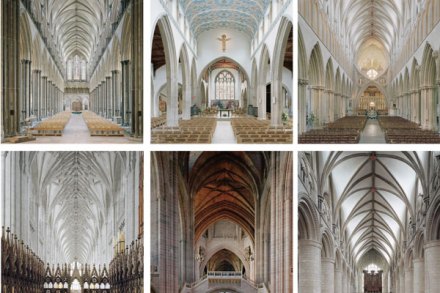
My beloved 1967 Gibson Les Paul Goldtop guitar is now locked away until December at the earliest. For the past eight years, I have had the terrifying privilege of dragging my axe (as we guitarists call our instruments) on stage to perform in a series of Christmas gigs (as we musicians call such performances) with the celebrated prog rock band Jethro Tull. Ian Anderson, who leads the band, has for years generously staged a series of pre-Christmas concerts to raise funds for English cathedrals. Our 42 cathedrals are some of the greatest expressions of creativity, imagination and hope (more on that later) which our nation has ever produced. They are also mostly bloody freezing, although this year the magnificent, but sadly underrated, Bristol cathedral approached cosy conditions.

Notre-Dame rising

Five years have passed since a major fire swept through the Cathédrale Notre-Dame de Paris on April 19, 2019, bringing down the church’s roof but sparing the rest of the building. In response, French president Emmanuel Macron immediately promised that the structure, which is owned by the state, would be rebuilt quickly, and more beautiful than before. He further promised that the cathedral would be ready to receive worshipers and visitors in time for the 2024 Paris Summer Olympics. Since his announcement, however, things have not gone entirely to plan. Notre-Dame will not be finished in time for the Olympics; as of this writing, completion has been pushed off to December 2024.

notre-dame

Britain’s churches need us to survive – but do we still need them?

From our UK edition

In the summer of 1992, Gloria Davey came upon a ruined church near Swaffham in Norfolk. It had no roof, no windows and no door. Satanists were using it for their rites; a grave had been opened, giving up its bones. Gloria’s husband Bob felt obliged to act. He disrupted their rituals, and when they threatened to kill him, he called in the local Territorial Army. They didn’t bother him again. Bob Davey was 73 when Gloria found the late 11th-century church of St Mary, in Houghton on the Hill; he died, aged 91, having visited it every day thereafter. He and a small group of friends built a mile-long access road and made the church watertight – made it good again, you might say. Then a kind of miracle happened.

Sixteen cathedrals to see before you die

From our UK edition

There can be no clearer illustration of the central role that great cathedrals continue to play in a nation’s life than the outpouring of grief that greeted the catastrophic blaze in Notre-Dame in 2019. President Macron described the building as ‘our history, our literature, our imagination, the place where we experienced all our greatest moments’. Indeed, it is impossible to conceive of any major European city without a cathedral at its heart. Emma J. Wells has written an accessible, authoritative and lavishly illustrated account of the building of 16 of ‘the world’s greatest cathedrals’.

How the quarrelsome ‘Jena set’ paved the way for Hitler

From our UK edition

Today, the German city of Jena, 150 miles south-west of Berlin, is the world centre of the optical and precision industry; but in the 1790s it spawned an even more marketable commodity. It was then a small medieval town on the banks of the river Saale with crumbling walls, 800 half-timbered houses, a market square and an unruly university. Here, in the philosophy department, Johann Gottlieb Fichte, a young professor inspired by Immanuel Kant and the French Revolution, proclaimed from the pulpit his theory of the ‘Ich’. ‘A person,’ he roared, ‘should be self-determined.’ In an age of absolute power and the divine right of kings, the idea of free will was an incendiary device and Fichte freewheeled his way through each lecture.

Under the skin of Seville

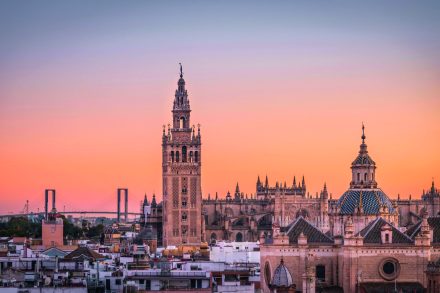
It was night when I arrived in Seville. A taxi took me through a maze of winding backstreets then came to an abrupt halt at the head of a pedestrian-only lane. ‘You’ll have to walk from here,’ said the driver. Uncertainly I dragged my suitcase down one dark alley after another, then suddenly came out onto a plaza lined with orange trees. Soaring above me, spotlit against the black sky, was the cathedral steeple. It was a breathtaking sight with its delicately latticed walls of golden stone, so tall I had to tip my head back to see the spire at the top. The cathedral stretched beside it, filling an entire block. Four hundred years have passed since Seville was the greatest and most glamorous city on earth, as glittering and alluring as New York City is today.

seville

In praise of Britain’s unsung cathedrals

From our UK edition

When a kindly vicar helped me get my life back on track, 20 years ago, I vowed to light a candle in every cathedral in the British Isles. Sadly, I don’t have the time or money to do them all in one go, but I’ve been ticking them off one by one and I’ve been to 44 so far. So long as I step up the pace a bit, I still hope I can get along to all of them before I cash in my chips. How many cathedrals are there in the British Isles? Well, that depends on how you count them. There are 42 Anglican cathedrals in England, six in Wales, and one on the Isle of Man. The Church of Ireland is also Anglican, with 30 cathedrals, on both sides of the border.

How we became a nation of choirs and carollers

From our UK edition

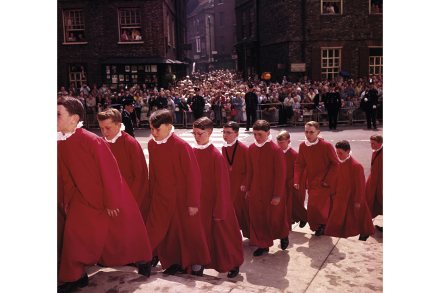
Between the ages of 15 and 17 I had a secret. Every Monday night I’d gulp down dinner before rushing out to the scrubby patch of ground just past the playing fields, where a car would be waiting. Hours later — long after the ceremonial nightly locking of the boarding house — I’d sneak back, knocking softly on a window to be let in. I’d love to say that it was alcohol or drugs that lured me out. It wasn’t even boys — or, at least, not like that. My weekly assignation was with Joseph and Johann, Henry, Ben and Ralph. My addiction? Choral music.

Britain’s choirs are facing oblivion

From our UK edition

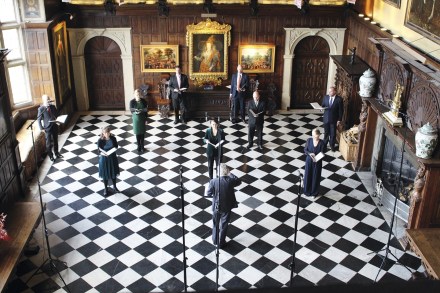
Britain’s choirs are facing oblivion. Yet they’re also terrified of returning. One story explains why. Picture this innocent choral-society scene in Skagit County, Washington State, on the evening of 10 March. One-hundred-and-twenty singers, most of them elderly sopranos, gathered in the Presbyterian church to rehearse for two hours, their chairs 15cm apart. At half-time they took a break for shared snacks, and at the end the helpful ones stayed to stack the chairs. Fifty-two of those singers came down with Covid-19, supposedly through the release of aerosol droplets in the ether. Thus began the swirling of rumours across the world about the grave dangers of singing.