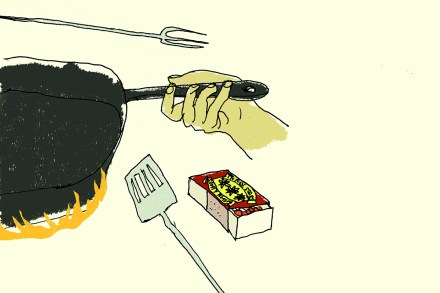
Iron clad: good cooking’s most essential metal
Miles Coverdale’s translation of Psalm 105 in the Book of Common Prayer elevated iron from metallurgical to literary significance. The story of Joseph being sold unjustly as a bondservant — “Whose feet they hurt in the stocks: the iron entered into his soul” — shames flaccid times like ours. And iron’s virtues excel not least of all in cooking, where it can enter literally into our bodies and, who knows, maybe our souls too. Joseph just got things started. Think of the first ironclads, Monitor and Merrimac, hammering away at each other at Hampton Roads in 1862, of the dreadnoughts that put paid to Nelson’s wooden walls, of Agatha Christie’s ironclad alibis, of the verse in Christina Rossetti’s great carol: “Earth stood hard as iron, water like a stone.