Cardiff

The art of resurrecting forgotten artists

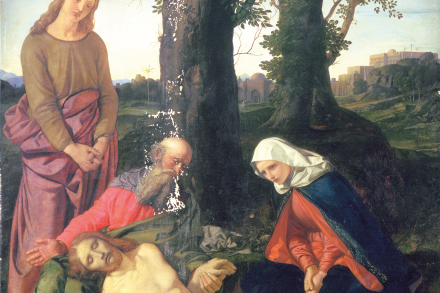
A retired priest in North Wales once told me that after the war he had been asked by Billy Butlin to buy 19th-century paintings for the holiday-camp chapels, because they were going cheap. One he bought, for 49 guineas in 1947, was William Dyce’s 1835 “Lamentation of the Dead Christ.” In 1983, after the Butlin’s chapels had closed, it made a handy £125,000 at auction, when it was bought by Aberdeen Art Gallery. As late as 1962, Lord Leighton’s great “Flaming June” (1895) was sold for £50. Today? Millions. Talk about “the bubble reputation.” The pattern of artistic fame followed by subsequent obscurity has been repeated through the centuries.
Forgetting was the best defence for the Kindertransport refugees

From our UK edition

Michael Moritz, one of Silicon Valley’s most successful venture capitalists, really has got it in for Donald Trump. America is currently in a ‘dark age’ of authoritarian governance, he claims, which spurns legality and liberal do-gooders everywhere. As a lifelong Democrat, Moritz was appalled when, in 2017, Trump failed to denounce the alt-right protestors who chanted ‘Jews will not replace us!’ at a torchlit rally in Virginia. Understandably, Moritz is alarmed by the tide of anti-Semitism today. His Jewish parents narrowly escaped death in Hitler’s Germany when they came to the UK on the Kindertransport. The 71-year-old Moritz now asks the question: how long before the iron-studded jackboot returns to Europe?

Nazis and Nordics: the latest crime fiction reviewed

From our UK edition

Social historians of the future may look back at the reading habits of this era and conclude that we were almost exclusively interested in Nazis and Nordics. Certainly there seems no diminution in these twin tastes. Widowland (Quercus, £14.99) by C.J. Carey (a pseudonym for the writer Jane Thynne) is the latest Nazi-related novel in a crowded field, and its author wisely opts for a different, if not altogether original, conceit. An alternate Britain which lost the war has featured in fiction before — notably in Robert Harris’s Fatherland and Len Deighton’s SS-GB — but even with such celebrated predecessors, Carey more than holds her own.