Captain cook

The short, eventful life of George Forster – explorer, naturalist and revolutionary

From our UK edition

George Forster (1754-94), the German-Polish polymath, was in every sense a late Enlightenment prodigy. He was just ten years old when he accompanied his father, Johann Reinhold, on a scientific expedition to Russia and still in his teens when he sailed with him on Captain Cook’s epic three-year voyage to Antarctica and the Pacific islands. The ensuing book, A Voyage Round the World (1777), largely written by George, became a classic. It established him as one of the most significant naturalists and travel writers of the age, leading to him being elected a Fellow of the Royal Society aged just 22. He was also a very young polyglot, having learnt German, French, English and Russian by the age of 12. (He later added Dutch, Italian, Spanish, Portuguese and Swedish, as well as Latin.
What is it like to be worshipped as a god in one’s lifetime?

From our UK edition

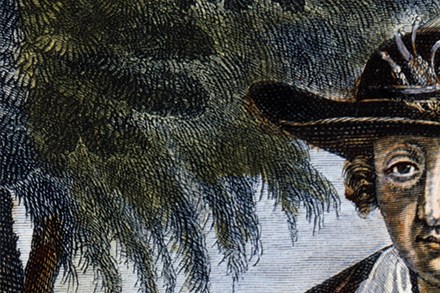
In January 1780 the news reached London that Captain Cook had been killed and eaten in Hawaii. The story of his death was met with morbid fascination by the general public, inspiring paintings, poems and even a ballet. This ballet was so violent that one of the dancers accidentally stabbed another during the scene of the attack, yet it was also a fantastic success, touring the theatres of Europe and America. Soon aristocratic women were wearing dresses modelled on the natives who killed Cook, and interest in the explorer’s death continued into the 19th century, until one wit noted that every museum in the world contained a copy of the club that killed him. So, who was it that really deified Cook: the Hawaiians who murdered him or the Europeans who made a martyr of his memory?

Without Joseph Banks, Cook’s first voyage might have been a failure

From our UK edition

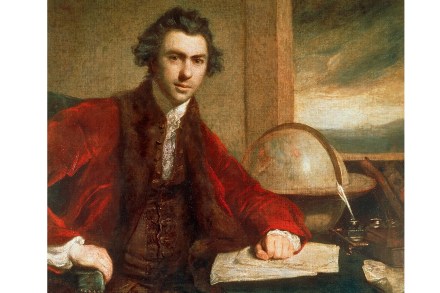
When the wealthy young Joseph Banks announced that he intended joining Captain Cook’s expedition to Tahiti to observe the Transit of Venus, friends asked why he didn’t instead do the Grand Tour. ‘Every blockhead does that,’ Banks replied. ‘My Grand Tour shall be one round the whole globe.’ It was a wise decision, and his voyage on HMS Endeavour would be the making of him.

A date with Venus in Tahiti

There is something about the Transit of Venus that touches the imagination in ways that are not all to do with astronomy. The last Transit occurred in 2012, and if nobody who watched it will ever see another, the sight of that small black dot, making its almost imperceptible progress across the disc of the sun, offered, across the span of 243 years, an oddly moving connection with the scientists and sailors who quartered the globe and, sometimes, risked their lives in 1769 to attempt the first comprehensive observations of the event. There is no shortage any more of ‘global events’ — a good, old fashioned footballing brawl between England and Colombia will stop the planet — but in the more localised world of the 18th century it was another matter.

endeavour