Cancel culture

Why cancel culture destroys the creative soul

From our UK edition

In the Spectator Christmas issue, musician Nick Cave was asked about mercy and cancel culture. Here is his reply: Mercy is a value that should be at the heart of any functioning and tolerant society. Mercy ultimately acknowledges that we are all imperfect and in doing so allows us the oxygen to breathe — to feel protected within a society, through our mutual fallibility. Without mercy a society loses its soul, and devours itself. Mercy allows us the ability to engage openly in free-ranging conversation — an expansion of collective discovery toward a common good. If mercy is our guide we have a safety net of mutual consideration, and we can, to quote Oscar Wilde, ‘play gracefully with ideas’. Yet mercy is not a given.

Cancel culture is nothing new

From our UK edition

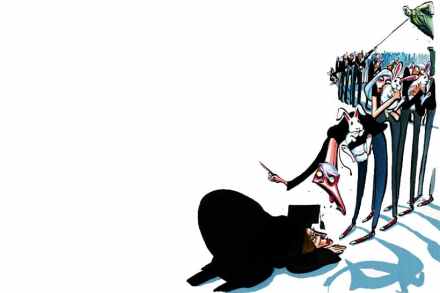
Spectator contributors were asked: Which moment from history seems most significant or interesting? Here is Andrew Doyle’s answer: The Synodus Horrenda of January 897 is one of many bleak episodes in history that the Catholic Church would probably rather we forget. This is when Pope Formosus was put on trial for perjury and violating canon law. The twist is that by this point he had been dead for eight months.  The trial was an exercise in score-settling by his successor, Stephen VI. He had the corpse exhumed, dressed in his sacerdotal garb and propped up in the papal court. Pope Formosus was even provided with a defence council, but the outcome was never really in doubt.

Roald Dahl and the limits of cancel culture

From our UK edition

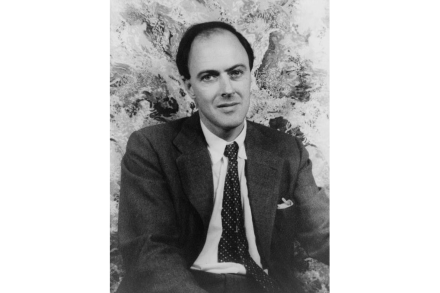
Roald Dahl was a proud antisemite but if it’s real courage you’re after, look to his family who, a mere 30 years after his death, have finally acknowledged that the children’s author wasn’t keen on the Jews. The Sunday Times reports that the family ‘recently met for the first time in several years to discuss the problem and published a discreet apology for his racism on his website’. In the statement, buried deep on the official Roald Dahl website, his family ‘deeply apologise for the lasting and understandable hurt caused by some of Roald Dahl’s statements’, though they make no mention of what these ‘prejudiced remarks’ were or to whom they were directed.

How the green-ink brigade is destroying the arts

From our UK edition

I’m often asked why Channel 4 recently banned an episode of my show The IT Crowd because of ‘transphobia’. I blame spell check. Before the internet, people who sent in crazy, entitled, demanding complaints were known as the ‘green ink brigade’ because of their tendency to write letters in what they thought were attention-grabbing colours. These same lunatics are now taken seriously because spell check means they no longer confuse ‘there’, ‘they’re’, ‘their’ and ‘antelope’. It’s still the same crazies, but these days they’re on Twitter and jumpy executives carry out their every wish.

‘We’re all members of the Stasi now’: Irvine Welsh interviewed

From our UK edition

The history of the word ‘offend’, from the Latin offendere, to hit, attack, injure, is a revealing one. From its starting point in physical violence to transgression against God in the Middle Ages, today ‘offence’, understood as displeasure or upset, is seemingly everywhere. The word may no longer refer to direct physical harm, but culture of all kinds, from artworks to comedy to literature to music, seems to have an upsetting quality to some. Words, we are told, are ‘violence’, images are hurtful, differing opinions are dangerous and must be suppressed. Even silence is ‘violence’, as this year’s Black Lives Matter protests reminded us.

Yelp’s anti-racist social credit nightmare

It’s seven in the evening and you’re working late. You’re interrupted by the soft rumble of hunger pangs, an unmistakable reminder that you haven’t eaten dinner yet. There’s this newish fusion restaurant a couple of blocks away that you’ve been wanting to try, but haven’t had the chance to. Every time you’ve walked past, it’s buzzing with activity. So you look the restaurant up on Yelp to see if it’s worth your time and money. You launch the app and search, only to be hit with an alert emblazoned with an ominously large exclamation point: ‘Business Accused of Racist Behavior’ The R word. It’s the new scarlet letter. You’re so taken aback that you almost forget that you’re hungry.

yelp

Letters from the politically homeless

Americans aren’t just fleeing liberal strongholds like California, Chicago and New York in droves. We are moving politically, too. As I often find myself caught in the crossfire of the culture wars, I also find myself at the crossroads of this migration. Since my last column, headlined ‘Why I won’t vote’, I’ve received hundreds of emails from others who feel politically homeless. I’ve also heard from many who have voted Democrat or Republican their entire lives and, for the first time, in 2020 will vote for the opposite party. Lifetime conservatives are voting for Biden. Independents are being radicalized to vote red or blue. People who didn’t vote for Donald Trump in 2016 are enthusiastically voting for him now.

voting politically homeless

The most memorable RNC speakers are not the stars

Let’s be real, the warm-up acts are never the draw. For every Jimi Hendrix opening for the Monkees (true story) there’s, well, every other opening act you’ve ever sat through to get to the main event. But the Republican National Convention has, for better or worse, managed to flip that on its head. The most memorable speakers, so far, have not been the stars. On Monday, Nikki Haley and Tim Scott did great. But Monday night’s most important moments came from Rep. Vernon Jones and Mark and Patricia McCloskey. Jones talked about supporting Donald Trump and what kind of havoc that wreaked in his own life. The McCloskeys spoke of being ordinary people who had been threatened at their home by the mob we see on our TVs.

sandmann

Letters: Will office workers ever want to return?

From our UK edition

The future of offices Sir: I agree with much of Gerard Lyons’s article about the future of the capital (‘London in limbo’, 8 August), but there is more to consider. Before the virus, many organisations considered having staff working from home. However, there were always objections: people needed to be at meetings; the technology wasn’t good enough; questions over whether workers would work their contracted hours. With the onset of the virus, working from home was forced upon many, and has proved to work better than could ever have been expected. Will these workers ever want to come back to the office?

How I got canceled

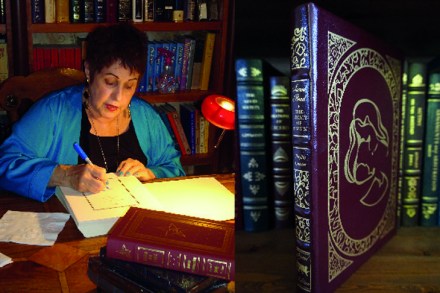
Perhaps contemporary ‘cancel culture’ officially began in 1989, when Khomeini issued his fatwa against Salman Rushdie for having ‘defamed’ Islam in The Satanic Verses. Rushdie was ushered into hiding and the Islamist assault on truth-speech in the West was on. But here’s what I also think. The day after Israel won its 1967 war of self-defense, the propaganda began in deadly earnest against both Israel and the West. Within two decades, perhaps less, Western universities were intellectually and politically ‘occupied’ by Stalinist and Islamist narratives. Balkanized social identities and victimology ruled.

phyllis chesler

Cancelling Kindergarten Cop is a step too far

From our UK edition

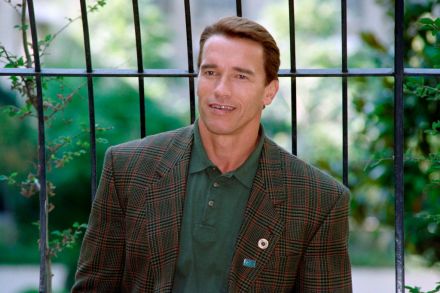
Arnold Schwarzenegger’s late-Eighties to early-Nineties comedies have not gone down in history as great triumphs. Films like Junior and Twins – in which he played a pregnant man and Danny DeVito’s unidentical twin respectively – are movies only arch nostalgists could love. But now we learn that Kindergarten Cop, another product of that strange period, is not just a bit crap, but basically white supremacist, too. This is the news that Northwest Film Center (NWFC) in Portland, Oregon, has pulled the 1990 action comedy from its summer drive-in series after woke complaints. In it, Schwarzenegger plays a cop who goes undercover as a kindergarten teacher to apprehend a drug dealer.

Biden’s comms director doesn’t hate women — but he does suck at his job

When it comes to being tolerant and inclusive on social media, Joe Biden’s campaign staff can’t quite seem to get on the same page as their candidate. Last week, Biden preached the need to increase funding for police across the nation, a message seemingly at odds with his party and his team. Biden campaign videographer Sara Pearl has tweeted that cops were worse than pigs, as well as hashtagging #DefundPolice. She was not disciplined or terminated from the campaign, which suggests Biden himself is not actually in charge (he repeatedly defers to his handlers when taking questions, both in person and on video conference) .

kamau marshall
trader joe’s petitions

Let’s ignore online petitions

Another day, another ‘racist’ branding faux pas erupts. Social media goes into overdrive. Legacy media is baited to join in. Somewhere in the middle of the news cycle, the company offers a banal apology, a withdrawal of the offending product in question, followed by a generic pledge to Do Better™. The corporate ritual is by now familiar —  and since Black Lives Matter plunged the country into an orgy of activism, it occurs at impressive speed.

The weaponization of whining

Bill Buckley used to observe that liberals always say they are in favor of entertaining opinions opposed to their own but are then surprised to discover that there are opinions opposed to their own. Bill died early in 2008 when the species homo liberalis was already under siege, his little squeaks for tolerance, at least in principle, drowned out by an inbred horde of professional victims, drunk on the cloying nectar of their own quivering sense of virtue. These days students arrive for their bright college years with plump mental bottoms swaddled in moist moral nappies, their mouths puckering for the grateful nipple of energizing pabulum about the horrors of racism and prejudice, their tiny minds soothed by reassuring nostrums caressing their unshakeable sense of election.

whining

We’re all thought criminals now

I’m disappointed that Bari Weiss has resigned from the New York Times and not just because she was one of the few voices of reason on the paper. A while ago, I flew to New York at Bari’s request to be interviewed by her for a forthcoming profile of a group of maverick writers and intellectuals in what was billed as a follow-up to her famous piece on the ‘Intellectual Dark Web’ — a kind of Junior College branch. Among those to be featured were the African American essayist Coleman Hughes; the Australian editor-in-chief of Quillette, Claire Lehmann; and the Swedish columnist Paulina Neuding. We spent an enjoyable afternoon together at the Times building on Eighth Avenue, having our photographs taken and being wined and dined by Weiss in the boardroom.

bari weiss anti-semitism

Source: ‘Dozens of instances of bullying and harassment’ at New York Times

‘Bari Weiss’s letter was tame,’ a New York Times insider tells me. ‘She could have named names. She could have said, “There are dozens of other instances of bullying and harassment.” Because there are.’ What took Weiss so long? Prominent writers at the Times never accepted her as a colleague. Instead, her colleagues on the opinion page sniped and leaked against her on Twitter from the first. Was it ‘tall poppy syndrome’ — resentment of a young writer who, in an era when legacy media seem to be in perpetual crisis, landed a plum job at the Times?

brexitland times
letter

The fatuousness of the Harper’s letter

The recent letter ‘on justice and open debate,’ published in Harper’s magazine on July 7 and signed by some 150 self-nominated intellectuals, will stand as one of the conspicuous fatuities of this intense American election year. The intellectuals begin with the portentous assertion that ‘our cultural institutions are facing a moment of trial.’ It is then explained that forces that have all long demanded ‘police reform and greater equality and inclusion across our society,’ goals whose championship these signatories claim throughout for themselves, are now being threatened.

From letter to worse

It is a truth generally acknowledged that any statement of civil principles will now be met with pitchforks and personal attacks, insinuations of racism, sexism, classism and white privilege, not forgetting online guerrilla action by the army of the fashionably aggrieved, led by their crack troops, the transsexuals. Take this week’s letter to Harper’s magazine, ‘A Letter on Justice and Open Debate’.

letter

Harper’s vs Vox — and the bonfire of the liberal values

Cockburn is long enough in the tooth to recall when it was uncontroversial to defend the 'free exchange of information and ideas.’ Not so many moons ago, it seemed obvious to the point of boring to say that 'the way to defeat bad ideas is by exposure, argument, and persuasion, not by trying to silence or wish them away.’ Not anymore. In 2020, that is edgy stuff, as the group of 150 writers who just wrote a joint letter to Harper’s have proved. Their letter, a defense of free expression, makes the perfectly clear and fair point that ‘as writers, we need a culture that leaves us room for experimentation, risk taking, and even mistakes. We need to preserve the possibility of good-faith disagreement without dire professional consequences.

vox

Kanye West and the uncancelables

For better or worse, the rapper, producer and sneaker salesman Kanye West is almost certainly not running for president, as he has claimed. He is instead sidling into the mainstream consciousness just before he drops his latest album. Kanye has had an odd few years. He's come out in support of Donald Trump, made an impassioned religious album, and failed to build a complex of Star Wars-inspired domes for the homeless. A presidential run, then, feels like a natural next move. Ultimately, though, he does not seem to have even filed the necessary paperwork. This has not prevented progressives from being outraged by what they believe is an attempt to split the liberal vote and hand Trump another victory.

uncancelables