Canada

Canada’s parents are taking to the streets

From our UK edition

In the biggest demonstration since the Freedom Convoy, large numbers of Canadian families and supporters took to the streets across the country on 20 September to assert the rights of parents as primary educators and protectors of their children with the slogan, ‘Leave our kids alone!’  The ‘1 Million March 4 Children’ was spearheaded by Muslim Canadians in response to increasingly aggressive policy and curriculum changes in publicly funded schools, pushing radical gender ideology and putting content before children that protesting parents say is indecent or age-inappropriate. Turnout was impressive, with many thousands of participants in over 100 cities and up to 10,000 marchers reported at the largest gathering in Ottawa.

The lack of Indigenous mass graves in Canada

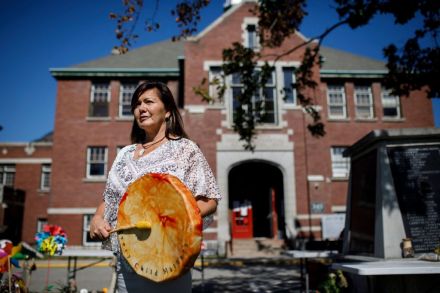
In May 2021, the Canadian Broadcasting Corporation reported that the remains of 215 children had been found buried at the former Kamloops Indian Residential School in British Columbia. The Tk'emlúps te Secwépemc First Nation band had confirmed the story, they claimed, quoting Chief Rosanne Casimir. “To our knowledge, these missing children are undocumented deaths,” she said. “Some were as young as three years old. We sought out a way to confirm that knowing out of deepest respect and love for those lost children and their families, understanding that Tk'emlúps te Secwépemc is the final resting place of these children.”  The outcry was enormous.

kamloops mass graves

Spectator Out Loud: Robert Tombs, Jamie Blackett and Tanya Gold

From our UK edition

22 min listen

This episode of Spectator Out Loud features Professor Robert Tombs on Canada's willingness to believe anything bad about its own history (00:55); the farmer Jamie Blackett on the harms of wild camping (12:10); and Tanya Gold on the reopening of Claridge's Restaurant. Presented and produced by Cindy Yu.

The rise of conspiracy history

From our UK edition

Readers would doubtless find it hard to believe that the late Queen and the Duke of Edinburgh kidnapped and killed indigenous children while on a state visit to Canada in 1964. Yet this story circulated for years in Canada along with other horror stories of the rape, torture and murder of indigenous children at the hands of depraved priests and nuns. The bodies, it was said, were thrown into furnaces or secretly buried at dead of night. These accusations were linked to boarding schools run by various religious bodies first established in the 19th century and finally closed in the 1990s. A Truth and Reconciliation Commission was set up in 2008, and millions of dollars were given by the government to search for clandestine mass graves. None was found.

Canada’s assisted dying horror story

From our UK edition

My favourite Martin Amis novel was his 1991 book Time’s Arrow. It is a pyrotechnically brilliant work in which all time goes backwards. On publication it was criticised in some quarters because the novel includes a reverse version of the Holocaust and some thought Amis was using the Holocaust as a literary device. As so often, these transient critics didn’t get the point. It is hard to say anything new about the Holocaust or find any new angle on it. Europe, like Canada, does not believe in the death penalty for criminals. Only for victims But Amis managed, because towards the end of the novel (that is, at the beginning of the Holocaust) one of the characters starts to worry about the bodies that they are bringing out of the crematoria.

Wildfire apocalypse, not

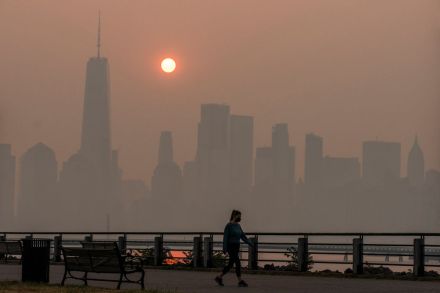
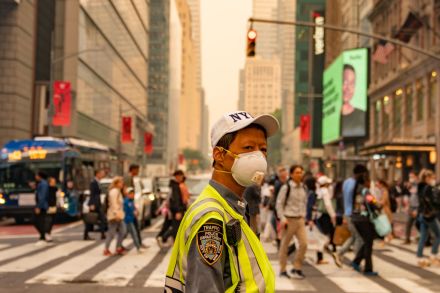
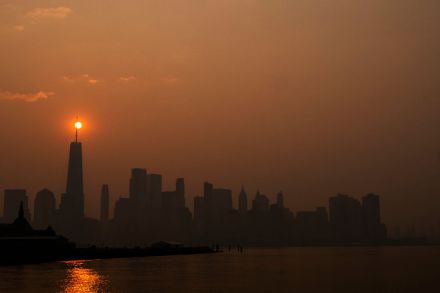
There was nothing new about springtime wildfires in Canada until the wind shifted unexpectedly last week. That shift blew smoky air all over the northern and eastern US, producing memorably apocalyptic-like orange air in New York City. Not wanting to waste a crisis, the lamestream media jumped right in with both feet. They blamed the wildfires on the much-dreaded “climate change,” scared the daylights out of everyone about the air quality and then warned that more like it was on the way unless we changed our fossil fuel-burning ways. Not unexpectedly, the media’s knee-jerk take was all wrong. Wildfires and smoky air have always occurred wherever there are forests. At least eighteen of these dark or “yellow days” occurred in the US and Canada from 1706 to 1910.

wildfire

The Canadian wildfire is a reboot of Covid panic mode

I was skeptical when my children arrived home from school Wednesday and informed me they could not play outside, irritated when they used the faculty fearmongering to demand screen time, irate when we pulled into the drop-off line Thursday morning. There was the crossing guard in an N95, a teacher in the same. A small boy was wrapped in useless cloth, dragged to the front steps by a mother sporting a surgical mask and a smart business suit. Evidently, cartoonish shoulder pads are making a comeback after a three-decade slumber, but mass panic barely had time to take a nap here in Washington before bureaucrats roused it in the name of public safety. It feels as though we are living in a horror movie and a particular one at that: the rushed sequel to a surprise box office hit.

wildfire canada covid

Climate change didn’t cause Canada’s wildfires

Is the hazy stuff out there smoke billowing down from Québec, or hot air emitted from smoggy-brained politicians and journalists? Chuck Schumer told the Senate on Wednesday that the smoke drifting over the Eastern Seaboard was caused by climate change. Alexandra Ocasio-Cortez said it showed the urgency of going greener faster. Proof of carbon pollution, lectured the Canadian minister of the environment. A stark reminder of climate change, intoned Biden. Every news organization and weather app out there suddenly became experts on a new hazard — not smoke or fire, well-known phenomenons that have been extensively documented throughout history — but a new threat, both more nebulous and more ominous: “air quality.

climate canada wildfires

The legal challenge to assisted suicide

Lonnie VanHook was preparing to board the train to Oregon when his body gave out. The Navy veteran is accustomed to these sorts of betrayals. He is quadriplegic and legless to boot; a rare form of cancer is eating away at his skeletal-muscle tissues and bladder. He awoke in a facility surrounded by medical professionals wearing the plastic countenances of concern and sympathy they picked up during the med school lessons on bedside manners. During the interaction, Lonnie told them about the reason for his upcoming trip. You can picture the Oakland native rolling his eyes as he has prepared for the rebuttal. The doctors, no doubt, exchanged astonished glances. Lonnie, what were you thinking?!? You don’t need to take the train. We can do that right here!

assisted suicide

How VICE lost its cool

Last week I was at a writers' party in Miami, a city at the cutting edge of tech, finance, the creator economy and nightlife. Naturally the writers were talking about themselves. I asked someone what he would do if he didn’t have to worry about pageviews or proprietors or the other pressing concerns of the modern media. “Think VICE, when it was good,” he replied. To me, VICE when it was good is the girl’s bum on the fiction issue from 2008. It’s Michael Moynihan’s raspy voice reporting from South Korea. It’s the floppy hair of the one super-hot reporter I knew that smoked filterless roll-ups. VICE was where the cool kids at the back of the bus would grow up to write, the place that you would daydream about working for as a young reporter.

vice

How to spend 48 hours in Montreal

From our UK edition

‘You’ll see when you get there,’ my friend said. ‘There’s just a different vibe in Montreal.’ He wasn’t wrong. I travelled from Toronto by train – a five-hour journey made infinitely more bearable by the impressive landscapes that flashed past the window – to find that Montreal is a tale of two cities. Still distinctly North American – and Canada’s second most populous metropolis – Montreal is dotted with all the chrome skyscrapers and wide, bustling intersections you would expect. Yet around each corner there is also a dose of seemingly incongruous European flavour: a cobbled street, an old stone church, a statue in a tree-lined square. For every modern vista, there is a strip of café culture that kids you into thinking you have strolled down a French avenue.

Dear God, not this national divorce thing again

Marjorie Taylor Greene wants Americans to get a national divorce, and the only question is who gets custody of Puerto Rico. Actually there are other questions, such as: why the hell are we talking about this again? And: why is a member of the United States House of Representatives advocating breaking up the United States? And: which third party gets to be the divorce lawyer? Because there is no way Canada is telling me how much alimony I have to pay. For those of you leading normal and productive lives, this latest brain-plague began on Twitter when Congresswoman Greene declared, "We need a national divorce. We need to separate by red states and blue states and shrink the federal government," adding, "Everyone I talk to says this.

national divorce

The truth slips out about Justin Trudeau’s euthanasia regime

Two cheers for a brief hiatus in the Canadian stampede towards suicide for all. Earlier this month, David Lametti, Justin Trudeau’s justice minister, announced that legalization of euthanasia for the mentally ill will be delayed by one year. This, he said, will give the health system and regulatory bodies more time to prepare. Mentally ill adults will now become eligible for euthanasia in March 2024. Sadly, it’s a mere hiatus. Despite the international wave of horror in recent months pushing back against Canada’s sickeningly casual euthanasia regime, the government clearly has no intention of walking back its plans to make death on demand available to the most psychologically fragile.

authoritarian

The barbarism of Canada’s euthanasia regime

“After a recent experience caring for a patient receiving medical assistance in dying, I felt distressed and uncomfortable. How should I manage these emotions?” According to the website of the College of Nurses of Ontario, that’s a frequently asked question for healthcare professionals involved in euthanasia. Perhaps Canadian health science programs ought to have some mandatory classes on Shakespeare. He wrote quite a bit about coping with the pangs of conscience, particularly after having been an accessory to the unnatural death of another.

In Ottawa, where junkies and technocrats collide

I got out of the taxi in front of my hotel in lower town Ottawa and was immediately accosted by a homeless junkie looking for a donation to the cause. It was a Sunday evening, well after sunset, and not quite the greeting I had hoped for upon arrival in Canada’s leafy capital. The smell of pot was in the air, a lot of it — there was a cannabis store across the street, and another around the corner. After checking in and dropping off my bags, I went in search of a late dinner. A two-block journey to a trendy tap house with a wide selection of craft beers witnessed another half-dozen, very animated homeless people. One, eyes closed, was dancing in the middle of the sidewalk, his arms flailing in the air, oblivious to everyone and everything around him (mind the lamppost!).

Canada’s new Conservative leader is no Donald Trump

Contrary to media messaging, Pierre Poilievre, the new leader of Canada's Conservative Party, is no Donald Trump. But he does represent a challenge to the left, so the brush must be dipped in the most lurid colors available. On September 10, Poilievre won the Conservative leadership contest in a landslide, giving the party its first credible leader since Stephen Harper. Andrew Scheer, a former leader who squared off against Justin Trudeau, was likable but failed to project confidence, notably when the left held his feet to the fire over his Catholic pro-life views. Far less convincing was Scheer's successor, Erin O’Toole, who wasn’t even likable. When it came to policy, O’Toole acted like a Liberal who’d somehow wandered into the Conservative caucus.

Must we now despise colonial architecture too?

From our UK edition

Here’s a thing. A disturbing book about disturbing cities. And it’s full of loaded questions. Like Hezbollah, the publisher uses the silhouette of an automatic weapon as its logo. This is a trigger warning. Jonathan Swift wrote: All poets and philosphers who find  Some favourite system to their minds  In every way to make it fit  Will force all Nature to submit. So I give you Owen Hatherley, an architectural critic of the left, adept in the predictable tropes of Guardian-sprache, who exists in a world, as he often tells us, defined by concepts of colonial domination, exploitation and ocean-going misery. As Lionel Trilling observed, leftish people are always glum because things are never quite as perfect as they wish them. Rightish people have more fun.

The worldwide working-class counterrevolution

Something is happening across the world right now, something that deserves more attention than it's getting. First, to the Netherlands, where farmers have been protesting, blockading roads with their tractors and staging enormous rallies. The demonstrations have been going on and off since 2019, when the Dutch legislature proposed a crackdown on nitrogen emissions. Nitrogen is heavily emitted by livestock and fertilizer, which means the regulations are hitting Dutch agriculture especially hard. But it wasn't until July that the protests garnered international attention. The Dutch government announced plans in compliance with a court order to cut nitrogen emissions by 50 percent.

Dutch farmers touch off a worldwide revolt

Why are farmers around the world standing in solidarity with a tiny country in northwestern Europe? What’s going on here? Starting in June, 40,000 Dutch farmers took their tractors to the streets to protest their government’s proposal to slash nitrogen emissions. For some farmers, this plan will mean culling 95 percent of their livestock. For others, it will mean going out of business altogether, hoping to sell their land to make ends meet — with the Dutch government as the only buyer. I’m as green as the next guy, but there is a thin line between regulation and tyranny.

Tim Ryan wants to be China on abortion

While on Bret Baier's Fox News show Special Report, Ohio Democratic Senate candidate Tim Ryan said there should be no abortion restrictions at all, establishing himself as radical even by pro-choice standards. After the overturning of Roe v. Wade by the Supreme Court, Ohio passed a heartbeat bill that restricted abortion after six weeks. Yet Congressman Ryan believes this is too strict. In fact, he believes any kind of restriction is too strict. Ryan said, "Look, you got to leave it up to the woman, because you and I sitting here can’t account for all of the different scenarios that a woman, dealing with the complexities of a pregnancy, are going through. How can you and I figure that out?