Cambridge

The first step towards restoring the National Trust

From our UK edition

It is poetically fitting that the resignation of the chairman of the National Trust, Tim Parker, was announced on the first anniversary of the murder of George Floyd. The collective mistakes that have so damaged the Trust’s reputation were bound up in the rush of many institutions to ‘take the knee’, metaphorically and literally. Immensely delicate questions about how best to study the connections of Trust properties with slavery and (ill-chosen word) ‘colonialism’ were rushed and politicised. The view inevitably spread that the Trust now bears an animus towards the past whose glorious buildings and landscapes it is supposed to protect so that millions may enjoy them.
The first Cambridge spy: A Fine Madness, by Alan Judd, reviewed

From our UK edition

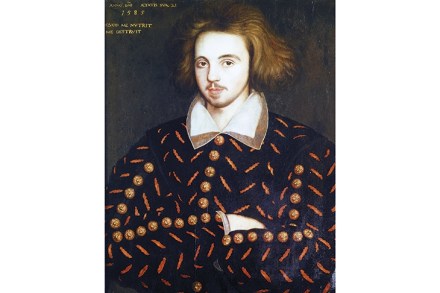
For his 15th novel, the espionage writer Alan Judd turns his hand to the mystery of Christopher Marlowe’s death. The result is never less than engrossing, with Judd putting the scanty known facts about the great playwright to ingenious use. The story is narrated from the King’s Bench prison by Thomas Phelipps 30 years after Marlowe’s fatal stabbing in a Deptford rooming-house brawl. Phelipps is good company, a master cryptographer and key employee of the spy-master Francis Walsingham, yet a self-proclaimed ‘simple man’ who yearns to marry and settle down. These contradictions help make him as fascinating as the mercurial Marlowe, who he’s sent to recruit at Cambridge. Phelipps immediately senses that Marlowe needs ‘protection from himself...

Why is going to Oxford being held against me?

From our UK edition

Should going to Oxford be held against you? In my experience, some employers think it should. A month before the first lockdown of 2020, I attended an interview with a prestigious company in London. With nearly 1000 applicants for each place on their internship scheme, the stakes were high; making it to the interview may have been a success in itself, but now it was time to impress the recruiters in person. After a frantic journey on the underground, I arrived at the interview location. Having spent the previous few days researching the interview process, I expected an hour of rigorous intellectual interrogation, followed by a brief case study assessment.  What I didn’t expect, however, was that in the first five minutes I would be told the odds were stacked against me.

The campus Churchill delusion

From our UK edition

Was Winston Churchill a racist? For students like me who attended Churchill College, Cambridge, it's a question which barely even merits an answer: of course he wasn't. But some Cambridge academics appear to take a different approach when it comes to assessing the record of Britain's most famous prime minister. Churchill College recently announced a ‘year-long programme’ into Sir Winston’s allegedly ‘backward’ conceptions of empire and race. As part of this review, the college has held events such as ‘The Racial Consequences of Mr Churchill’. Many students are simply bemused. Academic debate is, of course, no bad thing. It is something to be encouraged at any university.

The Greeks wouldn’t have accepted Cambridge’s ‘respect’ policy either

From our UK edition

Professor Toope, the vice-chancellor of Cambridge university, had proposed a motion ordering all members of the university to ‘respect’ each other, or else. But significant numbers of members argued strongly against it, and rightly so: ‘respect’ is an emotional term implying deferential regard or special concern or solicitude for someone, a response more in line with the world of counselling and social welfare than with rigorous academic debate. Further, if ‘respect’ became justiciable because an academic appealed against dismissal from his job on that account, where would that end? Thankfully Professor Toope failed, as history suggests he should have. On the ancients’ intellectual agenda, respect had to be earned.

Cambridge academics have just won an important battle for free speech

From our UK edition

Academics at Cambridge won a cheering victory for free speech today when they voted by an overwhelming majority to reject plans from the vice-chancellor to change the rules governing debate at the university. They rejected the university’s proposals to insist that students and staff be ‘respectful’ of opposing views. They decided, instead, that the rules should say students and staff must ‘tolerate’ opposition. The result was as close to conclusive as you can get. Only 162 academics voted in favour of the university’s plan, while 1316 voted in favour of the change. (A further 208 academics wanted neither.

Tolerance is out of fashion at Cambridge University

From our UK edition

A struggle begins in Cambridge on Friday, which will determine the freedom to argue in the university. As the students of today are the elites of tomorrow, and as the same fight between liberalism and, for want of a better word, wokeism is being fought everywhere, it is an early skirmish in the fight over everyone’s freedom. At its heart is a distinction with a difference worth fighting over: the line between ‘tolerance’ and ‘respect’. Tolerance is an old liberal virtue that is tougher than it looks. After the devastation brought by the wars of religion, the early Enlightenment decided, in the words of John Locke, that ‘the civil magistrate has no jurisdiction over souls’.

Cambridge University is kowtowing to China

From our UK edition

Last month, writing elsewhere, I quoted the website of the China Centre at Jesus College, Cambridge: ‘Under the leadership of the Communist party of China since 1978, [China] has experienced an extraordinary transformation… China’s national rejuvenation is returning the country to the position within the global political economy that it occupied before the 19th century.’ The tone sounded propagandist not academic. This month, all mention of the Chinese Communist party disappeared from the China Centre home page. Now the Centre says it concentrates on ‘mutual understanding between China and the West’, contributing to ‘harmonious global governance’, which should be ‘non-ideological and pragmatic’.

A tribute to the grandes dames of gardening — Beth Chatto and Penelope Hobhouse

From our UK edition

There is no longer much point buying strictly practical gardening books, such as were a staple of the publishing industry in years gone by. Those colourful, cheery, cheap volumes have been superseded by trustworthy websites, such as that of the Royal Horticultural Society, which can quickly answer any query you have about cultivation, plant identification or pest damage. Gardening books these days must offer something not to be found online, if readers are to shell out their precious British pounds: deep, hard-earned knowledge, elegant writing, attractive illustrations and, preferably, all three. This year, at least, there are a number that pass the test.

A gas-lit world

For me, a home without Period Piece is like a house without a cat — lacking an essential cheering and comfortable element. I have loved Gwen Raverat’s memoir of growing up in Cambridge in the 1890s ever since I first read it 20 years ago when recuperating from a bad bout of ’flu, at that blissful moment when you are feeling better but not quite strong enough to get up and do anything. I can still recall the delicious feeling of reading and dozing, dozing and reading, snug in the gas-lit world of Victorian Cambridge, until the January afternoon outside the bedroom window gradually turned purple and faded into dark.

period piece

How Noah Carl is fighting back against Cambridge

From our UK edition

Dr Noah Carl, the young conservative academic who was fired from his Cambridge college after being targeted by a left-wing outrage mob, has decided to fight back. He is launching a campaign to crowdfund a legal action against St Edmund’s College, not just to restore his own reputation but to protect the rights of other scholars who find themselves being persecuted for challenging the prevailing orthodoxy. ‘This isn’t about whether you agree with my research or my political views,’ he says. ‘This is about protecting freedom of speech, and standing up to the activists who are trying to control our universities. Hardly a week goes by without another case of someone being fired, or disinvited, or deplatformed, just for holding a certain viewpoint.

The truth about Noah Carl

From our UK edition

My great friend Dr Noah Carl joins a group of distinguished academics removed from their posts this spring. But while Jordan Peterson (visiting fellowship rescinded by Cambridge) and Sir Roger Scruton (sacked as a commission chair by James Brokenshire) can arguably hold their own and get on with their lives, Noah – an early-career Junior Research Fellow at St Edmund’s College, Cambridge – has been fired from his only job, made unemployed by the braying mob. When Noah first told me of his appointment in Oxford’s Turf Tavern last year, it was a great cause for celebration. A Junior Research Fellowship is, after all, something of a holy grail for aspiring academics. Within weeks that joy turned to ashes in his mouth.

Cambridge’s slavery inquiry will raise more questions than it answers

From our UK edition

Can the past hold the present to ransom? Can we be culpable for our predecessors’ actions? Knotty questions of this kind have long been debated in British universities. But now these abstractions are finding new and controversial expression. Yesterday, the University of Cambridge made headlines by launching an academic investigation into its historical relationship – direct or otherwise – with the slave trade. The panel will spend two years scrutinising whether Cambridge profited from ‘the Atlantic slave trade and other forms of coerced labour during the colonial era’. For academics, the enquiry will certainly be interesting. But serious problems inevitably arise when historical discoveries are deemed to have moral consequence for the present.

Bats in the belfry

From our UK edition

As the wordy title of this book and the name of its author suggest, this is a faux-archaic, fogeyish journey around England’s oddest vicars. The Reverend Fergus Butler-Gallie is, though, the real thing: a young curate in the Church of England. Yes, he’s given to sometimes tiresome jocularity: he describes himself as ‘a Bon Viveur first and foremost, with a soupçon of Roguishness and Prodigality’. But, still, his essential thesis is right: the Church of England has produced some real oddballs in its time, and this is an entertaining gallop through several centuries’ worth of them. For 400 years after the Reformation, the Church of England was the ideal Petri dish for nurturing eccentricity.

Smuts-shaming at the University of Cambridge

From our UK edition

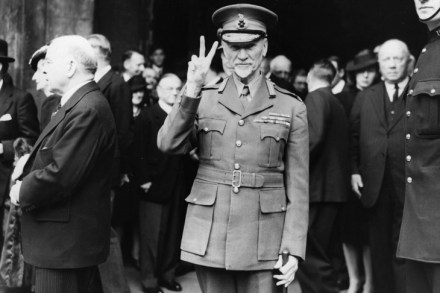
One should not rise to the bait, but the latest little ‘Rhodes must fall’ type story makes it hard. Cambridge University, of which Jan Smuts was once Chancellor, has removed his bust from public display. According to John Shakeshaft, the deputy chairman of the university’s governing council, Smuts has ‘uncomfortable contemporary significance’, as ‘part of the system that led to apartheid’. No mention that the party that Smuts led was the fierce opponent of the National Party, which introduced apartheid in South Africa. True, Smuts, like virtually every white leader of his generation, did not want full democratic rights for black people in South Africa, but there are other things to be said.

A bruising encounter with Cambridge cry-bullies

From our UK edition

There’s a Tracey Ullman comedy sketch about the extreme and ugly form of political correctness afflicting the youth. It’s set in a self-help group for ‘people who are so woke [i.e. attuned to left-wing grievance politics] they are finding it impossible to have any fun at all.’ A newcomer to the class tells his story: ‘It started with the little things — signing an online petition; going to a march. Well, before I knew it, I was writing to the Guardian about LBGT representation in the Harry Potter books…’ At this point, a prissy young woman interjects: ‘Which is shocking by the way.’ The therapist (played by Ullman) calls her to order: ‘Yes, all right, Libby. We’ve all read your blog.

Universities challenged | 10 May 2018

From our UK edition

British universities have serious problems. The recent strikes protesting against a sudden reduction in pension rights were unusually effective, and a symptom of wider discontent. Yet international comparisons invariably show our universities to be among the best in the world, and incomparably the best in the European Union. This apparent paradox is easily resolved: universities in other countries have problems too, and often worse. Our problems are serious nevertheless.

Home is where the art is | 8 February 2018

From our UK edition

When I first visited Kettle’s Yard, Cambridge, I was shown around by Jim Ede, its founder and creator. This wasn’t an unusual event in the 1970s. I was an undergraduate, and in those days Ede — elderly, elegant and almost translucently ascetic — showed round anyone who rang his doorbell. It was rather as if Henry Clay Frick had given you a tour of his pied-à-terre on Fifth Avenue, or Sir Richard Wallace walked you through his collection. Except, of course, that they wouldn’t have done that — and Kettle’s Yard, as Ede (1895–1990) mused in a conversation with the artist John Goto, isn’t really a collection, ‘it’s a number of things perhaps’. In fact, it is much more than just a collection.

Leave Brexit alone and get on with governing

From our UK edition

I return often to Cambridge and was there recently. Julian Glover, my partner, was talking to the History Society at Trinity about his new biography of Thomas Telford, the 18th-century roads, bridges and canals engineer. We spent the night at Trinity, and I had time to update my acquaintance with this fast-changing city. ‘Fast’ hardly does justice to the speed of change. ‘Silicon Fen’ may be a smart-Alecky sobriquet, but something huge is happening here, something very much of our time. Though the university nucleus remains reassuringly familiar, the river Cam sits at the centre of the biggest and most sustained expansion and boom I’ve ever seen in England.

Missed connection

From our UK edition

To me, the strange words ‘Marsh Gibbon’ once meant I was nearly home. My heart lifted as we creaked and shuddered into the little station at Marsh Gibbon and Poundon, on the slow and pottering line between Cambridge and Oxford. Usually it was dusk by the time we got there, and I can remember seeing the gas lamps lit and flaring, a pleasing moment for anyone who likes a little melancholy. But equally remarkable was the lowness of the platform. Had it actually sunk into the marsh after which the desolate little halt was named? I recall a withered, gloomy porter in a peaked cap carefully setting steps by the door, for the few passengers wanting to alight at this mysterious destination. Without him, they would have had to jump.