Byzantine empire

Why is the British Museum hiding its great Orthodox icons?

From our UK edition

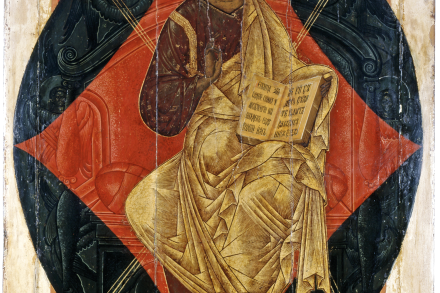
The long neglected art of Byzantium and early Christianity is returning to the world’s museums. Last November, the Louvre confirmed plans for a 3,000 square metre department dedicated to the Byzantine legacy and more than 20,000 works from Ethiopia to Russia that are currently scattered across the museum’s cabinets. Having been initially shelved a decade ago, this monumental undertaking is scheduled to open in 2027, signifying a pivotal moment for the Christian arts of the Eastern Roman Empire to become a serious curatorial subject in European museums once again. (A precursor to the new department established in 1954 lasted but 15 years.) Byzantine art has been the subject of serious study in universities only since the 1940s.

Of partisan razors and Byzantine bakers

Last week, conservative media company the Daily Wire announced it would begin selling shaving supplies under the brand name Jeremy’s Razors. Why is a media company selling razors? Because Harry’s Razors, a longtime Daily Wire sponsor, recently dropped the partnership due to “misaligned values.” In the launch video for Jeremy’s Razors, Daily Wire co-CEO Jeremy Boreing mocked the woke razor companies with which he plans to compete. “[Michael Knowles] went and said that boys are boys and girls are girls, and that was just too much for Harry's,” Boreing said. “And it's not just Harry's, either. Gillette razors used to be the best a man could get. Then they decided that men are too toxic, unless you're the kind of man who teaches his daughter to shave her beard.

Has nostalgia become the Greeks’ national disease?

From our UK edition

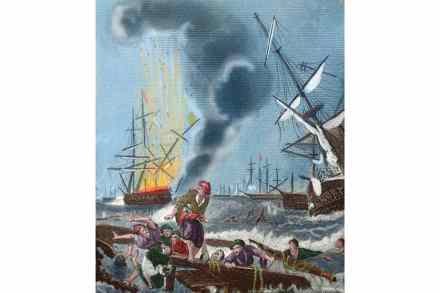
Imagine a new take on the Greek myth of Pygmalion. A love-shy artist makes a woman out of marble who is so beautiful that he falls for her and prays that she will come to life. For a moment he thinks his wish will be granted, but it is only his imagination. Now, in his sadness, he feels as if he himself is turning to stone. This, in a sense, has been the story of the Greek nation since, two centuries ago, a gang of brigands and diplomats took up arms to breathe life into the Parthenon marbles and revive the glory that was Greece. Thus began the phenomenally bloody Greek War of Independence, which brought an end to the centuries-long Ottoman occupation. Yet even at the start, the dream was as chaotic as its realisation.