Business

Why does Netflix never show us business heroes?

God bless Netflix: I’ve just watched all 28 episodes of Foyle’s War, the 1940s detective series set in Hastings and London that first aired on ITV more than 20 years ago. Pedants may have spotted minor anachronisms or been irritated by London scenes filmed in Dublin, presumably for tax breaks. But for me, the whole oeuvre – Spitfires, ration books, moustaches and all – stands as a monument of meticulous and compelling period drama. And as an amateur actor who always struggles to keep a straight face on stage, I’m in awe of Michael Kitchen’s gift of expressing Detective Chief Inspector Foyle’s moral outrage and inner pain by the tiniest

Should a two-bedroom flat worth £2m be called a ‘mansion’? 

Many mansions Does a two-bedroom flat worth £2 million deserve to be called a ‘mansion’? — The word ‘mansion’ is borrowed from the old French mansion, which means any old house. And so it was in English until the 18th century. It also had associations with a home lived in by a priest. — The first instance of ‘mansion’ being used specifically for a grand home was in 1512, according to the OED. In 1865, the word was being applied to lodging houses in Brighton, while the Westminster Gazette in 1893 defined it as a house with a back staircase. By 1901 blocks of flats in London were being called

Why does the Latin mass prevail?

The Pope is visiting Lebanon and Turkey. Will anyone be raising the vexed question of the Latin mass and sacraments with him and asking him exactly why it is so vexed? Though Jesus spoke Aramaic, the New Testament first appeared in Greek in the 1st century ad because that was the common language of the Mediterranean. It remained the language of the liturgy until Pope Damasus I (d. ad 384) invited St Jerome to translate the whole Bible into Latin (the Vulgate: vulgatus, ‘widely used, common’). The Roman empire collapsed in the 5th century ad and local languages started replacing Latin, but the Roman liturgy remained standard in western Europe.

Singapore’s future is in capable hands

I was in Singapore last week, a city that hums with energy. It feels efficient, cosmopolitan and yet personal – if you know where to look. My schedule was packed, but in the best way. First stop: Jamie Dimon, JPMorgan’s chair and CEO, in conversation about the state of the world. Jamie was vintage Jamie – articulate, forthright, refreshingly unscripted. In a world drowning in platitudes, his candour was invigorating. He spoke about resilience and leadership that doesn’t flinch when the winds change. Focus on the mindset, not just the markets, he said. Then came the Bloomberg New Economy Forum. I sat on a panel about global debt sustainability, a

Georgia Toffolo: In defence of my husband James Watt

Rough justice Sir: The Church Commissioners’ plan to establish a £100 million (rising to £1 billion) fund for ‘reparative justice’ is indeed ‘the most egregious example of lanyard Anglicanism’ as your leading article says (‘Laud’s prayer’, 11 October). It is deeply flawed in conception, substance and process – and is especially ill-judged when parish clergy are atrociously paid and many parishes face an existential crisis. The critique made by the Policy Exchange paper ‘The Case Against Reparations’, written by Professor Lord Biggar, Dr Alka Sehgal Cuthbert and me, is reasonably well known. What is less appreciated is that since at least May last year, the Commissioners have known they have

How could the Co-op be so insensitive to Jewish shoppers?

Between news bulletins of the Manchester synagogue attack last week, I popped into my local Co-op for some groceries. When the public address system said something indistinct about ‘solidarity’, I paused to listen: it was an advert for Sun & Stone lager, produced in Scotland in collaboration with Taybeh, a Palestinian microbrewery, and with a slice of any profits going to the Disaster Emergency Committee’s Gaza appeal. The Co-op is a benign beacon of alternative capitalism, owned by its members and valued by millions of customers. At their annual meeting in June, those members voted to ‘cease all trading with Israel’, as the Co-op has also done with the likes

Bring on the robot-run railways!

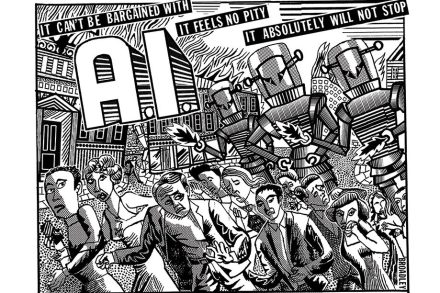
I awoke on Sunday to what felt like a Brave New World moment: Radio 4’s news-reader reciting an unedited Downing Street script for Donald Trump’s visit, about US financial firms (mostly Citigroup, in fact) agreeing to invest £1.2 billion over here to create 1,800 jobs. Or some such propaganda, the Financial Times having already set the tone with ‘Rush for deals ahead of Trump trip – tech, nuclear and whisky on table’. As the President packed his best leisurewear for Windsor Castle, news followed of £5 billion from Google for UK-based AI services; and finally, even bigger bucks from Microsoft. All to the good if pledges turn into realities and

How private equity ruined Britain

What has happened to Britain’s rivers isn’t a mistake. The fact that serious pollution is up 60 per cent on the year, or that only one in seven rivers can be called ecologically healthy, is the result of corporate tactics. It is effluent from the murky world of private equity. Some 2.5 million people in the UK now work for a business that is ultimately owned by private equity. Since the 2008 financial crisis, Britain has become a prime target for takeovers, driven by low company valuations, favourable exchange rates and a pliable regulatory environment. Everything from Bella Italia to the Blackpool Tower, Travelodge to Legoland, the AA to Zizzi,

A new water regime must still reward private investors

The weekend’s torrential Yorkshire rain amid a hosepipe ban offered a handy metaphor for the chaos that has befallen the privatised UK water industry. Sir Jon Cunliffe’s Independent Water Commission report – aiming for a ‘fundamental reset’ to restore public confidence, clean our waterways and ensure future supply – is welcome for the clarity of its central conclusion: that unfit-for-purpose Ofwat and a jumble of other regulators should be replaced by a single body with more teeth and comprehensive oversight of the sector. So far, so good. Cunliffe – a veteran of the Treasury, the Bank of England and Brussels – can also be applauded for his bureaucratic cunning in

Why wealth taxes don’t work

The nation owes the former Labour leader Neil Kinnock an eternal debt for losing the 1992 general election when he was clear favourite to win it, thereby sparing us whatever socialist folly he might have brought to Downing Street. I salute him again for popping up to propose a 2 per cent wealth tax on fortunes above £10 million that might raise a supposed £11 billion for the hard-pressed Chancellor – thereby bringing into sharp focus the vague threat that several cabinet ministers have studiously refused to rule out. Pressure is building on Rachel Reeves from backbenchers, unions and anti-poverty campaign groups to mount a raid on the rich in

Don’t compensate drivers for mis-sold car loans

Surprisingly big numbers are the theme of this week’s column, several having flashed up to disturb the pleasures of a summer season of parties, music and sport. The first is the 69,000 tally of jobs shed in the UK hospitality industry since the increase in employer’s national insurance contributions in October’s Budget – the most destructive legislative measure for business in recent memory, except perhaps for the Employment Rights Bill that’s expected to receive Royal Assent before parliament’s recess this month. The UKHospitality trade association thinks losses could rise to between 150,000 and 200,000 by the autumn, as 70 per cent of member businesses cut more staff and pub closures

I’ve become a slave to my Airbnb star rating

‘Right, we’re going to book into Pauline’s B&B and give her a four-star rating and that will drop her down from a perfect five,’ I said, in a state of utter lunacy. We were sitting in front of the fire at the end of a rainy West Cork day during which another difficult customer had rated us four stars, which should not be terminal but is, because of the way Airbnb plunges your overall rating the second one guest doesn’t rate you five stars. I was so upset at our latest downgrading that I was comparing myself with other B&B listings in the area with a perfect five, and had

Mark Carney, the mischief-making pin-up

Well, would you look at Mark Carney. Just three months ago I described the incoming prime minister of Canada and former governor of the Bank of England as ‘a fish-out-of-water technocrat’ who made little public impact over here and was swiftly forgotten after he left in 2020. When I once came across him hunched and dark-suited in the Pret queue at King’s Cross, midway through his Bank tenure, I actually felt sorry for him. But here he is, beer-swigging in an Ottawa bar with Sir Keir Starmer; cutting Donald Trump short in a press call before the G7 meeting; shedding his eco-credentials to champion Canadian oil and gas; and generally

It’s time to get rid of the Rich List

Here’s a takeover tale that captures the zeitgeist. It involves two FTSE 250 companies and some deep-pocketed US investors – and I’ll explain it as simply as I can. In essence, how would you feel if your GP surgery fell into the hands of American investors associated with the book title Barbarians at the Gate? The first of the two London-listed companies is Assura, which owns 600 NHS surgeries and diagnostic facilities and has accepted a cash offer of £1.6 billion from a pair of New York investment giants. They are Stone-peak, which holds a huge global portfolio of infrastructure assets, and Kohlberg Kravis Roberts, whose initials KKR may be

If the numbers add up, Shell should bid for BP

A hangar full of analysts and investment bankers must have spent the long weekend formulating advice for Shell chief executive Wael Sawan for and against a takeover of BP. On the plus side, Shell’s strong share performance, reflecting its undiluted focus on oil and gas and boosting its market value to £150 billion, makes a bid look almost bite-sized – BP’s value having shrunk to £56 billion over the past two years as investors decried the commitment to renewables that its board has belatedly reversed. And the addition of BP’s assets in North America and the Gulf of Mexico would turn Shell into a carbon-fuel giant to challenge the likes

Save London’s black cabs!

Donald Trump’s Soprano-like threat that the ‘termination’ of Federal Reserve chairman Jerome Powell ‘cannot come fast enough’ has been headlined as one of his wildest thrusts to date, but is actually one of his most conventional. Prickly politicians always resent unelected central bankers, though they also see them as useful scapegoats for economic trouble. Liz Truss longed to fire Andrew Bailey from the Bank of England; Gordon Brown gave Eddie George’s Bank its ‘independence’ but took away so much of its power that George nearly resigned; Margaret Thatcher never accepted the most potent modern governor, Gordon Richardson, as ‘one of us’. Trump’s predecessors took fewer potshots at the Fed because

Why the restaurant world hates beer drinkers

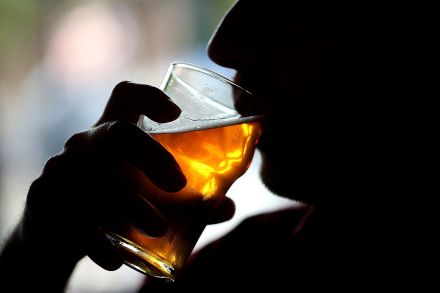
I’ve always thought working in hospitality is like getting a free MBA – but one rooted in the real world rather than theory. So it didn’t surprise me to discover a brilliant business idea in a book about the restaurant trade. In Unreasonable Hospitality: The Remarkable Power of Giving People More Than They Expect, star restaurateur Will Guidara describes his quest to take Manhattan’s Eleven Madison Park from number 50 in the San Pellegrino restaurant rankings in 2010 to the number one spot in 2017. To check out the competition, Guidara takes a group of employees to the top restaurant on the list. Unsurprisingly, the experience is superb, and his

UK tax on US tech is a useful bargaining chip

The Digital Services Tax (DST) is a relatively easy bargaining chip to give away in a last-ditch bid to appease Donald Trump, whose final menu of tariffs on UK exports to the US is expected imminently. First tabled by Philip Hammond as chancellor in 2018 and enacted by his successor, Sajid Javid, two years later, this 2 per cent levy on tech multinationals with more than £25 million of UK digital revenues was always seen as a raid on the likes of Apple, Amazon, Netflix, Google, Meta and Microsoft,  though it must by now also catch Shein and other Chinese operators – and was always a provocation to the White

Where have all the new businesses gone?

The Chancellor’s appeal to regulators last month for suggestions to boost growth was mocked as evidence that the government itself is hopelessly bereft of ideas. Might as well ask traffic wardens to devise urban regeneration schemes, we scoffed, or food safety inspectors to plan state banquets. But it made sense to the extent that smarter regulation really should have the potential to boost economic activity – and there are signs the message has got through. Bank of England governor Andrew Bailey speaks of using Brexit freedoms to shield smaller UK banks from ‘Basel rules’ that would require them to hold larger reserves. The Financial Conduct Authority chief Nikhil Rathi has

Rachel Reeves owes Brompton bikes an apology

I long to write less about Rachel Reeves and more about world-beating British businesses – such as Brompton, the folding bicycle maker whose fortunes I have followed since I bought the product and interviewed the founder-designer, Andrew Ritchie, 20 years ago. The latest Brompton news was that profits collapsed from £11 million in 2023 to breakeven for the year to March 2024 in the teeth of a post-pandemic demand slump; and that additional hiring has been put on hold after Labour’s NI increase added ‘hundreds of thousands of pounds’ of extra costs. A move from cramped west London premises to a new base at Ashford in Kent, with room for