British Conservative Party

Liz Truss’s American book tour

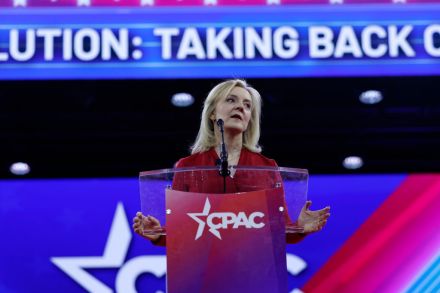
National Harbor, Maryland I’ve been visiting the United States for many years, but 2024 was my first time at the Conservative Political Action Conference in Maryland, where I spoke on the main stage, complete with American-style big hair. Compared to political events in the United Kingdom, people at CPAC take things to a whole new level: where else could you have a debate about the Constitution with a woman in a Statue of Liberty costume? Or meet a family of five in matching sweaters that each bear a letter to spell out “TRUMP?” The enthusiasm for the cause was infectious. And few speakers were more dazzling than the newly installed Argentinean president Javier Milei. I confess to bagging a front-row seat for his address.
CPAC

The liberal-conservative tug of war for the GOP

For the last thirty years, the Republican Party has been a battleground between two competing ideologies. One of these is fundamentally liberal, although it is packaged and sold under a variety of brand names: “compassionate conservatism,” neoconservatism, classical liberalism, and — most misleadingly — Reagan conservatism. The other ideology is a rejection of modern liberalism and the post-Cold War elite consensus in American politics. It is skeptical of free trade, large-scale immigration and US involvement in foreign conflicts. Pat Buchanan and Donald Trump are the primary representatives of this view, which is often called populist or nationalist. The two sides are not evenly matched.

liberal-conservative

The inevitable Boris Johnson

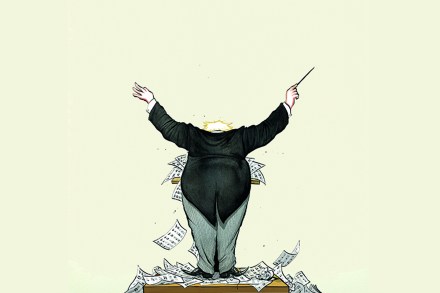
London, England When I checked the date that Boris Johnson resigned as prime minister, I thought it must have been wrong. July? The psychodrama that ensued felt as if it had been going on for years. If Boris’s tenure was the main show, Liz Truss’s stint as Britain's shortest-serving PM was the slapdash encore that no one asked for. You know, when the music restarts as you’re eyeing up a taxi home and secretly thinking the act needn’t have bothered. Boris’s downfall, the real one — not the multiple wobbles — began with Partygate. A steady drip of salacious stories for months, each one getting slightly more unforgivable, recounting incidences of Boris and members of his government breaching the strict lockdown rules he himself had set in place.

boris johnson right neoliberalism

How nice it must be to sack incompetent leaders

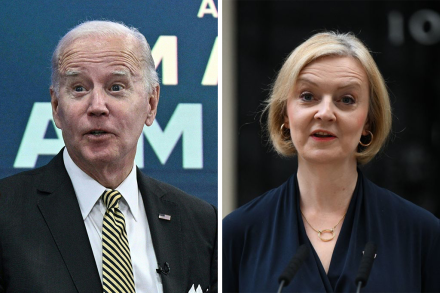
Liz Truss has resigned after only forty-five days in office, the shortest serving prime minister in British history. She's long come off as a stubborn and prideful figure, stuffed with confidence even if she doesn't express it well. It must have taken a momentous behind-the-scenes rebellion to convince her to go — and surely that's what happened. The past couple of weeks in British politics have been nothing short of mesmerizing. We Americans now understand how the rest of the world must have felt gawking at us for five years.

Is Britain really ‘on the brink?’

There’s a macabre joke in Britain these days that my friends and family also play. We compete to see who has had to wait the longest for medical treatment. It starts relatively innocuously. People talk of the ordinary things: like having to wait days to get an appointment with a doctor. They call up in the morning at 8 a.m., only to be told that all of the slots are gone. Best of luck tomorrow. Then someone will say that they’re waiting for minor surgery. Perhaps a small corrective procedure. It was put off first for the pandemic, and now is lost amid a sea of backlogged work. They wonder if someone has lost their details in the slush. Normally I win, although not always. My old general practitioner retired before the pandemic, and his practice was transferred over to another doctor.