Brexit

Watch: Vote Leave’s Dom Cummings is grilled by Andrew Tyrie – ‘this sounds like Aladdin’s cave to me’

From our UK edition

Popcorn at the ready! Today Vote Leave's Dominic Cummings has been hauled before the Treasury committee to answer questions on 'the economic and financial costs and benefits of UK's EU membership'. To begin this, Cummings -- who has been described by former colleagues as a Tory Che Guevara -- was grilled by the committee's chair Andrew Tyrie. The tone was set from the start: DC: “I’ve got another meeting at four, so I’ll have to be out of here before that.” AT: “I don’t think you’ve got the hang of these proceedings. We ask the questions and you stay and answer them.” DC: “I’m just telling you when I’ll be leaving.” AT: “In that case you’ll be recalled.” DC: “Fine by me.

Brexit forecasting is futile – and both sides should just admit it

From our UK edition

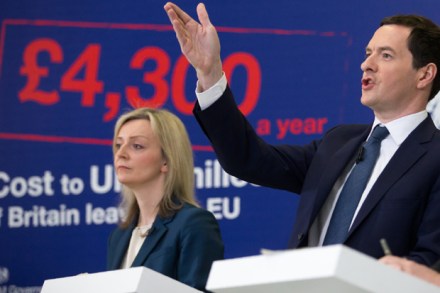
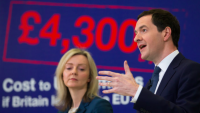
The most striking thing about the Treasury’s forecast of the impact of Brexit is the relative modesty of its claim that by 2030, assuming a UK-EU trade deal akin to the one negotiated by Canada, ‘our GDP would be 6.2 per cent lower’ while ‘families would be £4,300 worse off’. Since those quotes come from the foreword signed by George Osborne, many voters will distrust the whole document — in which case they might prefer the even more modest ‘worst case’ of a 2.2 per cent GDP hit by 2030 predicted by non-partisan think-tank Open Europe alongside what it calls ‘a far more realistic’ range of possible outcomes ‘between a 0.8 per cent permanent loss to GDP… and a 0.6 per cent permanent gain’.

Mark Carney wades into Brexit debate again

From our UK edition

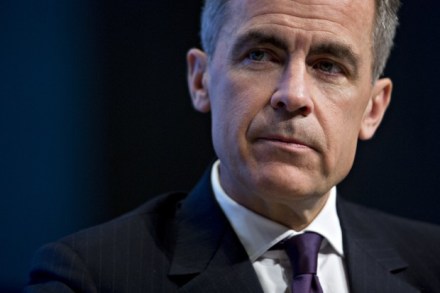
Whatever might be said about the Governor of the Bank of England, it's hard to fault his persistence. Mark Carney has made a habit of wading into the debate surrounding the EU referendum. And based on his appearance in front of the Lords Economic Affairs Committee this afternoon, he isn't planning on stopping any time soon. Carney repeated the MPC's warnings about the 'threats' from the forthcoming referendum being 'the most significant near-term domestic risk to financial stability'.

Today in audio: Gove’s case for Brexit

From our UK edition

Michael Gove has been making his case for Brexit and doing his best to knock the stuffing out of the 'remain' campaign. He started the day on the Today programme, spelling out why he thought Britain was best off outside the EU. In his pitch to the nation, he said: 'I want us to vote to leave the European Union before it's too late, because that's the safer choice for Britain. If we vote to stay, we're not settling for a secure status quo, we're voting to be hostages, locked in the back of the car, driven headlong towards deeper EU integration.' The Justice Secretary then gave a speech later in the day in which he put forward in greater detail why he thought the opposite side in the EU debate are treating the electorate like children.

Did Stephen King write the In campaign’s script?

From our UK edition

One of the most striking things about the debate on Britain’s future relationship with Europe is that the case for staying is couched overwhelmingly in negative and pessimistic terms, while the case for leaving is positive and optimistic. Those of us who want to Leave believe Britain’s best days lie ahead, that our country has tremendous untapped potential which independence would unleash and our institutions, values and people would make an even more positive difference to the world if we’re unshackled from the past.

The danger of Michael Gove’s vague optimism

From our UK edition

After yesterday’s furore over Treasury warnings about exactly what Brexit will cost British families, today it’s Michael Gove’s turn to hit back. The Justice Secretary is set to accuse the Government of ‘treating voters like children who can be frightened into obedience’. It’s extraordinary just how quickly the war of words seems to be intensifying, given that there are still more than nine weeks to go until the actual referendum. But is there a danger that all this noise is just going to switch off voters to the actual arguments being made? Michael Gove did his best this morning to make a clear-cut case for ditching the EU after being given three minutes on the Today programme to argue for Brexit.

Today in audio: Osborne slammed over ‘absurd’ Brexit warning

From our UK edition

George Osborne's warning over what Brexit will cost the UK economy has dominated the headlines for much of the day. But how have the Treasury figures gone down in Westminster? Based on the number of Tory MPs queuing up to slam the Chancellor's claims, it would seem not very well at all: Kwasi Kwarteng said he thought the figures were 'absurd'. He attacked the Treasury as an organisation not qualified to make predictions about economic outcomes following its failure to predict the 2008 credit crunch: John Redwood also used the same word to describe his disdain for the warning that Brexit would cost British families £4,300. He said the predictions for what will happen in 2030 were 'completely worthless'.

The Coffee House podcast: George Osborne’s Brexit warning

From our UK edition

George Osborne has warned today that Brexit will cost each household in the UK around £4,500. The Chancellor also said leaving the EU would make Britain 'permanently poorer'. But is there any truth in Osborne's claims? In this Spectator Coffee House podcast, Fraser Nelson joins Isabel Hardman and James Forsyth to discuss the figures and whether the numbers add up. Speaking on the podcast, Isabel Hardman says the Treasury report shows a change in argument by the Government in making the case for staying in the EU: 'The really interesting thing about this is that George Osborne is doing this at all. He and his Tory colleagues at the start of this year thought that the EU referendum campaign would be about security and talking about the threat to Britain's national security of Brexit.

The deceptions behind George Osborne’s Brexit report

From our UK edition

Sometimes, George Osborne’s dishonesty is simply breathtaking. Let's set aside the way he has positioned himself over the years (if he believed that leaving the European Union ‘would be the most extraordinary self-inflicted wound’ he might have told us – and his constituents – earlier, rather than proceeding with the farce of renegotiation). But it’s his maths, today, which shames his office – and his use of this maths to make the entirely false suggestion that the Treasury thinks Brexit would make you £4,300 worse off. For anyone who cares about honesty in politics, and the abuse (and reporting) of statistics, this is an interesting case study. His chosen date is 2030.

Watch: Tristram Hunt feels the heat over the EU on Sunday Politics

From our UK edition

With the outcome of the EU referendum predicted to be on a 'knife edge', there are growing concerns that David Cameron may have misplayed his hand. So, in order for the Remain camp to reclaim a lead in the polls, they need some solid media performances from names the public can trust. Alas, they may soon come to regret Tristram Hunt's appearance on yesterday's Sunday Politics. During a tense exchange with Andrew Neil, Hunt struggled to rebut Neil's questions on immigration, going on to accuse the BBC presenter of offering up his own version of 'project fear'. TH: In the long run, I think there is a really interesting question about the degree of free movement of people across the European Union, but my point is that Britain should be a part of that conversation.

Belgian expat trolls Vote Leave campaign

From our UK edition

It's been a good week for Vote Leave after they were given the official designation to campaign for Brexit in the EU referendum. Despite this, they still have a few problems they need to overcome. One of these comes in the form of Rick Astley, the eighties singer. A Belgian expat by the name of Mario Van Poppel has decided to try and cause some problems for the Leave camp's digital operations. Van Poppel -- who is based in London -- has purchased several Vote Leave domains. While the official Vote Leave website can be found at www.voteleavetakecontrol.org, a visit to voteleave.com, voteleave.co.uk, voteleave.net or voteleave.org now leads to a video of Rick Astley singing 'Never Gonna Give You Up'. https://twitter.

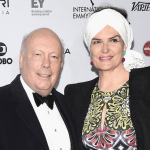
Julian Fellowes on the celebrities who ought to ‘put a sock in it’

From our UK edition

Ahead of the upcoming EU referendum, Julian Fellowes used an appearance on Question Time to put forward the case for Brexit, before giving an interview on the topic to the Mail on Sunday. Now, however, the Tory peer has decided to take a backseat after growing tired of famous people telling the public what to do. Giving a talk at The Berkeley as part of London Book and Screen Week, the Downton Abbey writer says that when celebrities tell people what to think, he thinks they ought to 'put a sock in it': 'I'm very much in favour of Brexit, I think it's a great opportunity and I think if we miss it our children and grandchildren will wonder why.

Why Obama’s Brexit intervention will matter whether we like it or not

From our UK edition

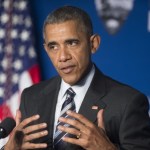
It now looks likely that Barack Obama’s visit to London next week will see the President calling on Britain to stay in the EU. We’re told that Obama will be giving his views as a ‘friend’ and only if he’s asked about Brexit. Nothing sounds more patronising. And as Jacob Rees-Mogg has said, why should we listen to a President who hasn’t been very good? But the truth is that, whether we like it or not, Obama’s intervention could be key. Whatever many think of the President and the collective failures and disappointments of his time in office, Obama is still loved amongst the group of younger voters in Britain who could swing the EU referendum for the remain campaign.

The Bank of England should butt out of the Brexit debate

From our UK edition

Unelected. Technocratic. Exercising a great deal of power over people's lives, without much in the way of accountability. Staffed by well-meaning, over-educated experts, big on theories and short on experience, and run by a smooth globe-trotting boss who is immaculately plugged into the Davos set. It is not hard to see why the Bank of England, especially under its Canadian Governor Mark Carney, is instinctively pro-EU. It looks across to Brussels and sees an institution very like itself. So it is no great surprise to see the Bank making subtle, and not so subtle, warnings, about the risks of the upcoming referendum. It was at it again today. Its decision to leave interest rates on hold was no great surprise – after seven years at 0.

Just join Germany

From our UK edition

An argument you sometimes hear from those sitting on the Brence (the Brexit fence) is that it’s a pity the EU couldn’t have stayed the same as it was when we first joined it in 1973. Back then, say the Brence-sitters, it was a trading bloc with only nine members, which made sense. Greece wasn’t a member, nor were Spain and Portugal, never mind Lithuania, Latvia and all those other countries ending in vowels. But if we could go back to that better arrangement — play fantasy politics, as it were — would we, with hindsight, want it to include France and Italy, two of the original nine? Their economies are both now looking pretty rackety. In fact, isn’t there only one country in Europe with which we would want to be BFF (Best Friends Forever)?

Cameron’s plan for a graceful exit all hinges on the referendum

From our UK edition

The year 2019 seems a long way away. Whether or not David Cameron can stay in office until then is this week’s hot topic of conversation among Tories. They wonder how many more weeks like the last two the Prime Minister can endure. Before Parliament broke up for Easter, the view among Cameron loyalists was that the Tory party needed a holiday. The thinking went that the recess would remove MPs from the Westminster pressure cooker and let referendum tempers cool. But this break turned out to be a disaster. The government spent the first week trying to get on top of the Port Talbot steel story and the second attempting to fend off the fallout from the Panama papers.

Tarot reading

From our UK edition

It’s 8.57 on a Friday evening and I’m at home, waiting for an obscure American radio talk show to come online. For the next hour I’ll be answering listeners’ love queries with the aid of my Tarot-reading skills, and out of respect to all the lovesick Americans out there I’ve made a real effort to stay sober. Which is quite an achievement because, downstairs, my friends are slugging it out over the EU referendum. Nobody understands what they’re talking about, as usual, but I’m feeling left out. So I lay three cards on the table and ask the Tarot: ‘Who’s going to win?’ Do read on… The radio show’s a one-off. Normally, I sit in a darkened booth somewhere in Chelsea and wait for punters to walk in off the street.

Could the IMF’s Brexit warning swing it for Remain?

From our UK edition

The IMF has published one of the starkest warnings so far against Brexit from an organisation based outside of Britain. The latest set of figures from the International Monetary Fund predict that there will be a 0.3 percentage point dip in Britain’s growth forecast this year, as a result of the referendum. And the IMF warned that if Britain did vote to leave the EU, it could lead to ‘severe regional and global damage’. Both sides have used the statement to exchange in the latest round of tit-for-tat. George Osborne has said ‘for the first time, we’re seeing the direct impact on our economy of the risks of leaving the EU.