Brexit

Wild life | 19 May 2016

From our UK edition

   Nairobi The gangsters hadn’t heard of Brexit. ‘What is this “Breaks it”?’ they asked my friend hours after kidnapping him at gunpoint. At dusk my mate had been driving in Nairobi, with the Wings song ‘Band on the Run’ playing. He pulled over to answer his mobile when a man appeared at his side with a pistol. After letting him and two others get in, my friend was directed to an insalubrious Nairobi postcode, frogmarched up five floors and then beaten on the arms and knees with a golf putter. Big Gangster emptied his pockets and went carefully through his iPhone emails, messages and contacts list. ‘They got to know where I worked, where I lived, everything.

Brexit: the-stab-in-the-back myth is coming

From our UK edition

I don’t know if 'Leave' supporters will win. With the young abstaining and the old voting in a low-turnout referendum, it is just about possible that they could. But it is already dismally clear how they will react if they lose: they won’t accept the result. Nigel Farage was proud to admit that he would be a bad loser. 'In a 52-48 referendum this would be unfinished business by a long way,' he told the Mirror. 'If the Remain campaign win two-thirds to one-third that ends it.' The old-fashioned among you might have thought that in any electoral contest the side with the most votes wins. How out of touch you fuddy-duddies are.  It is not enough to win a majority of the vote anymore.

Tory MPs get physical over the EU referendum

From our UK edition

Although it was already evident to many that relations in the Tory party are far from rosy thanks to the upcoming EU referendum, it seems tensions are higher than anyone first anticipated. In today's edition of The Times, Rachel Sylvester's column -- titled 'The Tories need a new breed of modernisers' -- includes a curious anecdote. Sylvester says that one Brexit-backing Tory MP attempted to trip up a minister in the members' lobby in frustration after the minister plumped for In: 'Some are almost literally coming to blows: one minister says a Brexiteer tried to trip him up in the members’ lobby of the Commons after he announced he would be backing Remain.' Let's hope Cameron gets a grip on his party before any physical casualties emerge.

Today’s inflation figures tell us nothing about Brexit. Why does the Treasury pretend otherwise?

From our UK edition

We’re now at the stage in the EU referendum debate where every announcement is explained in terms of its relationship to Brexit - whether relevant of not. So today we learn that inflation is still flat, dropping to 0.3pc in April. As per usual. But bizarrely, the Treasury is pretending that this tell us about the misery coming our way if Britain walks away from Europe. Here’s what a Treasury spokesman had to say about the figures: ‘Today’s inflation figure continues the trend we’ve seen over the past year. Pay is growing faster than prices, boosting families’ spending power.

The Brexiteers have brought romance back into politics

From our UK edition

I recently got round to reading Francis Fukuyama’s famous book The End of History and the Last Man. As well as heralding the triumph of liberal democracy, he explains that a snake will always lurk in the garden, for human nature is not entirely won over by the gospel of equality. He introduces us to the term megalothymia, the desire to distinguish oneself from the rest, be the best. It’s expressed in capitalism, sport and other cultural pursuits. It is also likely to be expressed in politics: leaders will probably emerge who don’t have any new ideology, but want to rock the liberal democratic boat. They are motivated by a sort of primitive lust for adventure.

Merkel says Brexit would bring “instability” to Europe. A bit like her migrant crisis

From our UK edition

Each week before June 23, I would like to nominate a ridiculous comment of the week. With the amount of folk around claiming that Britain’s exit from the EU would herald World War III, pestilence, famine and every other horseman of the apocalypse, there is no shortage of candidates. At the beginning of last week I rather assumed that David Cameron would win for attempting to posthumously recruit the British dead of Two World Wars to  the cause of the EU, claiming that the fallen had laid down their lives solely in order that Britain should not to be sovereign.  But then the PM’s predecessor, Gordon Brown, stepped up in the middle of the week and pronounced that voting to ‘Leave’ the EU would be ‘not British’.

The Spectator podcast: Boris needs you! | 14 May 2016

From our UK edition

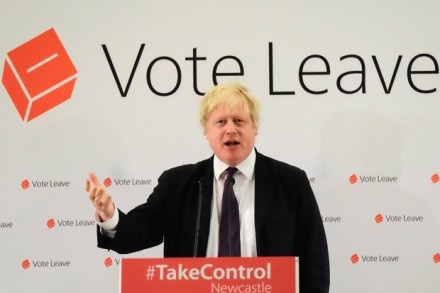
To subscribe to The Spectator’s weekly podcast, for free, visit the iTunes store or click here for our RSS feed. Alternatively, you can follow us on SoundCloud. Boris Johnson has kickstarted his battle bus tour of Britain which he hopes will convince people to vote out of the EU. But before he hit the road, he made a direct pitch to Spectator readers in an exclusive interview. The former mayor of London set out his Brexit battle lines, as he spoke to James Forsyth and Fraser Nelson, saying: ‘It is unquestionably true that I’ve changed. But so has the EU. And of the two of us, it’s the EU that has changed more than me.’ Speaking on the podcast, James Forsyth tells Isabel Hardman that: ‘He knows that he is in the fight of his political life.

Liam Fox is wrong to suggest that the EU controls the Foreign Office

From our UK edition

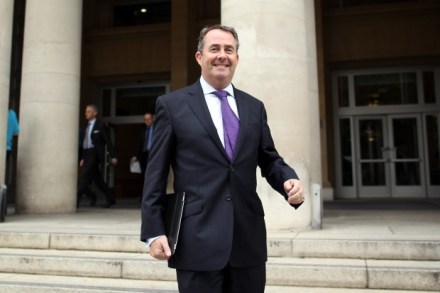
Former Defence Secretary Dr Liam Fox told an audience at the Royal United Services Institute last week that the Foreign Office had been reduced to "little more than the EU embassy in Whitehall". He is not the first person to accuse the FCO of promoting the interests of foreigners above those of Britain. But his analysis is way off target. Full disclosure: I am a recovering diplomat. I know the Foreign Office's shortcomings – including its tendency to sit on the fence in a crisis until it is too late; and its habit (now changing, at last) of moving staff with expertise to deal with countries in which they are not an expert.

The IMF serves up more Project Fear – and it’s working

From our UK edition

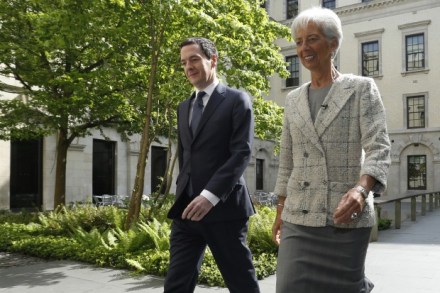
Another day, another warning about the economic bombshell which would follow Brexit. This time it's the turn of the IMF. In a press conference at the Treasury, Christine Lagarde spoke of the outcome of a vote to leave the EU ranging from 'bad to very bad'. Whilst the IMF's report said: 'A vote to leave the EU would create uncertainty about the nature of the UK’s long-term economic relationship with the EU and the rest of the world. A vote for exit would precipitate a protracted period of heightened uncertainty, leading to financial market volatility and a hit to output.' George Osborne was clearly grateful for the support of the IMF in the severity of their warning against Brexit.

Is the Brexit campaign ‘morphing into Ukip’?

From our UK edition

Is the Brexit campaign 'morphing into Ukip'? That's what Sir John Major will say he fears is happening later. In a speech at Oxford University, he'll argue that those calling for Britain to leave the EU are 'fuelling prejudice on immigration'. He'll also say that: 'As the leave arguments implode one by one, some of the Brexit leaders morph into Ukip and turn to their default position - immigration. I urge them to take care, this is dangerous territory that - if handled carelessly can open up long-term divisions in our society'. So does he have a point? It's definitely credible to see how some elements of the leave camp are focusing their positions around the immigration debate.

Vladimir Nabokov wades into the Brexit debate from the grave

From our UK edition

So far in the Brexit debate, a range of figures -- from David Cameron to David Icke -- have chipped in to offer their two cents' worth. However, no-one was expecting the latest literary figure to enter the discussion. In this week's TLS, a talk by the late Vladimir Nabokov -- given in 1926 -- has been translated into English for the first time. In the talk -- titled 'On Generalities -- the Lolita novelist discusses Europe. Nabokov appears to struggle with the concept of Europe -- concluding that when people utter the word 'Europe' with 'metaphorical, generalizing intonation', he sees 'precisely nothing': 'That is how history is treated.

These heartless Europhile snobs

From our UK edition

One of the interesting features of the Brexit debate is that it has laid bare a schism in British society which runs much deeper than the conventional Labour-Conservative divide. On the one hand, we have the prosperous, educated elite, mainly based in cities and university towns, who are liberal on social issues, pro-immigration, believers in free trade and internationalist in outlook. On the other, we have the white working class, clustered in areas of economic stagnation, particularly seaside towns, who are socially conservative, anti-immigration, suspicious of free trade and staunchly nationalist. This isn’t a perfect summary. Dan Hannan, Boris Johnson and Michael Gove fall more naturally into the first category, whereas Scottish and Welsh nationalists are mainly pro-EU.

What Brexit won’t fix

From our UK edition

The Leave campaign was right to pour scorn on David Cameron’s warning this week that Brexit could threaten Europe’s military stability and lead to war. Boris Johnson mocks the Prime Minister about his prophecy on page 14. If Cameron really believed that Britain leaving the EU could lead to war in Europe, why on earth did he risk having a referendum at all? Why was he suggesting until a few weeks before his negotiations with EU leaders that he would consider voting for Brexit if he didn’t get his way? It’s easy to tease the increasingly shrill alarmism of the Remain campaign. But it is harder to say how exactly leaving the EU would make things better.

Mark Carney isn’t butting out of the Brexit debate any time soon

From our UK edition

The Bank of England isn’t going to butt out of the Brexit debate any time soon it seems. Today’s interest rate decision produced few surprises with the Bank sticking at 0.5%. But the headlines are focusing instead on its warning about the consequences of a vote to leave the EU. The wording about the dangers of Brexit was the starkest yet. The Bank of England said: ‘A vote to leave the EU could materially alter the outlook for output and inflation and therefore the appropriate setting of monetary policy. Households could defer consumption and firms delay investment, lowering labour demand and causing unemployment to rise’ As doomsday scenarios go, excluding the Prime Minister’s warning about World War three, they don’t come much darker than this.

EU immigration hasn’t hurt jobs or wages. Here’s why:

From our UK edition

This morning's national insurance figures have further stoked the debate about immigration, and the extent to which leaving the EU would make a difference. Many British people are concerned that high levels of immigration have hurt their jobs, wages and quality of life. This anxiety is understandable as workers have had a rough ride in recent times. Allowing for inflation, average wages fell by 8 to 10 percent in the six years after the global financial crisis of 2008. Such a sustained fall in pay is unprecedented in British post-war history. Alongside falling wages, immigration from the EU has been soaring. Between 1995 and 2015, the share of EU nationals in the working age population more than tripled from 1.8 per cent to 6.

The Spectator podcast: Boris needs you!

From our UK edition

To subscribe to The Spectator’s weekly podcast, for free, visit the iTunes store or click here for our RSS feed. Alternatively, you can follow us on SoundCloud. Boris Johnson has kickstarted his battle bus tour of Britain which he hopes will convince people to vote out of the EU. But before he hit the road, he made a direct pitch to Spectator readers in an exclusive interview. The former mayor of London set out his Brexit battle lines, as he spoke to James Forsyth and Fraser Nelson, saying: ‘It is unquestionably true that I’ve changed. But so has the EU. And of the two of us, it’s the EU that has changed more than me.’ Speaking on the podcast, James Forsyth tells Isabel Hardman that: 'He knows that he is in the fight of his political life.

Boris needs you!

From our UK edition

Boris Johnson is nodding along as he reads Karl Marx. To be more precise, he is standing in the Spectator boardroom reading a letter that Marx and Engels wrote to this magazine in 1850 complaining about being pursued by Prussian government spies in London. He then admires a picture of the youthful Taki chatting up Joan Collins at a New York nightclub in 1957. When he was editor of this magazine, he called it ‘the best job in London’. But now he says that being mayor of London was even better. Less fun, perhaps, but more fulfilling. After eight years at City Hall, he is turning his mind to what he will do next. As we sit down to lunch, he suggests that since he has so much more time on his hands, perhaps he could write the leading article or proofread some pages.

Have we sacrificed a quarter’s growth to answer the European question?

From our UK edition

Has the shadow of Brexit already cost us a slice of GDP — and if so, is it a blip or an omen? The Office for National Statistics says UK growth was 0.4 per cent in the first quarter of this year, down from 0.6 per cent in last year’s final quarter. And we can’t blame the neighbours, because the eurozone upped its game from 0.3 per cent to a positively breathless 0.6 per cent — with even France trotting in ahead of us at 0.5 per cent. We still look stronger on the jobs front, mind you, with our unemployment rate, at 5.1 per cent, well down on a year ago and at half the rate for the eurozone. And our service sector continues to perform quite well.

Watch: George Osborne grilled about his great deception over Brexit

From our UK edition

The Chancellor gave evidence to the Treasury select committee today, and he was challenged about The Spectator’s analysis of his systematic attempt to mislead over the cost of Brexit. A loss of £4,300 per household, he said: a figure that he fabricated using three tricks. He disguised an increase as a decrease: the Treasury study suggests that GDP would be a 29 per cent bigger in 2030 with Brexit and and 37 per cent bigger with no Brexit. So the choice is between two significant rises. By no stretch of the English language is this a ‘fall.’ Osborne conflated household income with the very different notion of GDP, so he could arrive at a higher (and scarier) figure.