Brexit

Watch: Tim Farron taken to task by furious Brexit voter

From our UK edition

Tim Farron has been doing his best to appeal to Remain voters left fed-up at the outcome of last year's referendum. The only problem? In doing so, he's angered those on the other side of the debate. Today, on a visit to Kidlington, he got his comeuppance as he came face to face with one such voter who was furious at the Lib Dem's Brexit stance. Here's the video: Voter Malcolm Baker confronts Tim Farron pic.twitter.com/PATPWC0yrR — Sam Lister (@sam_lister_) May 3, 2017 Farron did his best to try and calm the man down by saying that he had lots of friends who voted Leave - and that he didn't think they were 'racist'.

Jean-Claude Juncker could learn a thing or two from David Davis

From our UK edition

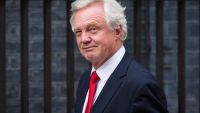
Even David Davis’s loudest critics would concede one thing about the Brexit secretary: he is nothing if not breezily confident. His performance on the media rounds this morning was no exception; and his message following Theresa May’s now-famously frosty Downing Street dinner with Jean-Claude Juncker could not have been clearer: keep calm and carry on - there’s nothing to worry about. Davis dismissed talk in the papers this morning that Theresa May will be sidelined by other EU leaders when thrashing out the terms of the Brexit deal. Instead, the Brexit secretary said that the PM will be front and centre of talks.

Who does Jean-Claude Juncker think he is?

From our UK edition

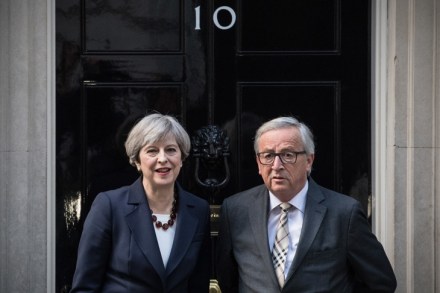
Jean-Claude Juncker: what a nasty piece of work. There aren’t many politicians I’d say that about. Even most of those I disagree with strike me as being pretty decent people. Theresa May might be a petty authoritarian, but she isn’t sinister. Jeremy Corbyn is wrong about everything, and stuck politically and sartorially in 1983, but he seems a nice enough guy. But Juncker — it is still rare that such a noxious character, such a scheming operator, such an arrogant arse, such a jumped-up, poundshop Machiavelli, darkens the corridors of politics. He’s the worst. All of Juncker’s awful traits were on display at the weekend, in the spat over his dinner with May last week.

Would Le Pen or Macron be better for Brexit?

From our UK edition

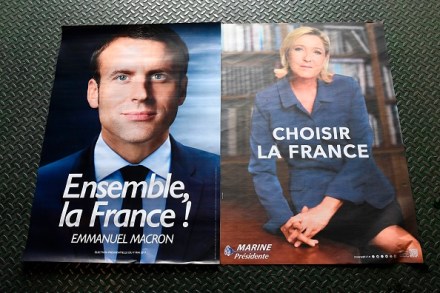
With Emmanuel Macron and Marine Le Pen through to the final in France, people of a conservative disposition might feel themselves spoilt for choice. You can have either the believer in free markets and open societies or the upholder of sovereignty and national identity. In both cases, the left doesn’t get a look-in. But what if it isn’t like that at all? What if Macron, far from opposing the big state, is just a more technocratic version of the usual dirigiste from ENA? What if Le Pen, far from wanting a nation’s genius expressed in its vigorous parliamentary democracy, is just a spokesman for joyless resentment, looking for handouts for angry white people?

Letters | 27 April 2017

From our UK edition

Aid is not the answer Bill Gates says he is a huge fan of capitalism and trade (Save Aid!, 22 April) but then spoils it by repeating the received wisdom about aid: ‘If you care at all about conditions in Africa – the population explosion, measles, polio — then don’t suggest there is a private-sector solution to these problems. It’s outrageous.’ No. It is not outrageous. A vigorous private sector is the only answer to African development. I have spent my life in Africa, working in 18 of its countries, usually deep in the bush. I have watched numerous aid programmes fail once the external funding is removed, and have spent much time thinking about and discussing why this should be so.

A progressive alliance? It’s more a coalition of chaos

From our UK edition

My heart soared when I first heard the phrase ‘progressive alliance’ in this election campaign. Not the reaction you’d expect, perhaps, but any attempt to persuade people to vote tactically on the eve of a general election is doomed to failure. A complete waste of time. I should know because I tried to get a similar venture off the ground three years ago. Mine was a conservative version, obviously. In 2014 I was worried that the split on the right would enable Ed Miliband to become our next prime minister. So I launched a Unite the Right campaign and set about trying to persuade supporters of Ukip and the Tories to vote for which-ever candidate in their constituency was best placed to defeat the Labour candidate. Our slogan was ‘Country Before Party’.

If Keir Starmer is Labour’s great hope the party really is in trouble

From our UK edition

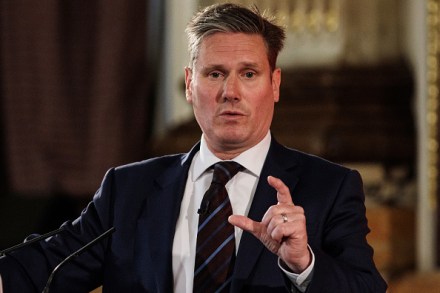
Is Keir Starmer Labour’s great hope? That’s what some longing for the day that Jeremy Corbyn calls it a day have said. The shadow Brexit secretary was centre stage yesterday as he spelled out the party’s plan for leaving the EU. But for those pinning their hopes on Starmer, today’s newspaper editorials make miserable reading. Labour’s plan for Brexit ‘is a joke’, says the Sun, which blasts the shadow Brexit secretary for his ‘waffle and wishful thinking’ yesterday. The paper says that Starmer’s argument that we should return to the negotiating table in Brussels if MPs reject the Brexit deal would give the 'EU licence to play hardball for years’.

Watch: Theresa May’s Brexit blunder

From our UK edition

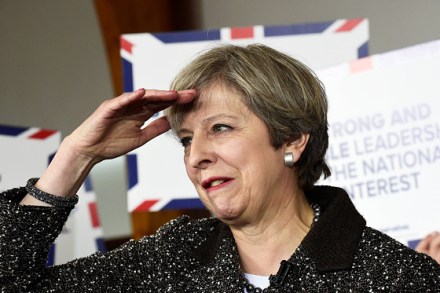
Theresa May is playing it safe during this election cycle and doing her best to leave the blunders to Labour. With the likes of Dawn Butler touring the airwaves, it’s a strategy that appears to be working wonders for the Prime Minister. But even a supposedly safe pair of hands like May isn’t immune to making a mistake. On a campaign trip to Wales today, the PM has been attempting to convince voters to back the Tories ahead of the snap general election. She's also been talking up Britain’s prospects after Brexit. All was going well. Or at least it was until May appeared to suggest that her plan for Brexit would involve Britain leading the world ‘in preventing tourism’.

Labour’s Brexit plan was doomed before Keir Starmer even opened his mouth

From our UK edition

Brexit comes in all shapes and sizes: hard, soft, clean. Today, Labour added a new type: a ‘reckless Tory Brexit’. That’s what Keir Starmer accused the Government of trying to drive through as he detailed Labour’s plan for waving goodbye to the EU. The main purpose of Starmer’s tour of the airwaves was to clear some of the mud out of the water of Labour’s Brexit tonic. To be fair to Starmer, he did manage to offer some clarity: there would be no second referendum under Labour, which puts helpful space between the party and the Lib Dems who have promised voters a second say. Staying in the single market also remained an option that was ‘on the table’ if it was Corbyn doing the deal making in Brussels, according to Starmer.

What does Emmanuel Macron mean for Brexit?

From our UK edition

It was a badly kept secret in Westminster that very senior figures in the UK government wanted Francois Fillon to win the French presidential election. He was regarded as being the best candidate for Britain, and the one most likely to be pragmatic on Brexit. But with Fillon out, attention switches to Macron—the overwhelming favourite. Macron is emotionally and ideologically pro-EU. He has been clear that he doesn’t want a sweetheart deal for Britain. On his campaign visit to London, he talked aggressively about luring businesses to France post-Brexit.

Why Matthew Parris is wrong about a Tory lurch to the right

From our UK edition

Exaggeration is the political pundits' stock in trade: nobody built a loyal readership on equivocation. But Matthew Parris' recent commentary about the Conservative Party's direction under Theresa May borders on the hysterical. A few weeks ago he used his Times column to hyperventilate about a Conservative Party 'paralysed in the headlights of a dangerous surge of reckless populism and in thrall to its own right wing'. Last Saturday, he returned to the theme and wrote of a 'deep, deep shift under way in our party...leaving anyone once attracted to the strong strand of tolerance and moderation we found powerful in the Conservative tradition feeling cowed, discouraged'.

Tony Blair is the messianic Remainer here to save us from ourselves

From our UK edition

Here they come, Tony Blair and his tragic chattering-class army. The former PM, whose rictus grin and glottal stops still haunt the nation’s dreams (well, mine anyway), is on the march with his pleb-allergic mates in business and the media. Blair and the Twitterati, linking arms, united in their horror at the incalculable stupidity of northerners and Welsh people and Essex men and women and other Brexiteers, their aim as clear as it is foul. They’re here to save us from ourselves. ‘Tony Blair is trying to save Britain from itself’, as one report put it. Excuse me while I pop an anti-nausea pill. Yes, Blair, the political version of Michael Myers, the nutter in the Halloween movies who just cannot be slain, is back. Again.

British universities must admit that there are some upsides to Brexit

From our UK edition

Britain’s universities are finding it hard to look on the bright side of Brexit. One of their big gripes is that they feel that foreign students could be put off from coming to the UK. This fits into the narrative that Brexit is an exercise in hauling up the drawbridge. But in reality, the result of the referendum isn’t necessarily bad news for universities – especially ones that hope to attract overseas students. What’s more, Brexit might even encourage rather than put off foreign students from applying here, because the fall in the value of sterling is making the cost of a pricey British degree cheaper for them.

Does Brexit mean England can have Englishness?

From our UK edition

Brexit is often said to be driven by English nationalism. In recent decades England has certainly become a less shy country, made aware of itself thanks to the growth of Scottish and Welsh national consciousness and the banal fact that we now talk about the English NHS, English schools, and so on, in a way that we never used to prior to devolution. Yet on today's English national day I saw not a single flag of St George flying on the train journey from London to Cambridge and back (travelling through Essex, supposedly one of the heartlands of English nationalism). And when I opened my Sunday papers I found no reference to it at all. (Though Jeremy Corbyn did briefly grab the lead item on the BBC News with his suggestion of a national holiday on St George’s day.

This election will be won or lost on the suburban battleground

From our UK edition

In Westminster, all the general election chatter is about Brexit. Will Tory Remainers turn Lib Dem? Will Labour leavers desert Jeremy Corbyn? As polling day draws near, however, the Europe obsession must recede. Politicians may not be able to look past last year’s referendum, but voters will have moved on. MPs will find that, as before, the great issue of our time will be just one of many on the doorsteps. This summer’s battleground won’t be Brussels. It will be suburbia. Domestic matters will decide whether Theresa May returns to Downing Street with a fat majority, and no one is more domesticated than the average suburbanite. We are intensely local. We want good local schools and good local hospitals — we don’t like grand projects like HS2.

We should jump at the chance to pay off the EU in euros

From our UK edition

Thirty billion? Fifty billion? Eighty billion, and we have to cover the cost of Jean-Claude Juncker’s martinis for the next decades, plus pick up the dry cleaning for every member of the European Parliament. The debate over Britain’s final exit bill for leaving the EU looks set to be among the most acrimonious issues as we negotiate our departure. But hold on. The first-class brains over in Brussels have made a slip. They are demanding that all the bills be settled in euros, rather than pounds. And yet they seem to have forgotten that their currency remains uniquely vulnerable to a catastrophic collapse. In fact, Philip Hammond should take that deal – because it might turn out to be very good one for the UK.

Those who want a clear Brexit will need to make sure it is in the manifesto

From our UK edition

Mrs May’s decision to call a snap general election is not very welcome, and I had thought she would think it too risky, but it makes sense — obviously because of Jeremy Corbyn and, a bit less obviously, because of public attitudes to her. She has brilliantly convinced people that she is a straightforward, unpolitical person who doesn’t descend to political games. This is untrue. She is, however, a person without childish vanity, celebrity hunger or media obsession. She benefits from a big cultural change, which descends from Mrs Thatcher, via all sorts of others — Angela Merkel, Ruth Davidson, Nicola Sturgeon. Women are now seen as stronger, more real and less silly than men. This is an old folk wisdom, but it only recently became the orthodoxy in politics.

The real victims of this snap election? The bankers’ wives

From our UK edition

The people I feel most sorry for in the wake of Theresa May’s shock announcement are not moderate Labour MPs, nor even the pollsters, who really will be in trouble if they get another election wrong. No, it’s the bankers’ wives of west London. If the EU is going to be the No.1 issue in the campaign, and the Tories are standing on a pro-Brexit platform, how will the poor dears vote? On the one hand, they were very, very angry about the outcome of the EU referendum and, even today, they’re not above buttonholing leavers at cocktail parties and giving them the hairdryer treatment. They regard David Cameron as criminally negligent —‘How could he let this happen?’ — and Theresa May as a ‘turncoat’.

Expect the unexpected in Theresa May’s pointless poll

From our UK edition

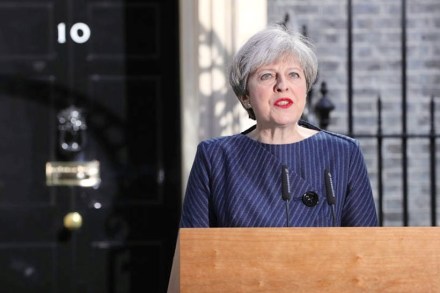
A general election is called and in a matter of hours a neutral and unbiased BBC presenter has likened our Prime Minister to Recep Tayyip Erdogan. Governments rise and governments fall, but some things stay just as they always were. It was Eddie Mair on Radio 4’s PM programme who made the comparison, while interviewing the Home Secretary, Amber Rudd. In fairness to Mair, he had been alluding to Theresa May’s apparent wish to create ‘unity’ within Westminster, a truly stupid statement within an address which sometimes made no semantic sense and sounded, to my ears, petulant and arrogant. Then along came the opinion pollsters to tell us exactly what will happen on 8 June — except they declined to be too explicit.