Brexit

Why do the British have such terrible taste in voices?

From our UK edition

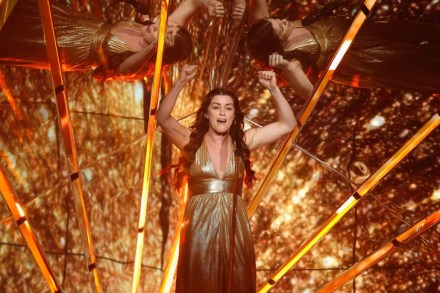
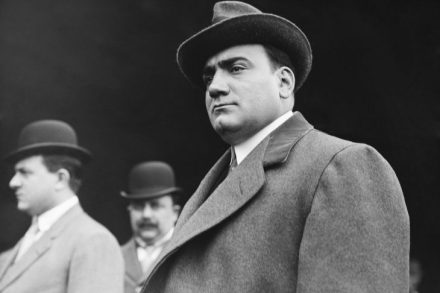
When it comes to voices, the words of the apocryphal Times headline come to mind: ‘Fog in the Channel; Continent cut off’. It’s one sign of the deep cultural differences between ‘us’ and ‘them’, which maybe made Brexit inevitable. You might not think a taste in voices would have any connection with this cultural divide. But for me, an Italian-born and trained soprano, who speaks opera’s mother tongue, it seems blindingly obvious. It strikes me that Brits in general have very different ideas of what an operatic voice should sound like, compared to the Italians, Spanish, French, Germans and also, interestingly enough, the Americans.

Barometer | 11 May 2017

From our UK edition

God forbid Irish police investigated Stephen Fry over a complaint of blasphemy, which is no longer a criminal offence in Britain. — The last prosecution was a private case brought by Mary Whitehouse against Gay News and its editor Denis Lemon over a poem in which a Roman centurion tells of having sex with Jesus after his crucifixion. Gay News was fined £1,000 and Lemon £500; he also received a suspended jail sentence. — The last man in Britain jailed for blasphemy was Bradford trouser salesman John William Gott, who got nine months’ hard labour in 1921 for calling Jesus a circus clown. He died soon after his release. Left-leaning Brexit is a key factor in the coming general election. What percentage of each party’s voters in 2015 voted Leave last June?

Magical thinking isn’t a political position

From our UK edition

I’m due to debate the philosopher A.C. Grayling on Saturday about whether there should be a second EU referendum on the terms of the Brexit deal. It is part of a two-day event being held at Central Hall, Westminster, on ‘Brexit and the political crash’. It is billed as a ‘convention’, an opportunity for all sides in this debate to discuss Britain’s future, but the reference to the ‘political crash’ is a giveaway. Brexit isn’t a revolt against out-of-touch elites or even a new departure that may or may not be good for the country. No, it is a ‘crash’, as in ‘car crash’ or ‘economic crash’. In reality, the ‘convention’ will be a viper’s nest of die-hard Remainiacs.

Farming today

From our UK edition

There are bigger entities landing at your local multiplex this week. An ancient indestructible franchise is re-re-(re-)booted in Alien: Covenant. In Jawbone, it’s seconds out for yet another boxing movie. Miss Sloane is that non-staple of the repertoire, a glossy feminist thriller about public relations. Something there for almost everyone. But there’s also a low-budget British film called The Levelling, which has a very Brexit-y theme — the travails of the farming industry — so let’s pull on our wellies and have a gander. The title alludes to the Somerset Levels, in the news in 2014 when rivers rose to drown the nether parts of southern England. ‘Save our village, dredge the river,’ says a forlorn sign in an inert wintry landscape.

The economy isn’t all roses, but that’s no reason not to vote for Mrs May

From our UK edition

As the election campaign goes into full swing, we hear surprisingly little about the state of the UK economy — because the Tories can’t (and probably don’t need to) promise that they can make it any better in the medium term than it is now, while almost no one takes seriously what Labour has to say about it. The truth is, against the odds and for the time being, that it’s ticking along nicely enough not to be a top concern for most voters. Are we right to be so complacent? After a slowdown in growth to just 0.3 per cent in January to March, most analysts expect a pick-up in the current quarter, and the IMF now agrees with the Budget forecast of 2 per cent for 2017. The construction, services and manufacturing sectors all reported rising activity in April.

Watch: Jeremy Corbyn dodges Brexit question seven times

From our UK edition

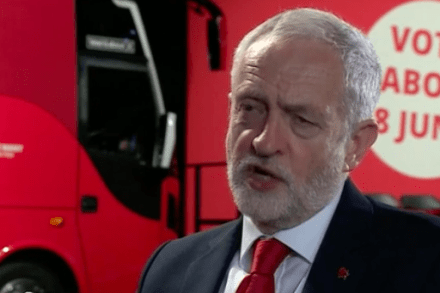
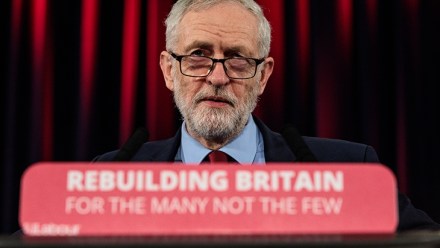
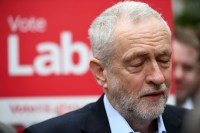
Jeremy Corbyn said this morning that Brexit was ‘settled’. Now, it seems, he isn’t quite so sure. The Labour leader was quizzed repeatedly on whether the UK would definitely leave the EU behind if he becomes Prime Minister on June 9th. Seven times, Corbyn refused to answer. Instead, Corbyn insisted that he would ‘get a good deal from Europe’ - but wouldn't say what would happen if he didn't. Here’s what he told the BBC’s Laura Kuenssberg: LK: ...My question is if you’re prime minister we will leave come hell or high water whatever is on the table at the end of the negotiations? JC: We win the election we’ll get the good deal with Europe.

Tories claim May needs a Macron-style mandate for the Brexit talks

From our UK edition

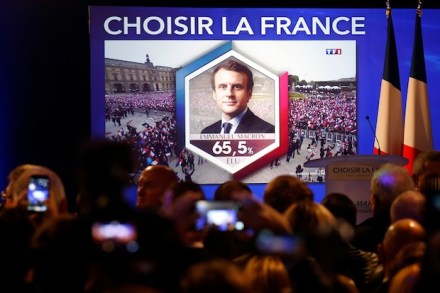
It hasn’t taken long for the Tories to try to turn Emmanuel Macron’s victory in France to their advantage in this election. At first glance, the triumph of the pro-EU Macron—the warm up music for his victory address was the Ode to Joy, not the Marseillaise—who has talked about luring British business and research to France post-Brexit doesn’t seem like a great result for Theresa May. Indeed, at very senior levels, the UK government wanted the more pragmatic Francois Fillon to win the French presidency. But when life gives you lemons, claim that Macron’s election shows that Britain needs a leader with just as strong a mandate and someone who can stand up to powerful EU leaders.

Brexiteers are Marine Le Pen’s natural opponents

From our UK edition

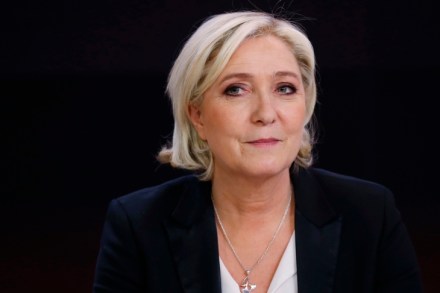
I’m a Brexiteer and I’m glad Le Pen lost. Those Brexit-bashers who say ‘Brexit-Trump-Le-Pen’ almost as one word, as if they are the same thing, all weird, all evil, all a species of fascism, have got it utterly wrong. Brexit was democratic, optimistic, generous, a positive people’s strike for better politics. Le Pen’s programme, by contrast, is mean, nativistic, protectionist and tragic. Its motor is fear, not confidence; panic, not experimentation. It has nothing in common with Brexit. I am a Brexiteer against Le Pen, and there are many of us.

Government considering publishing its ‘no deal’, Brexit contingency plan

From our UK edition

It was tempting to view Theresa May’s Downing Street broadside against the European Commission as purely a piece of domestic political theatre. After all, Jean-Claude Juncker is a more convincing bogeyman than Jeremy Corbyn. Yet having made further enquiries, I think that May was also keen to send a message to EU capitals with her statement: rein Juncker and his henchman in. As I say in The Sun this morning, one of the UK government’s big worries is that the rest of the EU still thinks that May won’t walk away from the negotiating table, no matter how bad the deal on offer is. This is why the EU feels emboldened to ramp up the amount Britain supposedly owes, using accounting techniques that would make Enron blush.

The EU’s leaders are flummoxed by democracy

From our UK edition

Guy Verhofstadt, the European Parliament’s main Brexit negotiator, tweeted on Monday: ‘Any #Brexit deal requires a strong & stable understanding of the complex issues involved. The clock is ticking — it’s time to get real.’ This was on the same day as media reports — allegedly leaked by associates of Jean-Claude Juncker, the European Commission president — criticised Theresa May for her naivety about Brexit talks at the dinner she gave Mr Juncker last week. These tactics are intended to affect our general election. By throwing Mrs May’s campaign slogan adjectives ‘strong and stable’ back in her face, Mr Verhofstadt was goading her at the decisive moment of her political career. So were the friends of Mr Juncker.

The Spectator’s Notes | 4 May 2017

From our UK edition

Guy Verhofstadt, the European Parliament’s main Brexit negotiator, tweeted on Monday: ‘Any #Brexit deal requires a strong & stable understanding of the complex issues involved. The clock is ticking — it’s time to get real.’ This was on the same day as media reports — allegedly leaked by associates of Jean-Claude Juncker, the European Commission president — criticised Theresa May for her naivety about Brexit talks at the dinner she gave Mr Juncker last week. These tactics are intended to affect our general election. By throwing Mrs May’s campaign slogan adjectives ‘strong and stable’ back in her face, Mr Verhofstadt was goading her at the decisive moment of her political career. So were the friends of Mr Juncker.

Portrait of the week | 4 May 2017

From our UK edition

Home Jean-Claude Juncker, the president of the European Commission, told Theresa May after dinner with her on 26 April, ‘I’m leaving Downing Street ten times more sceptical than I was before,’ according to an account in Frankfurter Allgemeine Sonntagszeitung. At the dinner, also attended by Michel Barnier, the EU’s chief negotiator, and David Davis, the Brexit Secretary, Mrs May was said to have declared that Britain was not legally obliged to pay the EU ‘a penny’; Mr Juncker said ‘the EU is not a golf club’ with a subscription that could be cancelled at any time. ‘Let us make Brexit a success,’ May is said to have remarked, to which Mr Juncker replied: ‘Brexit cannot be a success.

Donald Tusk steps in to relieve Brexit tensions

From our UK edition

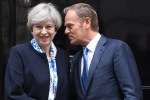
After the Brexit rows of the last few days, Donald Tusk—the President of the European Council—has intervened and urged everyone to calm down. 'These negotiations are difficult enough as they are. If we start arguing before they even begin, they will become impossible. The stakes are too high to let our emotions get out of hand. Because at stake are the daily lives and interests of millions of people on both sides of the Channel. We must keep in mind that in order to succeed, today we need discretion, moderation, mutual respect and a maximum of good will.'  Diplomatically, Tusk has chastised both sides of this dispute.

Why binding shareholder votes on pay should be a manifesto promise

From our UK edition

Will executive pay pop up in Theresa May’s manifesto? An objective of her snap election is to secure a larger majority on the basis of a smaller burden of manifesto promises than she inherited from David Cameron. But in her only leadership campaign speech last July, her reference to ‘an irrational, unhealthy and growing gap between what those companies pay their workers and what they pay their bosses’ was one of the phrases that caught the most attention. Back then, she was in favour of imposing annual binding shareholder votes on boardroom remuneration, as well as spotlighting the ratio between chief executives’ and average workers’ pay, and even forcing companies to accept workers’ representatives on boards.

Labour’s election strategy – vote for us and watch us lose

From our UK edition

The crapness of Corbyn’s Labour is a phenomenon. It fascinates me. Frankly, it does my head in. For there is a theory, you see, that Corbyn’s Labour isn’t really crap at all. That it is all a conspiracy. That journalists such as me, who I suspect are ‘neoliberal’ or something, merely construct a narrative demonising it as such. Where politicians match our prejudices, this theory goes, we give them enormous leeway and spring to their defence. When they don’t, we supposedly deem them ‘mad’ or ‘radical’ or, yes, ‘crap’, in a spirit of sheer defensiveness. It’s a neat theory, this, and very occasionally I even find myself wondering if it might be true.

Diane’s grey matter and Labour’s sticky votes

From our UK edition

I awoke the other morning to hear Diane Abbott’s brains leaking out of her ears and all over the carpet during an interview with LBC’s excellent Nick Ferrari. You will need a mop and a bucket very sharpish, I thought to myself, as she gabbled on, the hole beneath her feet growing larger with every syllable she uttered. Diane has had the brain leakage problem before, many times, and my worry is that following the LBC debacle there is almost nothing left inside her skull at all, just a thin greyish residue resembling a kind of fungi or leaf mould. This would leave her on an intellectual par with Emily Thornberry, a disaster for Labour. Later Diane explained that she had ‘misspoken’ during the interview — but how were we to know?

Theresa May hits out at the ‘bureaucrats of Brussels’, full transcript

From our UK edition

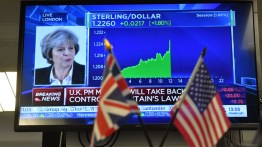
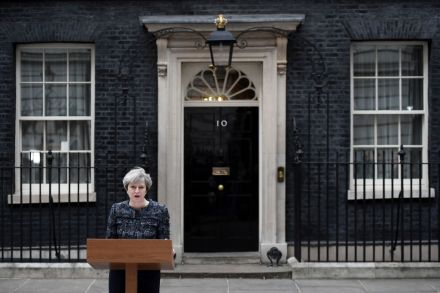
I have just been to Buckingham Palace for an audience with Her Majesty The Queen to mark the dissolution of this Parliament. The 2015 Parliament is now at an end, and in 36 days the country will elect a new Government and choose the next Prime Minister. The choice you now face is all about the future. Whoever wins on 8 June will face one overriding task: to get the best possible deal for this United Kingdom from Brexit. And in the last few days, we have seen just how tough these talks are likely to be. Britain’s negotiating position in Europe has been misrepresented in the continental press. The European Commission’s negotiating stance has hardened. Threats against Britain have been issued by European politicians and officials.

The Conservative party is treating the electorate like mugs

From our UK edition

What a curious election this is proving to be. It is hard to think of another general election in which the two largest political parties indulged in so much nonsense, nor did their best to persuade you that what is evidently true cannot possibly be true.  In the first place, the Conservative party asks you to believe the Labour party could yet finagle its way into Downing Street. You can’t afford to take a risk on Jeremy Corbyn, the Tories tell a public that has not the slightest intention of taking a risk, or anything else, on Jeremy Corbyn.

The EU has gifted the Republican cause a blueprint for a united Ireland

From our UK edition

Theresa May's awkward dinner date with Jean-Claude Juncker stole the headlines, but there was another Brexit development that passed with much-less fuss: the European Union's plan for Ireland to reunite after Brexit, which it inserted quietly into its negotiating guidelines. Few in Britain paid much attention to it. Across the Irish Sea, it was a different story. Among Catholic communities, there is growing hope that Brexit could be the issue which finally sees partition end on the island. Yet within Protestant communities, there is a growing fear that the EU is using Brexit as a tool to sneak through Irish reunification. The British government appears to be doing precious little to stop it.