Brexit

Finally, Boris Johnson has overcome his stage fright. Let’s hear more from him

From our UK edition

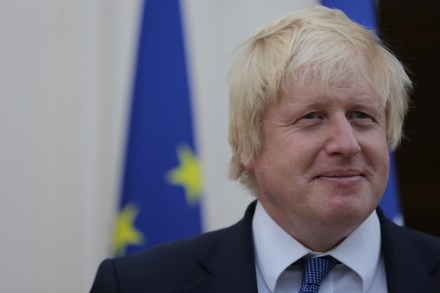
In my Daily Telegraph column yesterday, I asked where Boris Johnson had gone. We never hear from him now, I said, unless there’s been some tragedy overseas or some risqué joke backfiring in Bratislava. Since becoming Foreign Secretary, the most gifted communicator in the Tory party had been mute – a baffling waste of talent. While he sulked, Brexit was being defined by its enemies. The narrative has become one of tedious negotiations and no one in government seemed able (or even interested) in saying what the point of Brexit was. Boris helped inspired a nation to vote for Brexit, and gave a wonderful, liberal and globally-minded definition of it – a very different version to that offered by Nigel Farage with his despicable posters.

Can Theresa May satisfy both Boris and the EU?

From our UK edition

We are only six days away from Theresa May’s big Brexit speech in Florence. But it is far from certain what will be in it, as I say in The Sun today. The biggest domestic challenge for May, insiders say, is squaring Boris Johnson. I’m told that ‘there is quite a lot of nervousness about that’. ‘Boris has been the most hard-line’ of the Cabinet Brexiteers an insider tells me. One of those involved in the negotiations between the two camps predicts ‘it is going to be a tetchy week.’ Boris’s issue is money. He is opposed to paying a big exit payment to the EU and he’s told Number 10 that he wants that £350 million for the NHS.

The Bank of England can’t remain in its ‘Brexit’ parallel universe forever

From our UK edition

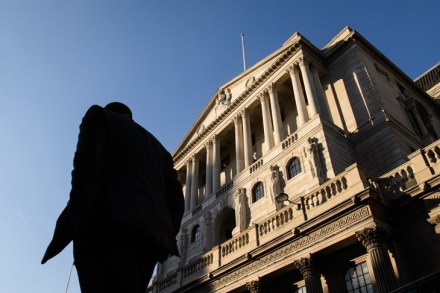
House prices are in freefall. Unemployment is rising relentlessly. The pound is plunging on the markets, and companies are re-locating to Paris and Frankfurt in droves. In the parallel universe Mark Carney increasingly seems to live in, that is a pretty accurate description of the British economy. In this universe, however, the picture is very different. The economy is doing just fine – and that is making it increasingly hard to understand why interest rates are being held at ‘emergency’ levels to cope with the ‘catastrophe’ of leaving the European Union. At a meeting of the Monetary Policy Committee yesterday, the Bank left rates on hold at 0.25 percent, while hinting that might finally go up next month.

Portrait of the week | 14 September 2017

From our UK edition

Home The European Union (Withdrawal) Bill was given a second reading by 326 votes to 290, with seven Labour MPs rebelling against the whip. Tony Blair, the former Labour prime minister, said it would be quite all right for Britain to stay in the European Union after all, with agreed adjustments to the free movement of people. Jeremy Corbyn, the current Labour leader, said that it was ‘open for discussion’ whether Britain remained in the EU single market, though Labour’s policy is for Britain to stay in the single market after March 2019 for a temporary period. Sir Peter Hall, the founder of the Royal Shakespeare Company and a former director of the National Theatre, died aged 86.

John Lewis doesn’t have a Brexit problem. It has a Waitrose problem

From our UK edition

It used to be the weather that served as the catch-all excuse for poorly performing businesses – it is too cold or too hot for people to go shopping. How convenient, now we have grown a little tired with that one, that Brexit has come along to serve the same purpose. Speaking on the Today programme this morning, John Lewis chairman Sir Charlie Mayfield was asked to explain a 53 per cent fall in profits for the first half of the year. To be fair to him he didn’t initially mention Brexit at all but when the inevitable question came from Today’s business correspondent he said: 'We should be under no illusions. Brexit is having an effect on the economy, no question. It’s the same for everybody and the main effects are sterling and confidence.

Dover

From our UK edition

When people come to Dover, it’s usually to pass through. The magnificent castle on the cliffs may be a tourist attraction in its own right, but for the most part, Dover has been a place people go through on their way to or back from the Continent. It’s never been much of a seaside destination. The rise of cheap flights, the end of duty-free and the advent of the Channel Tunnel diminished its status as a port, and the 2008 crash hit it hard. The number of vagrants, street drinkers and empty shop premises in the centre bear witness to a town that has seen better times. Yet things are looking up. Back in May, to the surprise of Doverians and the world’s media, a new Banksy mural was unveiled on the side of an old amusement arcade in York Street.

Jean-Claude Juncker’s EU expansion plans make a powerful case for Brexit

From our UK edition

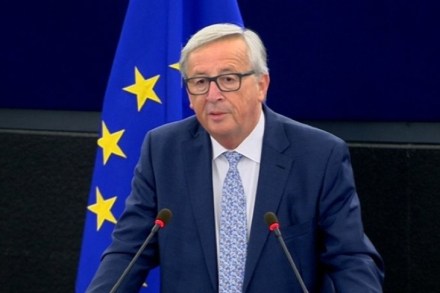
The choice which faced us at the EU referendum has often been presented as lying between the status quo and the unknown, between security and uncertainty. Until the early hours of 24 June last year I was convinced that this would be the clincher: that the British public, though heavily Eurosceptic, would not quite have the balls to overcome their native conservatism and take what many would see as a leap in the dark. Yet Jean-Claude Juncker’s ‘state of the union’ speech today dispels the notion that voting Remain would have been a vote to keep things as they are. Remaining in the EU as it now is was not an option on the ballot paper.

Theresa May must make sure that Brexit doesn’t just become a process story

From our UK edition

The EU Withdrawal Bill is undoubtedly an important piece of legislation. But I suspect that the bickering over Henry VIII clauses and affirmative statutory instruments passes most voters by. This is why it’s imperative that Theresa May keeps reminding voters of what the point of Brexit is, of what it will enable this country to do. One of the many problems with the Tory general election campaign was that it turned Brexit into a process story. May talked endlessly about the need to strengthen her hand in the negotiations. But as Andrea Leadsom complained in the political Cabinet’s post-mortem of the election campaign, May never said what Brexit was actually for.

Who will blink first in the Brexit bill fight?

From our UK edition

Tonight’s series of votes on the second reading of the EU withdrawal bill are unlikely to be the most spectacular part of its passage through the Commons. MPs have decided in the main to focus on the Committee stage which follows, as this allows Brexit-sceptics to try to force changes to the legislation without being accused of blocking Brexit. Labour is voting against the Second Reading and the programme motion, but the Tory rebels have decided to keep their powder dry, and so the debate this afternoon is much more of a preview of the fights in committee stage than it will be about the principle of the legislation, which is what second reading is supposed to be about.

When will Theresa May realise that Parliament hates a ‘power grab’?

From our UK edition

Nothing has the potential to harm Theresa May’s weakened government more than a battle over the rights of Parliament. Just remember the PR disaster for the government that was the government’s High Court battle with Gina Miller over the right for a Parliamentary vote on the exercise of Article 50. Having fought and lost in the courts, the government had no trouble whatsoever in passing the Article 50 legislation. Why expend so much energy in a battle which makes you look authoritarian and yet which you never needed to fight in the first place? Tonight, Labour will be hoping to repeat the exercise with the vote on the second reading of the European Union (Withdrawal) Bill.

Labour is threatening its electoral coalition by voting against the EU withdrawal bill

From our UK edition

Up to now, Labour have managed to have their cake and eat it on Brexit. At the election, Labour MPs in Brexit-backing seats could say their party didn’t oppose leaving the EU and had voted for Article 50. At the same time, Labour hoovered up votes elsewhere in the country from those angry at Brexit. Remarkably, 39 percent of Financial Times readers voted for the party despite Jeremy Corbyn’s hostility to high earners and the City. But, as I say in The Sun this morning, Labour are threatening this coalition by voting against the EU withdrawal bill. Already, Tory MPs are excited at the prospect of being able to attack Labour for trying to block Brexit. So, why are Labour taking this risk? One reason is that it is good chance to cause trouble for the government.

Voted Leave? It’s one way to lose friends, says Sarah Vine

From our UK edition

September is my time of year. Summer is all very well if you’re one of those golden-haired, long-limbed types who looks heavenly in a sarong and a waist chain. But for me it’s just an endless battle against heat, direct sunlight, corpulence (chiefly my own) and biting insects. Besides, there’s nothing quite like that back-to-school feeling, the promise of a new term — and a chance to catch up with friends who have been off gallivanting all summer. Hence one of my favourite dates in our social calendar, an annual ‘end of summer’ party in Henley. It’s a bit of a schlep on a Saturday night, but always worth it, not least because the fish and chips are excellent and the hostess divine.

Diary – 7 September 2017

From our UK edition

September is my time of year. Summer is all very well if you’re one of those golden-haired, long-limbed types who looks heavenly in a sarong and a waist chain. But for me it’s just an endless battle against heat, direct sunlight, corpulence (chiefly my own) and biting insects. Besides, there’s nothing quite like that back-to-school feeling, the promise of a new term — and a chance to catch up with friends who have been off gallivanting all summer. Hence one of my favourite dates in our social calendar, an annual ‘end of summer’ party in Henley. It’s a bit of a schlep on a Saturday night, but always worth it, not least because the fish and chips are excellent and the hostess divine.

What can ministers do to calm the EU withdrawal bill row?

From our UK edition

The EU withdrawal bill debate is winding on, with MPs criticising the ‘power grab’ planned by ministers. There won’t be any votes until Monday, and unless something changes, it looks as though the legislation will pass its second reading. Assuming that this is the case, it is much more useful to look at who is threatening to make amendments to the bill at Committee stage. The tone of the Brexit-sceptics so far has largely been reasonably respectful, as they are trying to encourage ministers to make concessions ahead of that. It is rare for a government to be defeated in a committee stage vote, but this bill is different as it goes before a committee of the whole house, rather than a smaller group of MPs reflecting the political balance of the Commons.

Brexiteers, your enemy is the government

From our UK edition

Twenty-nine years ago this month, the Vote Leave campaign got underway. Nigel Farage was still making his anti-establishment way as a City broker and a young Michael Gove was heading northwards to work on the Aberdeen Press and Journal. Instead, it was the founder of the movement who did the honours. Margaret Thatcher travelled to Bruges, to the College of Europe, the Europhile madrassa that has radicalised generations of youth to the cause of ever closer union. There in the belly of the beast she smartly explained why Britain was marvellous and wouldn’t it be better all round if the Continent was more like Blighty.

Jacob Rees-Mogg wins an election

From our UK edition

Although Jacob Rees-Mogg recently topped a ConHome poll as the number one choice to be the next Tory leader, few believe he has the mainstream appeal to lead the party to victory in a general election. However, Rees-Mogg can take heart that he has just secured enough votes to win a prestigious place on the Brexit select committee. With 14 Tories vying for the 10 available seats on the Exiting the EU Committee, the Brexit bunch have proved triumphant: Peter Bone Chris Chope Stephen Crabb Jonathan Djanogly Richard Graham Andrea Jenkyns Jeremy Lefroy Craig Mackinlay Jacob Rees-Mogg John Whittingdale Alas Anna Soubry hasn't been so successful – the Remain MP missed out on a place, again.

The Spectator Podcast: Fat Britannia

From our UK edition

On this week’s Spectator Podcast, we discuss Britain’s obesity crisis, the upcoming German election and the England team’s footballing woes. First up, Britain’s obesity problem is worsening, says Prue Leith in her Spectator cover piece. The UK is the sixth fattest nation on earth and more than a quarter of the population is obese. Yet despite this worrying epidemic, precious little is being done. So how can we fix this crisis? Spectator Health’s Christopher Snowdon, Professor Graham MacGregor, Chairman of Action on Sugar, and Professor Francesco Rubino, from Kings College London, have some answers. In her cover piece, Prue Leith writes: Part of the UK’s problem is that we see government intervention as nannying.

May’s exit strategy

From our UK edition

Nearly all Tory MPs now agree Theresa May should stay on as Prime Minister. She must get the party through Brexit, they say. A leadership contest now would risk splitting the party over the European issue. One senior Tory who was agitating to depose May back in July has told me that he has now decided it would be best if she stays until 2019. But this desire to keep her in place for Brexit should not be confused (especially not by Mrs May) with a desire to see her fight the next election. The number of Tories prepared to even contemplate following her into another battle remains vanishingly small. Memories of her performance in the general election are far too vivid, and painful, for that. So if Brexit is her main job, how is it going?

Will the House of Lords rebel against the EU withdrawal bill?

From our UK edition

Labour’s decision to whip against the EU withdrawal bill might well have more of an impact in the Lords than the Commons. In the Commons, as I wrote on Monday, the number of Tory rebels might well be offset by Labour ones—and I suspect that Labour’s decision to whip against the bill at second reading will make it easier for the Tories to peel off Labour rebels on amendments later on. But in the House of Lords, the government doesn’t have any sort of majority. If Labour whip against it there and team up with Liberal Democrat and cross-bench peers,  the bill could end up only passing with significant amendments. Now, normally the House of Lords backs down when it is in dispute with the elected House—as it did on Article 50.