Bret easton ellis

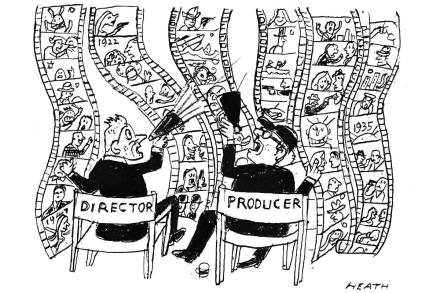
How long has Hollywood been out of ideas?

Marie-Georges-Jean Méliès made more than 500 films in his career, but 1896 was a banner year for the Frenchman. He captivated audiences with Playing Cards, his sixty-seven-second exploration of three cigar-puffing men as they are waited on by two young ladies. One man reads the paper and pours the wine as the other two play cards. It was the first reboot in film history. One year earlier, Louis Lumière released Card Game, a forty-three-second exploration of three men with cigars drinking wine and playing cards as they are waited on by a man. Méliès rightly recognized the original’s lack of representation, not to mention the absence of a news- paper.

Hollywood

The birth, death and rebirth of American Psycho: The Musical

American Psycho was never supposed to be a hit. Bret Easton Ellis thought Glamorama would be his big seller, and Psycho was just an odd interlude; an experiment with form that mocked the disconnection, inanity and opulent obliviousness of America’s new, young, hyper-materialist upper crust. It was also a cloaked reflection of repressed homosexuality, written by a gay author who once dated a closeted financier. It’s not even that violent. Most of it is just the interior monologue of this cold man listing the clothes and food and bad music that occupies his hollow mind. And it was intensely funny, but dryly, darkly so. In short, it wasn’t an obvious literary smash.

american psycho musical

Bret Easton Ellis’s comeback is a bloody masterpiece

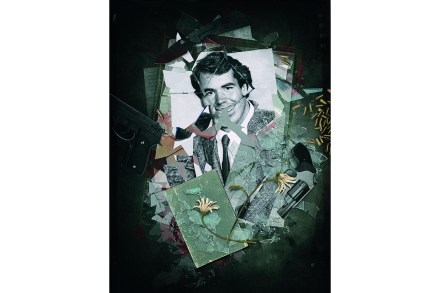
Bret Easton Ellis has a secret. It’s what happened to him and his friends in the fall of 1981 in his senior year at Buckley, a private high school in Sherman Oaks, California. It’s about a hippie cult and serial killer known as “The Trawler” and the disappearance of his friends. It’s about how all this is somehow tied to the arrival of a new student that year, Robert Mallory. It’s a true story. The Shards is Ellis’s seventh novel, published nearly thirteen years after his previous book, Imperial Bedrooms. He has tried to write this novel twice before, once when he was nineteen and again when he was forty-two. That second attempt led to an anxiety attack that had Ellis rushed to the emergency room at Cedars-Sinai. At least, that’s the story.

shards

The return of Bret Easton Ellis

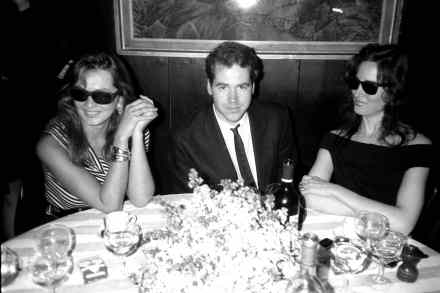
The Shards is about 600 pages long. “Should anyone even publish a 600-page novel?” asks its author Bret Easton Ellis. “I happen to believe, yes, if it’s justified.” Such books are rarely justifiable, and often, novelists become buzzed-about simply for executing them, but not many can boast that every word, scene and sentence is necessary. This is how it feels to read The Shards: not a detail is to be missed. It contains the thematic elements that run through Ellis’ oeuvre: the social lives of the wealthy, or nearly wealthy, drugs, sexuality and desperation painted over with bursts of violence. The through line that connects his work isn’t that sex and violence are taboo.

ellis

The mythic rise of the celebrity dissident

Celebrity is a remarkably enduring and powerful form of prestige. Who can imagine a world without it? Celebrities begin as people, become brands, then expand into empires. We have celebrity restaurateurs who become celebrity chefs and celebrity chefs who become restaurateurs. We have celebrity spin doctors and celebrity CIA analysts. We have celebrity comedians and celebrity revolutionaries; they’re often interviewed by celebrity journalists. We have celebrity architects, celebrity tycoons and celebrity statesmen. We have celebrity children of celebrities; celebrity ballerinas; celebrity vegans; celebrity plumbers; celebrity murderers. For decades celebrity told society stories about itself, some ennobling, some disgraceful.

celebrity