Brazil

Brazilian wax

From our US edition

This article is in The Spectator’s November 2019 US edition. Subscribe here. When Brazilian president Jair Bolsonaro spoke at the United Nations General Assembly in late September, he depicted Brazil as a victim of colonialism. ‘The United Nations has played a fundamental role in the suppression of colonialism,’ he said, ‘and we cannot allow this mentality to return to these rooms and corridors at any pretext. We cannot forget that the world needs to be fed.’ Foreign countries, Bolsonaro alleged, have ‘an interest in keeping indigenous people living like cave men’.
brazilian

Is Brazil’s Jair Bolsonaro really the ‘Trump of the Tropics’?

Jair Bolsonaro’s victory in Brazil's presidential election has stoked fears around the world that ‘fascism’ is on the rise. In Brazil, of course, that word has a particular resonance. The former army captain sees the years of military dictatorship from 1964 to 1985 as benign ones. The only mistake the generals made, he has said, was in not killing enough dissidents—another 30,000 would have done the trick. His pick for vice-president thinks that the country should be back under martial law, and repeats the line whenever he is invited to withdraw it. Bolsonaro has been dubbed the ‘Trump of the Tropics’, a moniker he seems happy to accept. Both men are disrupters. Both like to be seen dealing with a strong right arm and appeal to an angry base.

Indigenous languages are being wiped out – and social media isn’t helping

We are in Imbassai in the state of Bahia. It’s lush, beautiful and green. I am escaping the London winter gloom. For Fixyá of the Fulni-ô tribe, covered in body paint, he is escaping a desertified region in Pernambuco state. He lives by a town called Aguas Bellas (Beautiful Water) which is ironic as there isn’t any. We are here for the Encontro Multietnico, organised by Juliano Basso, where representatives of several different Brazilian indigenous groups, nearly all from the Amazon, can 'get together, exchange information, bond and have fun'. You certainly bond with people in a three-hour sweat lodge session, even if I wouldn’t call it fun exactly.

Low life | 12 January 2017

Still depressed, or, as Matthew Arnold put it, ‘the foot less prompt to meet the morning dew’, I got out of bed one afternoon and exchanged the soggy Devon hills for the tower blocks of Canary Wharf. I went at the invitation of Dr Ivan Mindlin, orthopaedic surgeon, Las Vegas casino house doctor during the mob-run era of ‘Lefty’ Rosenthal and Tony ‘the Ant’ Spilotro, and one of the most successful sports bettors in US history. He kindly put me up in an ‘executive’ room at a hotel round the corner from his 18th-floor apartment. The first night we went for dinner at a Chinese restaurant. We went there on foot. It was like going for a walk in a multicultural concrete-and-glass future.

Portrait of the week | 1 December 2016

Home Paul Nuttall, aged 39, was elected leader of the UK Independence Party. He said: ‘I want to replace the Labour party and make Ukip the patriotic voice of working people.’ Theresa May, the Prime Minister, was rebuffed by Angela Merkel, the Chancellor of Germany, and by Donald Tusk, the President of the European Commission, when she proposed settling the status of British and EU expatriates even before Article 50 was invoked. She made another attempt in talks with Beata Szydlo, the Prime Minister of Poland. There was some interest in a note photographed on papers being carried after a meeting in Downing Street by Julia Dockerill, an aide to Mark Field, a Conservative MP, that said: ‘What’s the model? Have your cake and eat it.

Going Dutch | 27 October 2016

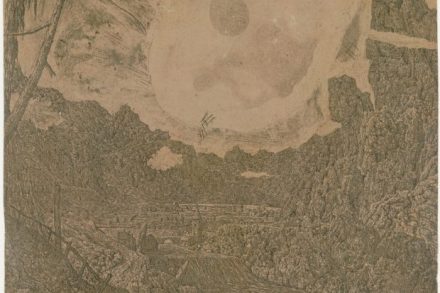
In debates about what should and should not be taught in art school, the subject of survival skills almost never comes up. Yet the Dutch, who more or less invented the art market, were already aware of its importance in the 17th century. In his Introduction to the Academy of Painting (1678), Samuel van Hoogstraten included a chapter headed ‘How an Artist Should Conduct Himself in the Face of Fortune’s Blows’. Top of his casualty list of artists ‘murdered by poverty ...because of the one-sidedness of supposed art connoisseurs’ was the landscape painter and printmaker Hercules Segers (c.1589–1633).

Rio, Rio

Stuff I have learnt after two solid weeks watching the Olympics on TV. 1. Tennis and golf shouldn’t be Olympic sports. Yes, I know we won both and Rose’s final chip on to the 18th green was great to watch. But you can see this sort of thing done with a tougher range of competitors at any number of majors all the time. Olympic medals should be there to reward the Corinthian spirit not just an opportunity for millionaires to add something a bit different to their mantelpiece. 2. I still don’t understand the judging system for the diving but had arse quality been included in the women’s events — as I believe it should — the Italian girl would have done much better. 3.

The first favela

Where are you going?’ demanded the boy on the wall. A walkie-talkie clipped to his denim shorts crackled, but there was no sign of a weapon. ‘The English Cemetery,’ I answered. He slid down. ‘You need to go back that way. Take the road on the right.’ The street in question was a dustbowl where diggers flattened the ground for the tramlines that should have arrived in time for the Olympics. But no, he insisted, there was no way of reaching the cemetery through the favela. There are favelas and there are favelas, and the mesh of houses, shacks and alleys that extends across Morro da -Providência, above the English Cemetery close to the heart of Rio, is no ordinary one.

Olympic shames

 Rio de Janeiro, Brazil ‘Welcome to hell’ was printed on a banner written in English at Rio de Janeiro’s international airport recently. ‘Police and firefighters don’t get paid. Whoever comes to Rio will not be safe,’ the message concluded. It’s fair to say not everyone is feeling the Olympic spirit ahead of the Games that start here next month. Bad news abounds. The city’s mayor made headlines by declaring the security situation ‘horrible’, and body parts were reported to have washed up near the Olympic beach volleyball venue. Then an investigation by Human Rights Watch exposed an alarming number of murders by Rio policemen. Earlier in the month a baddie was-busted out of hospital by his gang mates.

Women of substance

Three women, three writers, three very different life experiences. On Monday afternoon the artist Fiona Graham-Mackay introduced us to Imtiaz Dharker, whose portrait she has been painting. While she attempts to capture a visual impression, Imtiaz, who is a poet, tells us what it feels like to be the sitter, the one who is being looked at, drawn, observed with such sharp-eyed scrutiny. A Portrait of... on Radio 4 was one of those seductive programmes that draws you in simply by the quality of the voices and the clear-sighted honesty of what they’re saying. What would it feel like to be painted, and then see yourself as someone else has drawn you? How does the artist know where to begin? With the eyes, the mouth, a first impression?

Are we about to see the return of the Kings?

With only two months until the Rio Olympics, Brazil's woes continue, with a minister in the interim government being forced to resign after being accused of plotting to stop the country's national corruption probe. It is not just president Dilma Rousseff being investigated, of course; a full quarter of Brazil's congressmen are accused of criminal acts, which suggests the country may have a slight problem with corruption. There is a solution at hand, however, and one favoured by the people. Two thirds of Brazilians say they would like to get rid of presidents altogether - and bring back the monarchy. And there is a man waiting in the wings.

Brazil Notebook

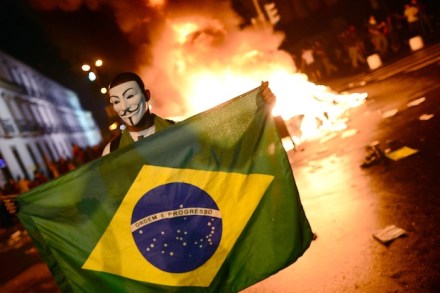
Ipanema, Brazil Another Sunday night, yet another episode of Game of Thrones drowned out by pot-banging and angry folk yelling into the night. In my quiet corner of Ipanema, a slanging match takes place as middle-class tenants of a high-rise apartment start slandering their neighbours in the favela below. The words ‘cow’ and ‘communist’, among others, are shouted by darkened figures hanging out of windows. The comebacks are meted out with equal ferocity. Things are tense in this town at the moment. Pot-banging, or panelaço, is an established form of protest in South America.

The roots of the matter

[audioplayer src="http://rss.acast.com/viewfrom22/panictimefordavidcameron-/media.mp3" title="Lara Prendergast and Louise Bailey, a hair extensions specialist, discuss the hair trade" startat=1622] Listen [/audioplayer]Perhaps you recall the moment in Les Misérables when Fantine chops off all her hair? The destitute young mother sells her long locks, then her teeth (a detail often excluded from child-friendly adaptations) before she is eventually forced into prostitution. It would be nice to think that her experience was no longer a reality, that the business of human hair had gone the way of the guillotine — but the truth is, it’s booming. The modern market for extensions made of real human hair is growing at an incredible rate. In 2013, £42.

Trash, review: trash by name, trash by nature

Trash is the sort of film one desperately wishes to be kind about — heart supremely, if not burstingly, in the right place and all that — but it doesn’t make life easy for itself. Directed by Stephen Daldry, with a script by Richard Curtis, and set amid the kids who work the rubbish dumps of Rio de Janeiro, this aspires to combine (I think) the lively spirit and warmth of Slumdog Millionaire with the hard-hitting social agenda of City of God, but in working both angles, it doesn’t pull off either one. It also culminates in the most implausibly happy ‘feelgood’ ending known to man (and here I am being kind, because I could have added ‘or beast’, but did not).

World Cup diary – best tournament in years

Sorry – bit of an interregnum in the World Cup diary, caused principally by England’s pathetic capitulation. But still the tournament gives pleasure, perhaps to a greater degree than it has done in thirty years or more. Watching Brazil get stuffed on their own midden heap was an enormous pleasure. Their thuggery in the previous round, against Colombia, came back to haunt them; there is karma in football. That’s why Leeds Utd are still in the lower reaches of the Championship.  Germany were magnificent; Brazil gave in after the second goal — but truth be told, they were never terribly good. One thing bothers me, though — at the start of these games the opposing players are horribly matey and affectionate to one another.

World Cup diary: Was the ref playing for Brazil?

Suspicions that FIFA is an organisation given, occasionally, to a bit of corruption will not have been allayed by the first match of the 2014 World Cup. Brazil won with two goals from a player who should have been sent off, including a penalty which clearly wasn’t a penalty, while Croatia had a perfectly good goal disallowed and were denied a rather more clear cut penalty themselves. Incidentally, I say “Brazil” – and so do ITV. So do FIFA. And so does the OED, Wikipedia and Google. But not the BBC. The BBC says “Brasil”. Of course it does.

If you thought this World Cup was weird, take a look at Brazil 1950

Old world Brazil has struggled to get ready for the World Cup, even though it hosted it before, in 1950. Some oddities of that tournament: — There was no final, as such. The winner was to be decided by a second group stage. But it came down to the last match, Brazil vs Uruguay, in which Brazil needed a draw and Uruguay a win. Uruguay won 2-1. — That match, at Rio do Janeiro’s Maracana stadium, still holds the record of the best-attended match in World Cup history, with 199,954 spectators. — Only 13 out of 16 teams who qualified turned up. Scotland could have gone but stuck to their manager’s promise that they would only attend if they beat England in qualifying. India withdrew supposedly because banned from playing barefoot.

I used to think I was a Nietzschean superman. Now I know I’m just a dad

In The Wolf of Wall Street, there’s a poignant shot towards the end in which we see an FBI agent going home on the subway. This law enforcement officer — Agent Patrick Denham — will eventually bring about the downfall of Jordan Belfort, the film’s main character, and the fact that he uses public transport is supposed to be evidence of his integrity. He’s an honest, hard-working tax-payer who plays by the rules. I’m not quite sure how it happened, but in the past 25 years I’ve gone from being an international party boy to a kind of FBI agent. Admittedly, I’ve never plumbed the depths of debauchery that Jordan Belfort does in the film. Even in my New York heyday, I was more of a Mouse of Madison Avenue than a Wolf of Wall Street.

Niall Ferguson’s diary: Brazil is overtaking us – but it no longer feels like that

 São Paolo It was back in 2001 that my good friend Jim O’Neill of Goldman Sachs coined the acronym ‘Bric’, short for Brazil, Russia, India, China. These were the emerging markets that were going to surpass the developed economies. And so they have. Well, nearly. I, too, am partial to a good acronym and it has always seemed to me very unfortunate that there isn’t a matching one for the four biggest established economies. According to the International Monetary Fund, these are currently the United States, Japan, Germany and the United Kingdom (based on last year’s GDP figures). I therefore propose ‘Juugs’. The rise of the Brics and the fall of the Juugs has a good ring to it.

‘She’s the most important Jewish writer since Kafka!’

The Brazilian novelist Clarice Lispector was a riddlesome and strange personality. Strikingly beautiful, with catlike green eyes, she died in Rio de Janeiro in 1977 at the age of only 57. Some said she wrote like Virginia Woolf (not necessarily a recommendation) and resembled Marlene Dietrich. She was ‘very, very sexy’, remembered a friend. Yet she needed a great many cigarettes, painkillers, anti-depressants, as well as anti-psychotics and sleeping pills to get through her final years. Lispector had great fortitude over her illness, it was said, and suffered the ravages of ovarian cancer equably and without complaint. According to her biographer Benjamin Moser, Lispector’s was a life fraught with the shadow of past failures and past sorrows.