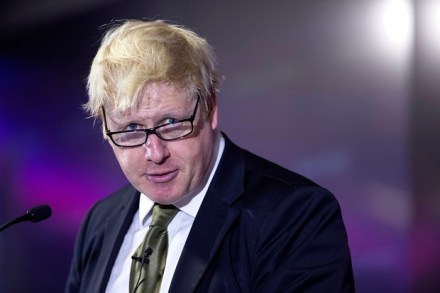
Boris johnson

My generation can’t afford to buy a house in London; so what?

From our UK edition

The UK Land Registry today released its latest report on house prises, showing the ticket-cost of an average home in England and Wales down 2.2 per cent to £177,299 in September from a peak of £181,324 in November 2007. No, that still doesn't mean that underpaid Westminster interns can afford to buy a home in central London. Per the Land Registry, average house prices in the capital rose 18.4 per cent since this time last year. Cue the New York Times with an opinion article composed by a young writer, cavilling about the matter: 'Without capital, those of us who do not own property resign ourselves to running in an exploitative rat race. . . . I live two boroughs away from where I was born [in east London], yet I’ll never be able to afford a home.

Nigel Farage admits Ukip’s leftward drift would hobble Tory pact

From our UK edition

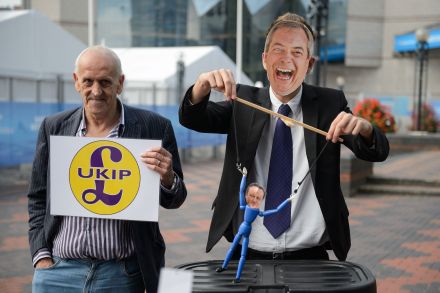
The Tories may have watched Douglas Carswell's re-entry into the House of Commons in silence, but he seems to be getting a reasonably warm reception from his old colleagues behind the scenes. He has already exchanged jokes and arranged to dine and drink with a number of them. For a few weeks this will send the whips into a spin, as they try to work out whether it really is just lunch, or a brewing defection. But it wasn't just Carswell who was nattering with Conservatives this afternoon. Nigel Farage, who watched his first elected MP re-join the Commons from a gallery, has also been talking to some of them. Philip Davies was spotted shaking Farage's hand in the members' lobby, while others tried to press the Ukip leader on the possibility that the Right may one day unite.

Boris Johnson asks voters to decide if he’s a fool or just a cynic. What a choice!

From our UK edition

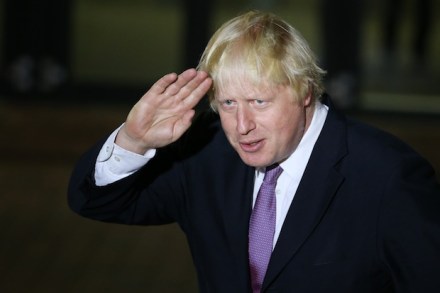
Boris is at it again this morning. Revealing, that is, why he cannot be trusted with office. To be charitable, I wouldn't trust many newspaper columnists with the keys to power.  But, of course, most Grub Street residents have no interest in being crowned Emperor. Boris does. Which is why his columns for the Daily Telegraph are so troublesome. You will remember the recent occasion when he suggested the burden of proof in criminal trials be reversed. That was revealing, but in a bad way. So is today's column in which he proposes setting quotas for immigrants from other EU countries. As is so often the case you are left to wonder which is worse: Boris meaning this or Boris not meaning this but writing it anyway. Neither answer is reassuring.

Stop “Stoptober”! It’s another insidious attack on liberty and free will

From our UK edition

Say what you like about the French Revolutionaries but at least they had a poetic imagination. When they wanted a new name for October, they anticipated Keats and named the season of mists and mellow fruitfulness ‘Brumaire’, meaning ‘foggy’. Which is a lot more evocative, I think we can agree, than its current incarnation under the new politically correct Terror: Stoptober. Stoptober. Geddit? That’s ‘-ober’, as in the second half of ‘October’, with the word ‘Stop’ cunningly positioned where the ‘Oct’ would normally be. And what marketing genius was responsible for this rebranding? Why, someone from an Orwellian body which you’d probably much prefer didn’t exist, let alone to have to fund with your taxes. Public Health England.

The Mayor of London is a wally: official

From our UK edition

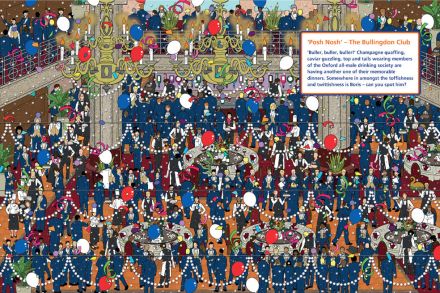
Far from it being Mr Steerpike's prerogative to call a former editor of the Spectator a wally, he was rather amused by Boris's latest escapade. Now we can all relive those classic moments when the Mayor of London was hunting for a seat in Parliament, with 'Where's Boris?' - a Wally-style search-and-find picture book, out next month from Orion. Another step toward immortality for BoJo. How many other wannabe PMs have made it into children's book hero format?

TM4PM: It’s on

From our UK edition

Most Secretaries of State tend to lay low the night before their big conference speech, redrafting and practising. Not so Theresa May. The glammed-up Home Secretary was working the party scene hard last night, flanked by a bolstered entourage. After losing her Special Adviser Fiona Cunningham in blue on blue briefing row, May has brought in former Mail journalist Liz Sanderson to handle her media. If it looks like a leadership campaign... May’s speech this morning was steely. She talked about freedom and a free society. With her smart new haircut, it was not long before obvious comparisons were being made to a the last strong woman to dominate the Conservative Party.

Theresa May was a tough act for Boris Johnson to follow

From our UK edition

Boris Johnson and Theresa May both fancy a pop at the Tory leadership and both gave speeches today that showed they were keen. That much is so well-known that it is a little tiring to analyse either speech simply in those terms (though it's worth noting that Boris supporters have been very keen indeed to tell us that this was a 'grown-up, loyal speech that shows he has a track record of delivery. Boris has a vision that is optimistic'). Both did a good job of rallying the troops in the conference hall, although in quiet different ways. May was sober but passionate about the threat posed to Britain by Isis, warning that the terror group could acquire nuclear weapons. She quoted the Koran on stage to demonstrate that Isis was twisting the sacred texts it claims to be fighting for.

Loyal Boris rallies the troops

From our UK edition

Boris Johnson was on loyal form tonight at the Conservative Home rally. He told the audience that the Tory advantage on leadership and the economy would see voters coming over to the party ‘in droves’. He even predicted a 1983 style win for the Tories—which considering that the Tory majority then was 144 seemed more than a little bit over optimistic. The Mayor of London was so in sync with the leadership’s strategy that he even moved straight from Europe to English votes for English laws, the issue that Cameron and co believe can stop the bleeding to Ukip. There were, though, perhaps a few markers laid down for the future.

Spectator letters: The best ‘never’ ever is in the Declaration of Arbroath Plus: BST for England, the problem for social workers, and C.P. Snow was not cold

From our UK edition

Never say never Sir: Dot Wordsworth (Mind your language, 20 September) quotes various telling usages of ‘never’ for rhetorical or theatrical effect. But she missed one of the earliest and spine-chilling best: the Declaration of Arbroath of 1320. Quite apart from including the first-known written statement of the old Scottish principle that kingship is essentially a contractual appointment, and can be terminated if the people feel let down, the translation ends with: ‘For as long as but a hundred of us remain alive, never shall we on any conditions be brought under English rule.’ Even Scots like me, who would have voted ‘No’ last week if we had been able, thrill to the resonance of these words. So what do they do for a ‘yes’ voter, even after 700 years?

Spectator letters: In defence of the EU, the Welsh and Mary Wakefield

From our UK edition

Breaking the unions Sir: By the time this letter appears we shall know whether the land of my birth has separated from the land of my life. I hope not. But is there not an uncanny parallel between the rise of the Scottish desire to quit England and the English desire to quit Europe? The same arguments about control from a city outside the nation; about elites and technocrats dictating to and imposing upon a sturdy independent people; the belief that outside the union (with England, with European partners) a radiant future beckons; endless columns, pamphlets and books explaining why rule from London/Brussels must be overthrown; and a charismatic, one-liner leader worshipped by his followers and given uncritical support by the BBC and other media.

Boris in Metroland

From our UK edition

Gaily into Uxbridge Station runs the red electric train, And alighting on the platform - he with the albino mane. Can he charm the blue-rinsed matrons, Past-it bankers, golf club patrons, Can he do it – yes he can!   Well done Boris! Side-step Clacton, 'Essex is no place for me, 'Better here in leafy Ruislip, with its vast majority. 'Better here to fight the battle, 'In Downing Street they’ll feel the rattle! 'Uxbridge, baby – I’m your man!

Boris selected: what’s next for the Tory leadership hopeful?

From our UK edition

Unsurprisingly, Uxbridge and South Ruislip Conservatives picked Boris Johnson last night as their parliamentary candidate for the 2015 election. Boris has a 11,216 majority to defend, but that's only the start of the work he needs to do. His supporters are well aware that before the Mayor can ever throw his hat into that leadership ring that they're all looking forward to, he needs to build better links in the Parliamentary Conservative party beyond those who already think he is wonderful. He needs to reach out, for instance, to those MPs who have been brought into the George Osborne camp by the Chancellor's clever system of patronage and promotion.

The Boris Island of ancient Athens

From our UK edition

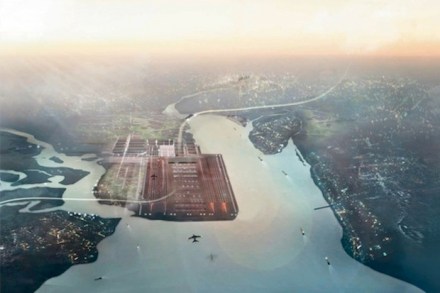
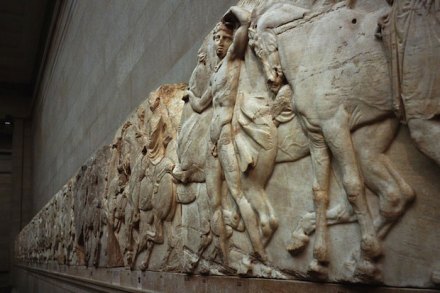
During his lecture on Athens at the Legatum Institute (see p. 22), Boris Johnson placed great emphasis on Athens’ development of Piraeus harbour in the 5th century BC. Did he have an analogy with a pet project in mind? It was the statesman Themistocles who ‘had been the first to propose that the Athenians should take to the sea’, and in 493 BC began to turn Piraeus with its three harbours into a military facility, replacing the old harbour at Phalerum. With Persian attack from the sea in mind, he built dockyards, mooring sheds and fortifications. This move had momentous political consequences for the poor. In 508 BC, Cleisthenes’ democratic reforms had handed power to decide political issues to the people’s Assembly.

Rona Fairhead will be good for the BBC – but who was so keen to nobble her rival?

From our UK edition

Hats off to Rona Fairhead, the former Financial Times executive who will succeed Lord Patten as chairman of the BBC Trust. It requires a brave spirit to take on this poisonously politicised role — and Fairhead starts with the disadvantage that everyone thinks they know the roll call of candidates who might have been preferred but declined to apply, including her own former boss Dame Marjorie Scardino, for whose job as head of Pearson, the FT’s parent, Fairhead was passed over last year. But a mole tells me she’s ‘as steely as she’ll need to be’; and leading ladies of the non-executive circuit (she’s on the boards of HSBC and PepsiCo) are also full of praise, though one says: ‘She must like stress.

Boris: No-one seriously approached me to stand in Clacton

From our UK edition

If the Tories did want to really fight Douglas Carswell in the Clacton by-election, then Boris Johnson would have been a jolly good way of driving a steamroller over Ukip's chances of doing well. James explained at the weekend that when David Cameron reached the same conclusion and put the feelers out to the Mayor, word came back that Johnson felt Clacton was too far away. But today Johnson suggested that those feelers weren't particularly robust ones.

Portrait of the week | 28 August 2014

From our UK edition

Home Theresa May, the Home Secretary, said that Britons who went to Syria or Iraq to fight could be stripped of their citizenship, if they had dual nationality or were naturalised. Her words came during a search for the identity of the British man in a video of the beheading of the American journalist James Foley. David Cameron had returned to London from his holiday in Cornwall to confer with security officials, but decided against recalling Parliament. In revenge the Daily Mail carried photographs of him in a wetsuit, which gave him a phocine look. Lord Dannatt, the former Chief of the General Staff, suggested Britain should deal with President Bashar al-Assad of Syria, but Philip Hammond, the Foreign Secretary, said: ‘That would poison what we are trying to achieve.

Breaking: Boris Johnson to stand in Uxbridge

From our UK edition

Boris Johnson has confirmed that he is going to apply to be the Conservative candidate for Uxbridge and South Ruislip. His announcement comes on the same day that Nigel Farage is expected to be confirmed as the Ukip candidate for South Thanet, which suggests that the Conservatives are keen to use Boris as their anti-Farage weapon. More to follow...

Boris Johnson is not fit to be leader of the Tory party, never mind Prime Minister

From our UK edition

Awkward, especially here, I know, but there you have it. But, look, if any other high-profile politician were suggesting the burden of proof in criminal trials should be switched from the accuser to the accused we'd be properly - in both senses - appalled. So we should be appalled that Boris suggests in his Telegraph column today that anyone travelling to Iraq or Syria should be presumed a jihadist unless and until they can prove otherwise. The state will not have to make a case you convict you but you must make a case to avoid conviction. And, lo, centuries of criminal law are undone. Worse still, I think, Boris considers this 'a minor change' to the law. What, one wonders, would constitute a major change? 'It is hard' Boris laments, 'to press charges without evidence'.

Radek Sikorski’s diary: Show Putin what you think of him – eat a Polish apple

From our UK edition

I made a welcome escape from sweltering Warsaw to the cloudy cool of Bodø, halfway up the coast of Norway, north of Iceland. Bodø’s harbour stays ice-free all year round only thanks to the Gulf Stream. The fjords bubble with whirlpools and offer some of the best cold-water scuba diving in the world. When the mist clears, the air in this visibly prosperous place has an Alpine, colour-enhancing quality. It’s my first time beyond the Arctic circle and the dusk through the night makes it hard to sleep. ‘Now imagine,’ says the wife over the phone from Washington, ‘what it was like to try to go to sleep in a Soviet-era hotel in Vorkuta, in late June, without curtains.

Demosthenes’ lessons in ambition for Boris Johnson

From our UK edition

The ancient Greek word for ‘ambition’ was philotimia: ‘love of high esteem in others’ eyes’. Both Boris and Alex Salmond are consumed by this desire for what Greeks saw as a virtue. The 4th-century bc statesman Demosthenes instructed a young man as follows: ‘Consider that your aim in life should be to become foremost of all, and that it is more to your advantage to be seen to aim at that eminence than to appear outstanding in ordinary company.’ The required reputation, however, did not derive from working for self-advantage but from willingness to sacrifice time, profit, health and life in the community’s interests. This, apparently, is Boris’s problem.