Book review

The best short story collections — from childish gabbling to jaded nihilism

From our UK edition

Anyone who enjoyed Ali Smith’s novel How to be Both, with its charmingly loopy monologue of an Italian Renaissance painter prattling away to us through one of the book’s famously interchangeable halves, will be glad to see her new book of short stories, Public Library and Other Stories (Hamish Hamilton, £16.99). It looks reassuringly similar: white hardback; photograph of two contemporary studenty people on the jacket; large font-size; non-justified lines; no quotation marks for dialogue. Here we are again reading Smith’s deliberately childlike prose.

K2’s fatal attraction

From our UK edition

Take one drug-addled occultist, one forlorn aristocrat, an assortment of urgent colonials and you have, no, not the western canon but the earliest expeditions to K2, the second-highest mountain in the world after Everest. First measured in 1856 by Lieutenant Thomas George Montgomerie, it stands at 28,251 feet, on the present-day border of Pakistan and China, amid the Karakoram range — hence its name, Karakoram 2, now abbreviated. K2 was first climbed in 1954 by the Italians Achille Compagnoni and Lino Lacedelli — a year after Edmund Hillary and Tenzing Norgay reached the summit of Everest.

From cave painting to Maggi Hambling: the best Christmas art books

From our UK edition

It’s been a memorably productive year for art books (I have published a couple myself), but certain volumes stand out. Chief among the illustrated monographs is Maggi Hambling: War Requiem & Aftermath by James Cahill (Unicorn Press, £30), a spirited examination of this wonderfully unpredictable artist. The book focuses on her recent paintings and sculptures, many on the theme of war. Art history meets forthright artistic statement, and it’s fascinating to see Cahill’s intellect in dialogue with Hambling’s visceral art. As she says: ‘Real art is the opposite of mere observation or reportage. It takes you to another place.

Everything you always wanted to know about Sixties pop —and more

From our UK edition

It might seem an odd choice, but after reading Jon Savage’s new book, I think if I had a time machine I’d now be tempted to set its controls for 13 January 1966 and the annual dinner of the New York Society for Clinical Psychiatry. Andy Warhol had been booked to give a speech, but instead he put on a gig by the Velvet Underground and Nico at full uncompromising blast, with a couple of Factory favourites dancing alongside them. One shrink described the evening as a ‘torture of cacophony’; another — no less disapprovingly — as an ‘eruption of the id’. A third left hurriedly, with the explanation that ‘I’m ready to vomit.

Erica Jong’s middle-aged dread

From our UK edition

Who’d get old? Bits fall off, your loved ones start dropping like flies and, perhaps worst of all, the only afternoon delight you’re up to is a cup of tea and a soporific radio play. Wealthy New Yorker Vanessa Wonderman, Erica Jong’s 60-year-old narrator, isn’t there yet, but she can see it coming down Fifth Avenue with its headlights on. Her parents are slowly and painfully quitting the world; her husband Asher, 15 years her senior, is succumbing to illness and certainly not capable of elaborate bedroom antics; and her acting career has faltered in the predictable absence of decent parts for middle-aged women.

The four men who averted the Apocalypse

From our UK edition

In March 1987, as Professor Robert Service records in his new account of the end of the Cold War, Margaret Thatcher visited Moscow. She had been reluctant to do so, largely out of fear that such a visit would only make it easier for a credulous Reagan — as she saw him — to offer Gorbachev even more concessions. She had also been worried that it would produce nothing for British interests. Her hesitation to travel to Russia, let alone, as her advisers had urged, solicit an invitation, was perhaps surprising. She and Gorbachev had got on famously — shoes off, in front of a blazing fire — when she had entertained him, then only the Politburo member responsible for agriculture, at Chequers just before Christmas 1984.

August in Arizona

From our UK edition

Helen Simpson is not a prolific writer; six slim collections of short stories in 25 years, each timed quinquennially with what seems, at least retrospectively, like impeccable forward planning. In fact, time, we shall see, is what her career so far has been about. She has also heroically resisted the pressure —and there must have been a significant one, at least towards the beginning — to move on from the short form and deliver a novel, as if the short story were not an entirely different genre but just a warming-up exercise before the heavyweight training session of the novel. Cockfosters is a slender volume, all of 140 pages, each of its nine stories named after a place (‘Kentish Town’, ‘Kythera’, ‘Arizona’, ‘Moscow’ etc.

A stunning blend of simplicity and complexity

From our UK edition

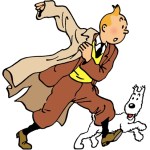
Reading Tintin when I was a child, in Britain in the 1970s, I always assumed Georges Remi’s creation was just a harmless bit of fun. However, when I went to Belgium I discovered, to my amazement, that over there they take him very seriously indeed (this year, a single Tintin picture sold for €2.5 million in Brussels). In Britain, the fearless reporter in the plus fours is a quaint juvenile amusement. In his native Belgium he’s seen as high art, and his creator Hergé (Georges Remi’s initials, backwards) is revered. The late Harry Thompson wrote a brilliant book about Tintin from the British perspective. It was informed and affectionate, but stopped short of adulation. Pierre Sterckx’s bulkier book belongs in the Continental camp.

Curiosities for Christmas

From our UK edition

There is not, sadly, a dedicated Trivia Books section in your local Waterstones, although at this time of year there really should be. But what would we call it? Trivia sounds too trivial. Loo Books sounds too lavatorial. Books for the Man or Woman who Has Everything, Except this Book is probably closest, but might need editing. Whatever we decide to call them, there is an unusually fine crop this year, and several are historically inclined. Gimson’s Kings and Queens (Square Peg, £10.99) is subtitled Brief Lives of the Monarchs since 1066, and gives us exactly that, in Andrew Gimson’s characteristically elegant and entertaining prose. ‘There are many admirable biographies of individual monarchs.

Rab Butler was too indecisive (and badly dressed) to be Prime Minister

From our UK edition

‘The best prime minister we never had’ is not an epithet exclusive to Rab Butler. Widely applied to the late Denis Healey, it was also said of Hugh Gaitskell, Iain Macleod and Roy Jenkins. (More recent candidates would include Michael Heseltine and Kenneth Clarke.) All had arguably greater intellects than the prime ministers they ended up serving, all enjoyed significant popularity in the country and all were committed to the centre-ground of British politics. Yet while ‘The best PM we’ve never had’ is a club rather than a solitary designation, Rab Butler is pre-eminent among its members.

In the grip of yellow fever

From our UK edition

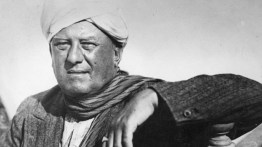
In late Victorian south London a ‘lower-middle-class’ boy, Arthur Ward, is lingering over his copy of The Arabian Nights. The book falls open at a colour illustration of Scheherazade, mysteriously pictured with a white peacock. Twenty years later, she materialises as Kâramanèh, the dazzling female sidekick of Fu Manchu. Young Arthur, who by now had reinvented himself as Sax Rohmer, was the author of the Fu Manchu novels, and Arthur had faded so far into the background that it seems even Sax Rohmer forgot him. He conjured his pen name from the Saxon, ‘Sax’ for ‘blade’ and ‘rohmer’ which means ‘roamer’. He was in essence the original bladerunner.

Shock and awe in Coventry, 14 November 1940

From our UK edition

On 14 November 1940, at seven in the evening, the Luftwaffe began to bomb Coventry. The skyline turned red like an eclipse of the sun as clouds of cinders, lit red by the blaze, floated down over the great West Midlands city. Coventry seemed to have been hit by a meteorite. The mile-high roar of magnesium incendiary flames created a firestorm in which over 554 people died and twice as many were wounded. Life as Coventrians had known it, lived it and loved it, came to an end that Thursday night. Hitler’s first Blitz on an English city had taken the inhabitants by complete surprise. In the space of 11 hours, buildings and people were torn apart, crushed and suffocated.

Samuel Palmer: from long-haired mystic to High Church Tory

From our UK edition

In his youth, Samuel Palmer (1805–1881) painted like a Romantic poet. The moonlit field of ‘The Harvest Moon’ (1831–32) glows with uncanny significance; for Palmer, as for Tolstoy’s Lieven, the bowed forms of the peasants at the harvest are shadows of divinity. Palmer aged like a Romantic poet too. The long-haired mystic became a High Church Tory: like Coleridge, but without the drinking. ‘The Past for Poets, the Present for Pigs,’ was Palmer’s opinion of England after the Reform Act. But did the poetry of Palmer’s seven-year sojourn in the ‘Valley of Vision’ at Shoreham, Kent also decline into prosaic commerce and pastoral nostalgia?

The deeper secrets of Britain’s submarines

From our UK edition

The Silent Deep is a compelling and fascinating exposé of a service that for too long has had to remain in the shadows. Peter Hennessy and James Jinks are to be congratulated on producing what must be the definitive work on the Royal Naval Submarine Service from 1945 to the present day. In his inimitable way, Hennessy has gained unprecedented access all the way from able seaman to Prime Minister and been made privy to details that until recently were shrouded in secrecy.

The best new cook books include recipes for Toad-in-the-hole, braised Pilot Whale and seal soup

From our UK edition

Timing is everything, and few cookbooks come at an apter moment than Mamushka (Mitchell Beazley, £25) by the excellently named Ukrainian-born Olia Hercules. It is too easy to pun on her strengths, but in these flamboyant recipes and stories, Hercules lifts up not just the cooking of her country but that of others in the former Eastern Bloc out of grey culinary oblivion. ‘Mamushka’ is an invented word, used by Hercules to describe the strong women in her life; her mother, aunts and cousins, not all Ukrainian but with roots in Bessarabia, Siberia, Armenia and Uzbekistan. All were great cooks, and Hercules says she includes very few of her own recipes. This food is as special as Hercules promises — and she writes beautifully about it, too.

He knew he was right

From our UK edition

A highlight of this year’s Dublin Theatre Festival was the Rough Magic Theatre Company’s production of The Train, a musical by Arthur Riordan and Bill Whelan. Political theatre at its wittiest and craziest, it told the story of the fledgling Irish Women’s Liberation Movement’s publicised trip in 1971 to Belfast to buy contraceptives, ostentatiously importing these banned Satanic devices back into the Republic, where the law obeyed the writ of the Catholic church. Watching it, one was reminded of the sheer extent of theocracy in Éamon de Valera’s Ireland (he remained president till 1973, having been Taoiseach for most of the period from 1932 to 1959), and the long journey from those days to this year’s equal marriage referendum.

Sic transit: the buildings we treasure most are often the ones we’ve never seen

From our UK edition

Here are two books which have almost nothing in common: form, function, source material, methodology, all utterly different. The surprise is that I should be surprised. Loss and rediscovery is at the core of what writers mostly deal with. We all experience loss (lovers, spectacles, innocence, our very existences) and that universality allows each of us to shape it as we will. James Crawford’s approach is structurally simple, but his narrative is beguiling. He considers the life-span of 20 buildings — including the Tower of Babel (5000 BC to 323 BC), the Library of Alexandria (300 BC to AD 650), the Berlin Wall (1961 to 1989) and, provocatively, the web ‘settlement’ of Geocities, born in 1994 and deliberately and utterly obliterated by its owners in 2009.

An elegy for Concorde, the most beautiful airliner of all time, that died aged 27

From our UK edition

The Concorde experience, a fleeting indulgence in luxurious grandiosity, began each day with circumvention of the hugger-mugger of the hoi polloi at Heathrow. In the tranquillity of the exclusive Concorde departure lounge, insulated against the vulgar cacophony of the rest of the terminal building, elite passengers, only 100 at a time, while awaiting the call to the aircraft, were able to sip gratis buck’s fizz and make gratis unlimited international telephone calls. On my three Concorde trips, one from London to New York and two to Washington, I was impressed by the rich variety and subliminal sameness of my travelling companions, the modish accoutrements of haute couture and the blasé cool of genuine or simulated cosmopolitanism.