Book review

Wild man of the woods

From our UK edition

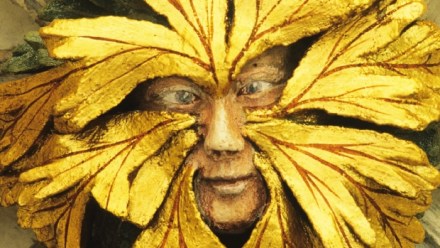
The other day I visited a psychic medium in Croydon, south-east London. Mavis Grimstick (not quite her real name) boasted an ability to hear the dead — ‘clairaudience’. Her front room, hung with plastic foliate Green Man gargoyle motifs and photographs of Stonehenge, was grimly inimical to mediumship and made me want to make a joke about striking a happy medium. ‘Have you been meditating of late? No? ’Cos I’m getting a gorgeous greenish light off of you, and it’s making me feel ever so sunshiny.’ She fluttered her hands. ‘Yes, I like the psychic aura that you have, but why do I see Stonehenge?’ (The roar of an airplane coming in to land over Gatwick muted my reply.

A choice of first novels | 10 March 2016

From our UK edition

At the beginning of this year I underwent a complete literary detox: an absolute, cold-turkey abstention from cutting-edge fiction of every stripe. I subsisted on police procedurals and grown-up Ladybird books, and watched a lot of TV. It was tough, but you’ve got to defrag the old hard drive once in a while. And it was worth it: when this new batch of first novels was helicoptered in, I felt ready to approach the gig in a spirit of optimism and can-do. I’m not even going to rant about the tendency of publishers to overmarket new writers, to box them up, underplay their strangeness and render them safe and familiar. Love Me Back by Merritt Tierce (Little Brown, £14.99) and Your Heart is a Muscle the Size of a Fist by Sunil Yapa (Little, Brown, £12.

Wonderful waffle

From our UK edition

It is hard to explain the contents of Karl Ove Knausgaard’s vast series My Struggle because not much happens. Or rather: a lot of things almost happen. In these strange and unquantifiable books, which feel like a spiritual autobiography but read like trashy fiction, Knausgaard recounts his ambiguous relationships with his brother and parents and wives; he describes terrible-sounding meals which he cooks (he eats a lot of pasta with dubious sauces) and the rambling, incomplete conversations he has with acquaintances. He discusses books he has read and books he would like to write. He goes out, meets girls, gets drunk, feels sorry for himself, and then goes back to his desk.

Fighting for progress

From our UK edition

It is very difficult to uncover accurate connections between ideas and events in history. A.C. Grayling is a philosopher and polemicist with a particular story to tell about the rise of freedom in the 17th century. In the introduction to his new book he writes: I hope the sketches offered here will illustrate the claim that the 17th century is truly the moment that history changed course so profoundly that everything before it is another world, and that it and the times since are our world. He replaces the conventional division of history into everything that happened before the birth of Christ and everything that has happened afterwards, with a new bifurcation: everything that happened when humans thought the world was the centre of the universe, and everything that has happened since.

A host of unquiet spirits

From our UK edition

As its title suggests, Julie Myerson’s tenth novel is about stoppage: the kind that happens when one suffers a loss so absolute and cataclysmic that there seems no possible way forward; when the future seems not merely unthinkably disrupted but also irrelevant. For the majority of people lucky enough to live out their days beyond war zones, barbaric regimes and disaster areas, such events usually come no closer than a news item; but even — perhaps especially — when the calamity is near at hand, we so often find ourselves at once desperate to empathise and yet incapable of imagining. Mary, whom we gradually discover has lost both her young daughters, understands that people can’t understand; often, she can barely understand herself.

When sharing isn’t fair

From our UK edition

In Silicon Valley, renting out is the new selling —and renting out stuff that belongs to other people can be far more profitable than renting out your own. Over the past few years, companies like Airbnb and Uber have made a great deal of money by pioneering a business model of connecting consumers, who want to use things — such as apartments and cars with drivers — with other people, who want to provide them. For public relations reasons they promote this model as the ‘sharing economy’. And who could be against ‘sharing’? But this isn’t the kind of sharing your mother taught you.

Strangers in their native land

From our UK edition

Though it seems to begin as an affectionate memorial to his maternal grandparents, a testimonial to a rare and perfectly happy marriage, Their Promised Land by Ian Buruma has a deeper purpose. The cache of letters to and from Winifred (‘Win’) and Bernard (‘Bun’) Schlesinger is the pre-email, daily correspondence of two people who could not bear to be apart, yet were separated for years at a time by both world wars. Although his grandparents died in 1984 and 1986, this artful volume reveals a good deal about the world we live in today.

Mr Spock and I

From our UK edition

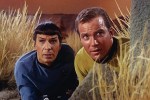
For a show with a self-proclaimed ‘five-year mission’, Star Trek hasn’t done badly. Gene Roddenberry’s ‘Wagon train to the stars’ is celebrating its 50th anniversary, although, as Marcus Berkmann’s entertaining and irreverent history points out, things could have been very different. Roddenberry’s initial idea was for a troupe of disparate 19th-century adventurers to explore the undiscovered corners of the New World in a grand airborne dirigible. While the prospect of Leonard Nimoy arching an eyebrow in a flimsy, flying gondola is irresistible, it’s hard to imagine such a concept proving as enduring as Roddenberry’s eventual brainchild.

Putting the sun in the shade

From our UK edition

About a century ago, scientists started meddling with an unfamiliar force of nature and the rest of us were terrified. That force was called electricity and nowadays we’re all fine with it. What Timothy Jorgensen wants to know is: why don’t we feel equally relaxed about radiation? After all, electricity is just as dangerous, but only if you’re very unlucky or very stupid. As his sparky book explains, radiation is really much the same. So why are we so scared of it, even when we’ve (usually) no need to be? Cards on the table: I know nothing about science. But that’s OK, because this book is meant for Luddites like me.

A good editor and a good man

From our UK edition

Before embarking on this book, Jeremy Lewis was told by his friend Diana Athill that his subject, the newspaper editor and philanthropist David Astor, was too ‘saintly’ for a lively biography. As a publisher, she had worked on an earlier authorised tome, and thought she knew. Lewis, and Astor, proved more resilient. There are always column inches in a well-connected plutocratic clan such as the Astors. And Astor’s mother, Virginia-born Nancy, was the gold-plated battle-axe who made Cliveden, the family house in Buckinghamshire, the centre of 1930s appeasement. The story is really how Astor (born in 1912) took on his Christian Scientist mother, threw off the trappings of privilege, and became the owner and editor of the Observer during its mid-20th-century heyday.

What went wrong

From our UK edition

I once asked an American friend to come and talk to the Centre for the Study of Financial Innovation. He told them that he was against it. That put him ahead of his time, but Mervyn King agrees with him. In his decade as Governor of the Bank of England, he had seen what innovation could do, in good times and bad — in crisis, and in the fitful recovery that followed. He has resisted any temptation to write a memoir with himself as hero. Instead, he has set out to explain what went wrong and what must change to stop it happening again—and since we all need to know that, he wanted to write, not in economists’ algebraic shorthand, but in English. That shorthand gave an illusion of certainty.

Purifying the gymnasium

From our UK edition

When Friedrich Nietzsche was offered a professorship in classical philology at the university of Basel in 1869 he was so happy he burst into song. He was only 24 at the time — a year younger than Enoch Powell, who became a professor of Greek at the university of Sydney aged 25 — and looked forward to a brilliant academic career. Three years later, when he delivered the six lectures contained in this book, he was already showing signs of disillusionment. His teaching duties included six hours at the local gymnasium — the German equivalent of a secondary school — and he wasn’t impressed by what he found there.

A disarming heroine

From our UK edition

The name Freya is derived from the old Norse word for ‘spouse’, perhaps Odin’s. As a goddess she is variously responsible for birth, death, war and beauty, which seems to cover a fairly wide range of human endeavour. It is a name befitting the ardent heroine of this old-fashioned novel with a distinctly contemporary bearing. An initial irritation at the use of a literary pun (the first of the three parts of the book is called ‘At Swim, Two Birds’ for no very obvious reason) and a sprinkling of period props (powdered eggs always pop up in the late 1940s) soon gives way to the pleasurable anticipation of a long tale well told.

‘Excess is obnoxious’

From our UK edition

When the German doctor and botanist Leonhard Rauwolff visited the Syrian city of Aleppo during an eccentrically Teutonic herb-hunting mission across the Middle East, he was instantly impressed by the thriving trade he encountered. It was ‘admirably great’, he wrote, ‘for great caravans of pack-horses and asses, but more camels arrive there daily from all foreign countries’. The year was 1573 but the description might have been written at any point during the past several thousand years. For Aleppo, trade and cosmopolitanism were always two sides of the same coin. They were seared into the city’s character long before the Muslim conquest of 637.

An electrifying politician

From our UK edition

Just who was Benjamin Franklin? Apart, that is, from journalist, statesman, diplomat, founding father of the United States, inventor of the lightning rod, the Franklin Stove, the milometer, swimming flippers and the flexible catheter, the man who engineered the America postal system, who established the first lending library, who wrote one of the finest autobiographies in the language, and who schooled us in soundbites such as ‘Let all men know thee, but no man know thee thoroughly.’ Amen to that. Despite being the subject of a steady flow of worthy biographies, of which this is the latest, Franklin remains as cunning in heaven as he was on Earth. A master manipulator, people saw in Franklin what he wanted them to see.

Life in a glass house

From our UK edition

‘First and last I was, and always would be, an American,’ Jeremy O’Keefe, the professor narrator of Patrick Flanery’s new novel, insists, with just the kind of pedantic over-emphasis that makes the reader suspicious. Equally dubious is the way he talks. Having spent the last decade at Oxford teaching and writing a book about the Stasi, O’Keefe’s speech is now an odd mixture of affectation and deracination (‘helicoptering’, ‘faux-artisanal’). On his return to New York he finds that he is ignored or mistaken for an Englishman — something which affronts him as much as his Oxford colleagues, with ‘their exclusionary quality’, refusing to accept him as one of their own. His memory, too, is in doubt.

The Mann who knew everyone

From our UK edition

Thomas Mann, despite strong homosexual emotions, had six children. The two eldest, Erika and Klaus, born in 1905 and 1906 respectively, were delinquent almost from the word go: shoplifting, prank phone calls, trickery on old ladies, special schools. They were also artistically precocious; the frantic pair took German Expressionist cabaret to Berlin, Paris, Amsterdam, London, New York and Moscow. By the time Klaus reached 21, he and his sister had frolicked right round the globe. Klaus never stopped travelling, and this biography is a feverish sequence of arrivals and departures. Erika was more the performer, Klaus more the writer. Both were openly gay. Klaus explored his homosexuality in his first book, published in 1925, and in many works thereafter.

Two men in a boat | 25 February 2016

From our UK edition

Ian McGuire’s second novel is an exercise in extremes: extremes of suffering, violence, environment, language and character. It tells the story of Henry Drax and Patrick Sumner, who we first encounter on the streets of Hull in March 1859. The two men have joined the crew of a whaling vessel, the Volunteer, about to set sail for the Arctic captained by one Arthur Brownlee. Brownlee, renowned for his misfortune at sea, has undertaken the expedition with the largely private intention of wrecking the ship in the waters of the north (motivation: insurance money). Drax is party to his secret plan. Sumner, along with most of the rest of the crew, is not. The two men, Drax and Sumner, have what look like very different sensibilities.