Book review - memoir

Keith McNally’s memoir is strangely unappetizing

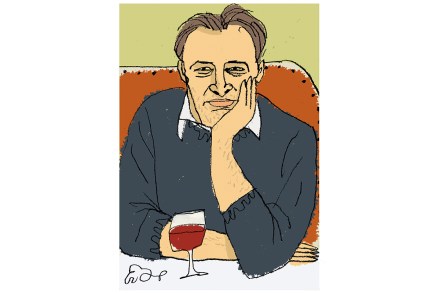
Harvey Weinstein has a memorable walk-on role in Keith McNally’s memoir I Regret Almost Everything. Taking a break from being New York’s most celebrated restaurateur, McNally wrote and directed a film called End of the Night that was screened at Cannes in 1990. Its auteur hoped that Weinstein, who distributed the previous year’s Palme D’Or-winning picture Sex, Lies, and Videotape, would warm to it. He was blunt: “I didn’t like your film and I’m not going to buy it.” As McNally swallows the shot, there’s a chaser. “But I’d still like to come to the after-party.” McNally admires Weinstein’s honesty, if little else. So I’m going to be straight, too. I didn’t enjoy I Regret Almost Everything. This is a shame, because the ingredients are promising.
McNally

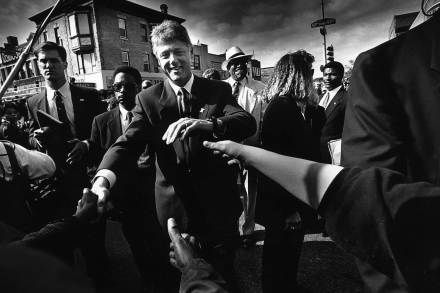
Bill Clinton’s latest memoir sees him at his chirpiest — and most combative

In February 1974, the British prime minister Edward Heath, then facing one of his country’s cyclical economic crises, called a snap general election. The result was close; Heath’s Conservative Party won the popular vote but secured fewer parliamentary seats than the Labour opposition. After power-sharing discussions broke down, Heath resigned from office. A fifty-seven-year-old bachelor without a London home of his own, he lodged for the next several months at a small Westminster flat owned by his political secretary Timothy Kitson. The man who had served as his nation’s head of government for the previous four years was left with a typist, a single daytime detective and a part-time driver at his disposal.

Clinton
Cher

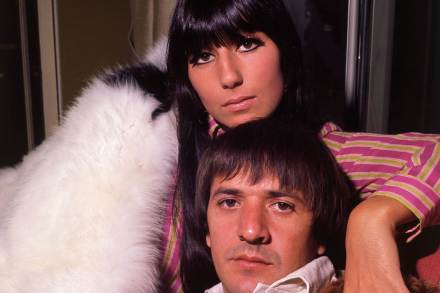
Cher should stick to what she knows best

The worst celebrity memoirists write first-person Wikipedia pages. Like Michelangelo carving a beautiful posterior out of Italian Carrara marble, the best celebrity memoirists edit their lives into tawdry yet moving epics. When they work, celebrity memoirs are the Warhols of American literature. When they fail, they’re the literary equivalent of a CVS receipt: boring and destined for the trash. Cher: The Memoir, Part One falls somewhere in between. It takes a miracle to reach Cher’s narrative peak. For more than a hundred pages, she details her childhood criss-crossing America as her mom marries and divorces man after man. I lost track of how many jerks Cher’s mother married, but according to Google, she married six different men (Cher’s heroin-addict biological father twice).

Michael Richards’s memoir is heavier on introspection than laughs

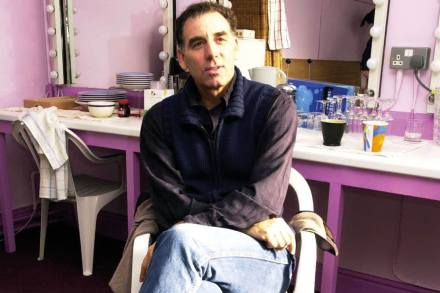
An unusual disclaimer greets the reader on the title page of this memoir of an actor chiefly known for starring as the lovable goofball Cosmo Kramer on the hit TV sitcom Seinfeld. “Neither the US Army nor any other component of the Department of Defense has approved, endorsed, or authorized this book,” it notes. But in the event the Pentagon probably needn’t have worried. Drafted into the army in 1970, the actor in question, Michael Richards, seems to have avoided any Sergeant Bilko-like shenanigans and instead separated from the service with a heightened appreciation for the punctuality, discipline and meticulous preparation that characterized his later career.

Richards

Britney Spears’s much-anticipated memoir is a desperate cry for help

Biological differences exist between men and women. Hamas lacks a justifiable reason to kill Israelis. Joe Biden won the 2020 election fair and square. Vaccines work. These are truths which, depending on the political class you’re speaking to, you can no longer say in public. Reading Britney Spears’s memoir, The Woman in Me, I thought, “We should add ‘the Free Britney Movement was wrong’ to the unspeakable truths list.” Two years into her freedom, Spears should celebrate her memoir as her umpteenth comeback. She should be sitting down with Oprah, confessing what really led to her 2007 breakdown, and releasing a new album pegged to The Woman in Me.

britney spears

No stone unturned

There are so many examples of narcissism-on-steroids that litter Rolling Stone magazine founder Jann Wenner’s memoir that it’s difficult to point out just one. But the following is typical: in 2001, Wenner was invited to a recording session for his friend Mick Jagger’s solo album Goddess in the Doorway. Wenner, long out of practice in writing for his magazine — clear prose was never his forte — submitted a review to his editor, who, knowing of the friendship, gave the album four stars. Wenner intervened, bumping it up to five stars, and reflected: “There was some snickering [in the office] about being on Mick’s leash, but so what, and what if I were?” Wenner’s torturously long memoir is a very bad book.

wenner

‘Steer clear of that cave boy, James Dean, and grease ball, Elvis Presley’

Lucky bastard. Such are the words that come constantly to mind while you’re reading Clancy Sigal’s two volumes of posthumously published autobiography. Blacklisted as a (self-confessedly lousy) actor for refusing to name names in the McCarthy era, working as the agent for the likes of Peter Lorre, Rod Steiger and — sigh — Barbara Stanwyck in 1950s Hollywood and freelancing on Fleet Street in countercultural London (including reviewing films for The Spectator), Sigal was at the centre of every piece of action going. Should Black Sunset and The London Lover ever be gathered into a single volume (perhaps taking Sigal’s earlier memoir, Going Away, along for the ride), ‘Been there, done that’ would make a good catch-all title.

The Empty Quarter is a great refuge for lonely hearts

Here’s a treat for desert lovers. William Atkins, author of the widely admired book The Moor, has wisely exchanged the dank, wind-lashed chill of Britain’s moorland for eight of the world’s fieriest deserts, from the Empty Quarter of Oman and Egypt’s Eastern Desert to the Taklamakan in China and an unlikely stint at Burning Man in America’s Black Rock Desert. It’s not entirely clear what prompted these particular journeys or this specific quest. We learn in the second sentence that a long-standing girlfriend has gone to live and work abroad and Atkins is not going with her; so perhaps a retreat into the desert is the wholly appropriate response in a travel writer searching for new territory to furrow.