Blockbuster

The resistible rise of Pedro Pascal

A British film fan recently took to social media to share an unusual experience that had happened to her while visiting the Picturehouse cinema in central London. She was standing in the foyer, watching the trailer for the forthcoming superhero picture The Fantastic Four: First Steps, when she became aware of a middle-aged man standing next to her, enjoying the same preview. He then said, in apparent surprise, “Look! I’m in that!” She turned to him, expecting to see some character actor with a one-line role, and it was none other than Pedro Pascal: film and television star, self-appointed nemesis to J.K. Rowling and “the internet’s daddy.


Oppenheimer and the triumph of Christopher Nolan

The Barbenheimer phenomenon — thought of by many as just idle chatter on the internet — has enduring power. Last weekend, Barbie and Oppenheimer earned a combined $511 million in global box office receipts; an unprecedented number where neither film is a superhero picture or a sequel. Barbie made more money, on the grounds that it’s an hour shorter and is PG-13 rated, but the vast box office success of the R-rated Oppenheimer, which made over $170 million in its opening weekend, is testament both to Barbenheimer excitement, and to the film’s very own brand: its powerful writer-director-producer, Christopher Nolan.  James Cameron aside, it is hard to think of any filmmaker who wields such power and influence in contemporary Hollywood.

Christopher Nolan

Avatar 2: a three-hour-plus video game cutscene

A few years ago, someone on Twitter brought up the fact that Avatar, despite being a massive hit, left little to no cultural imprint on American pop culture. I can’t speak for the rest of the world, but after December 2009, all I ever heard about the movie was that the precious material on alien planet Pandora was called “unobtanium,” and that the script was a lazy ripoff of Pocahontas. Those reviews must have been the first time I read the phrase “white savior narrative,” relatively late for a junior in high school. But beyond that, none of Avatar’s characters, story, themes, concepts or images have broken through into general consciousness. It’s the most obscure success of all time. How did a movie make so much money and leave so little behind?

Could Avatar 2 flop at the box office?

“Who asked for this?” asked the New York Times in November of the coming Avatar sequel, The Way of Water. Not me. I’m not the audience for this film. I did not contribute to Avatar's $2.92 billion global box office. I don’t, for example, post in the "Tree of Souls" forum, which has 2,093 members (a tiny number). Does Avatar have an army of fanatics waiting to be unleashed at the box office? I don't know anyone obsessed with Avatar, do you? Is it as meme-friendly as Minions: The Rise of Gru? No. Will it draw as many teens as an MCU movie? Probably not. Avatar does not have the built-in fanbase you need to carry a franchise. It requires a global audience — it needs mainstream buzz. It needs the press raving that it's a "visual masterpiece." But is that enough?

Blockbuster is the best argument in favor of That ’90s Show

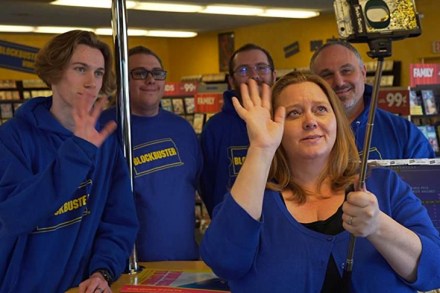
Blockbuster is a single-cam sitcom about the last Blockbuster (located inside a strip mall in Michigan). The set is dressed in authentic signage, fluorescent lights, blue walls and an oddly prophetic Howard the Duck poster. The employees have real Blockbuster name tags and uniforms (the producer, John Fox, acquired the rights and handed it over to established showrunner Vanessa Ramos: I have the rights to Blockbuster. Would you like to develop a workplace?). Every episode is packed with movie references and checkout-counter humor. The transitions between scenes are scored to hip-hop beats that sound like something you’d hear on Nickelodeon in the Nineties. You’re inside a Blockbuster for the first time since Carol Danvers fell through its roof in Captain Marvel.

blockbuster

The last American video store

Without a space or a location, ‘the movies’ cease to exist. They become another niche interest with little to no cultural penetration. Awards-season movies, summer blockbusters, sleeper hits and all kinds of popular film phenomena cease to exist without theaters themselves. The last year has shown how much movie culture relies on the activity of going to the movies and the physical space itself. The Last Blockbuster is a documentary about the death of another space: video stores, albeit through the eyes of the last representatives of a corporation that destroyed vast swaths of mom & pop stores across America. Lloyd Kaufman, the co-founder of Troma Entertainment, an independent film distribution company, is an understandably hostile subject.

video