Bleak house

Homage to the two drama kings who ruled British television for decades

From our UK edition

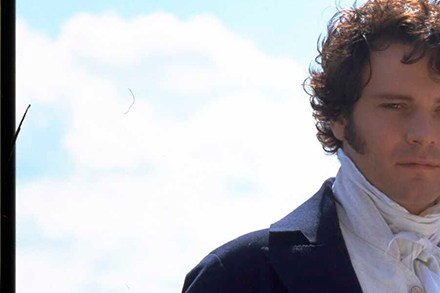
If I were to say to you that one of these books contains an entire chapter on how to get rimming on television and one is about a 90-year-old man who was married for 68 years and specialised in costume drama, you might make a guess at which is the scandalous one. And you would be utterly wrong. Between them, the two Davieses have practically stitched up the past 30 years of great scripted drama, from the happy glories of Pride and Prejudice (1995)to the devastating, gamechanging It’s a Sin (2021). Now both have memoirs out, paeans to the glorious years of British television and their not insignificant contributions to the national happiness.
The supreme conjuror Charles Dickens weaves his magic spell

From our UK edition

As Charles Dickens lay in his coffin, his will was read out to the assembled mourners. ‘I conjure my friends,’ he sternly instructed them, ‘on no account to make me the subject of any monument, memorial or testimonial whatever.’ It’s an appeal that later generations have studiously ignored, as can be seen in the piles of commemorative merchandise that are available to purchase online. These range from a fully poseable Dickens action figure (‘with quill pen and removable hat’) to a T-shirt featuring his face and the slogan ‘I put the lit in literature’. They can also be seen in the shelfloads of biographies and critical works published every year.

The atmosphere of a historic country house cannot be bought

From our UK edition

The Historic Houses Association can congratulate itself. This pressure group for country houses, founded in 1973, has proved to be one of the most effective lobbying organisations of our time. When it came into being, the future, according to the architectural historian John Cornforth, was ‘full of gloom’ for the country house. The Destruction of the Country House exhibition of 1974 revealed the extent of the crisis, which had set in a century earlier with the agricultural depression of the 1870s. That was when aristocrats who had previously relied on the income from their estates built their hopes on landing a transatlantic beauty with ‘plenty of tin’. The supply of heiresses dried up in about 1912, just before the first world war.

How The Sopranos changed TV for ever

From our UK edition

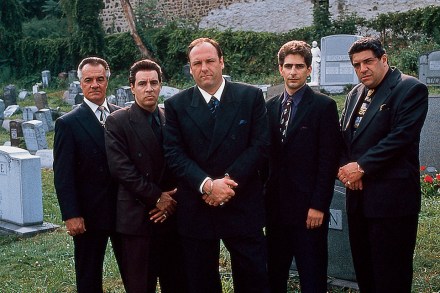
‘Too many characters, too many plot lines, characters who weren’t very good at their jobs, and their personal lives were a mess.’ Thus the memo to the creatives behind Hill Street Blues. ‘It was like a blueprint for what made every show successful since The Sopranos,’ Kevin Spacey giggles to Peter Biskind. ‘If the NBC executives had had their way, the road from then to now would never have been paved.’ As the quondamlead of one of that road’s biggest stones, House of Cards, Spacey can perhaps be excused his post hoc moment. Still, his big point stands. There was TV before The Sopranos and TV after The Sopranos, and they are not the same.

The year of living decisively: The Turning Point, by Robert Douglas-Fairhurst, reviewed

From our UK edition

We tend to think of turning points as single moments of change — Saul on the road to Damascus or Bob Dylan performing with an electric guitar. The change is identified as a discrete moment for which there is a distinct before and after. But this is not always the case and, as Robert Douglas-Fairhurst argues, a turning point can trace a wider arc and evolve over longer periods. These turning points are clear only in hindsight once the details have softened and the ripples outward have stilled. His latest book examines one such period in the career of Charles Dickens, surveying the artefacts of his life to track his development over the year 1851. This is not the first time Douglas-Fairhurst has applied his macro lens to Dickens.