Biography

Bookends: An unreal world

From our UK edition

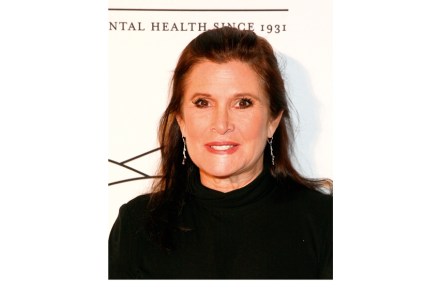
Even by Hollywood standards, Carrie Fisher is pretty crazy. She was born a Hollywood princess, and remembers her parents — Debbie Reynolds and Eddie Fisher — as ‘not really people in the traditional sense’. Nor, obviously, was her stepmother Elizabeth Taylor, let alone her friend Michael Jackson. And nor is she herself, shackled, as she feels, to the image of ‘a stern-looking girl wearing some kind of metal bikini lounging on a giant drooling squid’, as Princess Leia in Star Wars, aged 19, while these days looking, as she sportingly repeats, more like Elton John.

Settling old scores | 10 December 2011

From our UK edition

As a boy, Brian Sewell was unimpressed by opera but enraptured by pantomime which, he reveals in Outsider, sowed in him ‘an undying ambition, never fulfilled, to play the Widow Twanky in Aladdin’. Panto’s loss has been art criticism’s gain for, his tremendous erudition and exquisite prose aside, Sewell is surely the funniest art critic of our time, and easily the campest. In his ‘Prelude’ he remarks that he has ‘dug deep into indiscretion’, and ‘some may say that I have dug deeper still into prurience’. They would have a point. The first chapter, which is about his mother, or ‘principal demon’,  sets the tone.

Forthright to a fault

From our UK edition

Her mother was Ellen Terry, the most admired actress of the day. Her brother was Edward Gordon Craig, the celebrated stage designer. Little wonder then that Edith Craig was overshadowed for most of her life by two such towering figures. Yet her theatrical achievements were substantial. She was a talented costume designer and maker, the founder of the radical theatre group the Pioneer Players, and an indefatigable producer and director of countless plays and pageants. She was also an important figure in the suffrage movement, staging many feminist plays, and lived in a famous artistic lesbian ménage-à-trois.

Lust for life | 3 December 2011

From our UK edition

Seduced by the hayseed hair and the Yorkshire accent it’s tempting to see the young David Hockney as the Freddie Flintoff of the painting world: lovable, simple, brilliant, undoubtedly a hero, and delightfully free of angst. In this enjoyable book, which sets out to to ‘conjure up the man he is and in doing so to put his paintings and drawings in the context of his extraordinary life’, Christopher Simon Sykes provides us, naturally, with a more complex story. Hockney is a hero if course — not least to homosexuals, for blazing a stylish and courageous trail to emancipation in the 1960s, and more recently to beleaguered smokers in his stand against politically correct bullying.

A man who quite liked women

From our UK edition

It is noticeable that the kind of young woman that a clever public man most likes talking to is intelligent but totally unchallenging. This is pleasant for both. She gets to pick up useful knowledge, while he can hold forth, happy that she doesn’t have the inclination or firepower to disagree, argue or interrupt.    Dr Johnson was a bit like that. He wanted women to be equal ‘but not too equal’.  Hannah More, a successful playwright young enough to be his daughter, had too much natural self-belief for him, and he did not admire her dress sense. He was wary and in awe of the confident poet Elizabeth Carter, who knew more Latin and Greek than he did.

Cocktail Hour Under the Tree of Forgetfulness by Alexandra Fuller

From our UK edition

There is always a special risk, says Alexandra Fuller, when putting real-life people into books. Not all those who recognised themselves in her terrific memoir of 1960s and 1970s white-ruled Africa, Don’t Let’s Go to the Dogs Tonight, had appreciated their transformation. The author’s own mother, Nicola Fuller, was disquieted to find herself as a character in that ‘awful book’ (as she refers to it today). Was she really that flaky and drunk? Or was that how others perceived her? Most writers make life more interesting than it is; I suspect that Alexandra Fuller is among them. In Cocktail Hour Under the Tree of Forgetfulness she returns to the Africa of her childhood and to her eccentric farmer family.

Steve Jobs: The Exclusive Biography by Walter Isaacson

From our UK edition

America has always idolised its entrepreneurs, even when it has proved a thankless task — if you can glamorise Bill Gates, you can glamorise anyone. Especially Steve Jobs, whose death from pancreatic cancer has been greeted as the loss of Mammon’s Messiah. Is any of this justified? Well, yes and no. Jobs did as much as anyone, with the possible exception of Gates, to bring digital change into the mainstream, and this makes his biography as much a history of a digital revolution as a personal story. It’s this fittingly binary quality that makes Walter Isaacson’s biography so worthwhile, since Jobs himself emerges from it as an unattractive, even repellent character. Jobs grew up in the engineering belt just south of San Francisco which became Silicon Valley.

Martin Amis: The Biography by Richard Bradford

From our UK edition

Where’s Invasion of the Space Invaders? That’s what I want to know. Only by consulting Richard Bradford’s bibliography would you know that in 1982 Martin Amis published a book — subtitled ‘An Addict’s Guide’ — on how to win at Space Invaders, and that he (presumably) hasn’t let it come back into print. An entire book! That seems to me worthy at least of a paragraph in the body of a 400-odd-page writer’s biography. It tells you something, doesn’t it? I mean, apart from the fact that Martin Amis once liked Space Invaders, which is amusing if not crucial. Anything a writer disowns is of interest: particularly if it’s a frivolous thing and particularly if, like Amis, you take seriousness seriously.

Low Life: One Middle-Aged Man in Search of the Point by Jeremy Clarke

From our UK edition

Some may question whether a review of a columnist’s work in the magazine in which that columnist’s work appears can ever be impartial. It can, and not just because this particular magazine is, as far as I recall, honest about this kind of thing. It’s because it’s in my interests to be hard on Jeremy Clarke. I write what you may describe as the equivalent column for your anti-matter counterpart, the New Statesman; moreover, I am engaged in the business of bunching my selected columns into a book, rather as he has done here. One does not want to encourage the competition.

Georgette Heyer: Biography of a Bestseller by Jennifer Kloester

From our UK edition

Those of us who have spent an embarrassing number of hours immersed in the Regency novels of Georgette Heyer have learned to live dangerously. We have been overturned in high perch phaetons, held up innumerable times by highwaymen, been kidnapped and spirited across the Channel, lost several fortunes at Faro or Bassett and have even witnessed and survived every moment of the Battle of Waterloo. The same cannot be said of the author, whose life was somewhat less eventful. Heyer was a creature of habit and for many years followed a regular annual routine: two novels published, one detective story and one Regency romance, a summer holiday in the same hotel in Scotland, with golf for her husband and son, a dispute with her publisher or agent and a real or imagined crisis in her finances.

Pakistan: A Personal History by Imran Khan

From our UK edition

Imran Khan’s Pakistan: A Personal History describes his journey from playboy cricketer through believer and charity worker to politician. His story is interwoven with highlights from Pakistan’s history. At times he seems to conflate his own destiny with that of Pakistan, and at others to be writing a beguilingly honest personal account. Khan describes how youthful hedonism eventually gave way to faith. His cricketing life led him to realise that talent and dedication were no guarantee of success. In the end, he says, it comes down to luck. ‘Over the years I began to ask myself the question — could what we call luck actually be the will of God?’ Khan’s religious awakening was further stimulated by physical vulnerability.

The short life of Tara Browne

From our UK edition

I received a call from the Irish writer Paul Howard, who, as Ross O’Carro-Kelly (‘Rock’) has written a number of popular satires about Ross and the Celtic Tiger, a series now necessarily discontinued. Howard is presently embarked on a new project — a biography of Tara Browne, who famously ‘blew his mind out in a car’ in the Beatles’ song ‘A Day in the Life’, the one that begins ‘I read the news today oh boy/ About a lucky man who made the grade’. (He was similarly elegised in ‘Death of a Socialite’ by The Pretty Things.

What is it about Stieg Larsson?

From our UK edition

Stieg Larsson was a rather unsuccessful left-wing Swedish journalist who lived off coffee, cigarettes, junk food and booze, and died aged 50 after climbing seven flights of stairs, having recently sold to a publisher the series of crime novels now called The Millennium Trilogy. It was originally called The Men Who Hate Women, and in Sweden the first of the series was published under that prize-winningly awful title. The Millennium Trilogy is an improvement, but hardly has the ring of a hit. Nonetheless, it has sold millions of copies and inspired a global cult.

Summer reading | 21 July 2011

From our UK edition

It’s a tradition of the British summer. A Tory MP produces a summer reading list of weighty and worthy tomes to co-incide with the summer recess. This year, Keith Simpson has compiled the list, and as you can see it's long as your arm. Spectator Book Blog contributor Nik Darlington has made a few selections from the list. And of course, we'd like CoffeeHousers' recommendations too. Diary: Alastair Campbell, Diaries Vol. II: Power and the People and Diaries Vol. III: Power & Responsibility. Peter Catterall (editor), The Macmillan Diaries Vol. II: Prime Minister and After, 1957-1966. Earl Ferrers, Whatever Next? Reminiscences of a journey through life.

The gay Lambeth way

From our UK edition

Archbishop Edward Benson was the ideal of a Victorian churchman. Stern and unbending, he was a brilliant Cambridge scholar and a dreamily beautiful youth. Older men fell over themselves to promote him, and he climbed effortlessly from one plum post to the next, rising almost inevitably to become Archbishop of Canterbury. As Rodney Bolt shows in this fine book, Archbishop Benson’s domestic life was less than perfect. When he was 23, Benson chose an 11-year old girl named Mary Sidgwick to become his wife. She was his second cousin, and when she was 12 (which was at that time the age of consent) he proposed to her. They married when she was 18. Mary Sidgwick later claimed that being a child wife meant that ‘I did not grow up’. Benson tried to control her in everything.

Lucky miss

From our UK edition

In Dreams From My Father, his exploration of race and roots, Barack Obama recalled the tales heard in childhood about the man who gave him his name. His father, they said, was a brilliant economist who grew up herding goats in western Kenya, then won a scholarship to the University of Hawaii, where he fell in love with a white woman. ‘There was only one problem: my father was missing. Nothing my mother or grandparents told me could obviate that single, unassailable fact.’ My boy, I thought on finishing this book, you have no idea how lucky you were. Sociologists may worry about the impact absent fathers are having on a generation of young black men robbed of male role models. But there are worse things in life than being abandoned by your father.

Scenes from the Mad Hatter’s tea party

From our UK edition

I only ever heard my mother admit twice to fancying other men. One, remarkably, was Saddam Hussein, the other was Richard Burton, and of each she said, ‘He’s a good-looking old man.’ She said this the way only a Welsh Baptist matron could: grimly, and because she was secure in the knowledge that she was not likely to meet either in chapel or on the streets of Carmarthen. Richard Burton, once of Port Talbot, later of the Dorchester Hotel, was cat-nip to women. He had a face ravaged by acne and his feet smelt, but he managed to sleep with the most beautiful leading ladies of his time, something his latest biographer quotes Stanley Baker, his fellow thespian and Welshman, as saying was ‘absolutely essential’ for an actor. Sadly, Baker did not say this.

A far cry from Dr Finlay

From our UK edition

If he is remembered at all, A.J. Cronin is known now for Dr Finlay’s Casebook, which ran for many years on both BBC television and radio, and today resonates with the glow of a gentler past — when a GP happily made house calls, delivered babies, and served as shaman, shrink and confessor to his rural community. If he is remembered at all, A.J. Cronin is known now for Dr Finlay’s Casebook, which ran for many years on both BBC television and radio, and today resonates with the glow of a gentler past — when a GP happily made house calls, delivered babies, and served as shaman, shrink and confessor to his rural community. Cronin’s association with these programmes was actually relatively loose.

The biography of a nobody

From our UK edition

A biography of Ed Miliband has to try hard not to be the sort of thing one buys as a present for someone one avidly dislikes. This effort, the first in what its authors seem (perhaps optimistically) to imagine may be a long series of accounts of their subject’s life, does not try hard enough. It has detail — Messrs Hasan and Macintyre boast of a million words of interview transcripts — but in the end it is, plainly and simply, stultifyingly boring. I am not sure this is entirely the writers’ faults. Before reading their book, I thought Mr Miliband was simply oversold, a man born to disappoint. Now I realise that he, and therefore an account of his life, is boring too.

A heart made to be broken

From our UK edition

Very useful in modern conversation, Oscar Wilde. Not for the quotable quips — everyone knows those already. His real value comes when you’re trying to guess someone’s sexuality. ‘He can’t be gay,’ someone will say of whoever is under the microscope, ‘he’s married with two kids.’ You hit them with the reply: ‘So was Oscar Wilde.’ It’s hardly surprising that so many people are unaware of Mrs W’s existence, or that those who do tend to forget about her, given her husband’s status as poster boy for the Two Fingers to Convention party. You’d be forgiven for thinking that Oscar was a Victorian Alan Carr, standing in the middle of Piccadilly belting out ‘Sing If You’re Glad To Be Gay’.