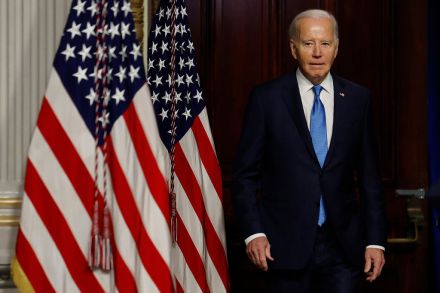
Biden

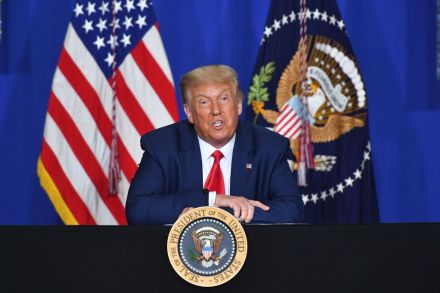
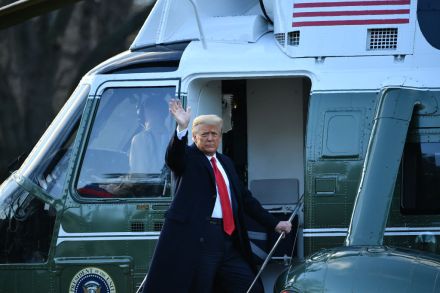
What is Trump’s new foreign policy?

From our UK edition

26 min listen

Freddy Gray speaks to author Jacob Heilbrunn about what another term in office for Donald Trump might mean for America's foreign policy, its relationship with Israel, and the war in Ukraine. How have his views changed since last time? And what will his relationship with Putin be like?
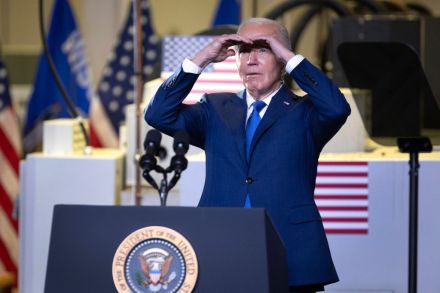
Why is Biden so unpopular?

From our UK edition

23 min listen

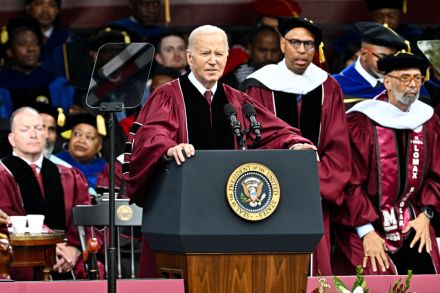
New York Post writer Miranda Devine joins Freddy Gray to discuss Joe Biden's unpopularity. Why are Americans increasingly not supporting him? And how have Biden family scandals and rumours affected trust in the President? In a week that Biden gave a commencement speech, they also discuss the recent controversy over NFL kicker Harrison Butker's speech. What insight does the reaction to the speech tell us about America today? Produced by Natasha Feroze and Patrick Gibbons.

Is Biden losing the swing states?

From our UK edition

19 min listen

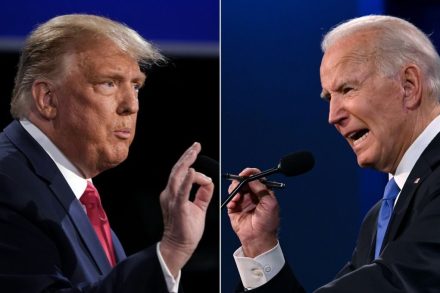
Matt McDonald, managing editor of the US edition of The Spectator, joins Freddy Gray to discuss whether Biden is losing the swing states, the potential outcome of the Trump-Biden TV debates, and who the polls are spelling trouble for.  Produced by Megan McElroy.

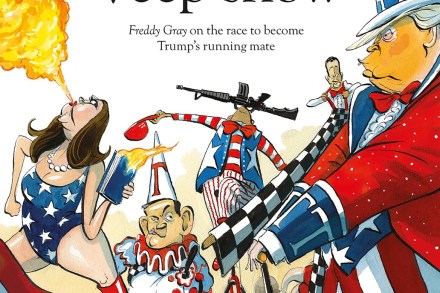
Who could be Trump’s VP?

From our UK edition

32 min listen

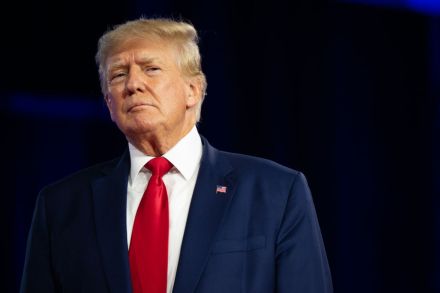
Freddy Gray talks to American columnist and commentator Guy Benson about who is in the running to be Trump's Vice President. Who does Trump want? But more importantly what does the Trump ticket need?  Also: Biden/Trump debates appear to have been confirmed. Who will the debates benefit most? And how relevant are they in the digital age? Produced by Natasha Feroze and Patrick Gibbons.

border

The case for cartel wars

Washington makes a fundamental error when it sees the present border crisis as an immigration problem, rather than the national security problem it has become under President Biden. For border states such as Texas, which bear the brunt of the situation, it’s also becoming a constitutional problem. In January, the US Supreme Court vacated an injunction prohibiting the feds from cutting razor wire that Texas had placed across a 2.5-mile stretch of border near the town of Eagle Pass. Governor Greg Abbott responded by asserting his state’s fundamental right to self-defense in the face of federal inaction, citing constitutional authority.

elders

Should elders be respected?

For the left, the world has always been, and always will be, a scandal. In this American election year, it has not escaped their anger and disgust that of the two presumed candidates for a second residential lease on 1600 Pennsylvania Avenue the incumbent is eighty-one years of age, while his challenger is seventy-eight. Yet that societies should be governed by their elders was taken for granted through all of human history down to very recent times. This was owing not to their experience alone, but to the fact that premodern people lived substantially in the past, recognizing that it — as Faulkner said — “is never dead, it’s not even past.

Is Donald Trump really going to be a dictator?

From our UK edition

23 min listen

Freddy speaks to Norman Ornstein, political scientist and emeritus scholar at the American Enterprise Institute. They discuss the possibility of Donald Trump becoming a dictator, his ongoing court cases, and if there's a double standard in the treatment of Trump vs Biden.

Reflecting on Trumpism in Pittsburgh

Pittsburgh  Over the past few decades, Pittsburgh has become the poster boy for industrial transformation, going from Steel City to shiny hi-tech hub. Butone thing that has not changed is the local argot. “I have landed among the Yinzers,” my friend Damir Marusic, who is an op-ed editor at the Washington Post, proudly texted me when he arrived in Pittsburgh. Marusic is a fast learner. “Yinzer” remains the endonym of preference in Pittsburgh, where it was derived more than a century ago from the second-person plural pronoun by Ulster immigrants and shared with the later blue-collar workers from Central and Eastern Europe who labored in the hulking mills along the Monongahela.

Pittsburgh
Mauritania

Modern-day slavery in Mauritania

In April 1864, the US Senate passed a bill that set in motion what would become the Thirteenth Amendment to the Constitution. Slavery was to be abolished. Seven months later, Union forces would burn Atlanta to the ground, a year after Lincoln’s address at Gettysburg marked the battle that began the South’s collapse and the April 1865 surrender of General Robert E. Lee and his Confederate army. The Civil War remains the bloodiest and most divisive conflict in American history with at least a million dead, including soldiers and civilians from both sides. You might think that given American history, if slavery had an in-your-face visibility anywhere on the planet, Congress would call for intervention by the UN, perhaps threaten to send in the Marines. Think again.

Will abortion decide the 2024 election?

From our UK edition

34 min listen

This week, the Arizona Supreme Court reinstated a law from 1864 that bans nearly all abortions in the state. But where do Trump and Biden stand on abortion, and will it be a deciding factor in the 2024 election?  Freddy's joined by Inez Stepman, Fellow at the Claremont Institute, and Daniel McCarthy, Editor of Modern Age Journal.  Produced by Megan McElroy.

Will Biden support Ukraine’s attacks on Russia?

From our UK edition

46 min listen

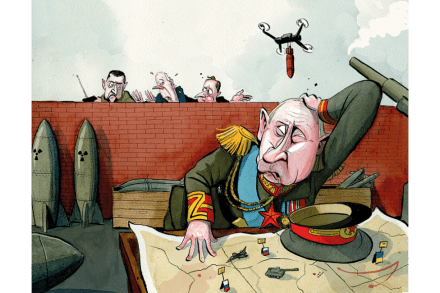
This week: will Biden support Ukraine’s attacks on Russia? Owen Matthews writes the cover piece in light of the Zelensky drone offensive. Ukraine’s most successful strategy to date has been its ingenious use of homemade, long-range drones, which it has used to strike military targets as well as oil refineries and petrol storage facilities in Russia. The strikes are working but have alienated the US, who draw a red line when it comes to attacks on Russian soil. Owen joins the podcast alongside Svitlana Morenets, author of The Spectator’s Ukraine in Focus newsletter to debate what comes next.

Kangaroo courts and bills of attainder

I want to talk about two things in this column: bills of attainder and kangaroo courts. The two often go together. What is a “bill of attainder?” We get the term from English law. A person or persons whom the people in charge don’t like is “attainted.” Forget about due process, presumption of innocence, or any such quaint ideas. Bills of attainder worked through the untrammeled deployment of state power. To be accused was tantamount to being found guilty; common penalties included the abrogation of the right to own property, and, not infrequently, the right to life itself.

attainder
press fake news media consultancy journalism

The depressed press

There is a recurring type of incident that reflects the insularity of today’s media class: “Everyone was talking about it, but no one reported it.” There is no stronger indictment of contemporary media bias — it doesn’t arise just out of partisanship, nor out of opposition to reporting stories that displease our ruling class. It reaches the point of actively lying and covering up things any average American knows to be true. The most prominent recent example is found in the reaction to Special Counsel Robert Hur’s findings regarding Joe Biden’s hoarding of classified documents.

debt

Want student loan forgiveness? Make universities pay

At the turn of the twentieth century, Saturday Evening Post editor and Yale dropout George Lorimer bitingly summed up academia when he said “colleges don’t make fools, they only develop them.” On the heels of yet another multibillion-dollar Biden administration college bailout, it seems we haven’t learned the lesson: colleges might not make fools, but they’re certainly trying to make fools of us. The bailout projects come from a Biden campaign promise: “I will eliminate your student debt.” Half-slogan, half-bribe, this resonated with millions burdened by the unpayable debt brought on by liberal arts degrees that may barely be worth the paper they’re printed on.

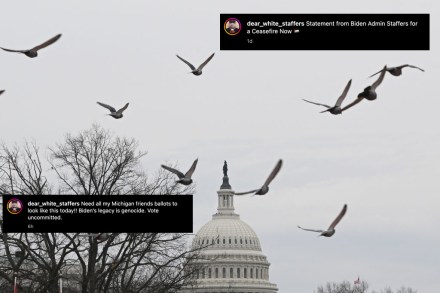
Is ‘Dear White Staffers’ losing favor with the left?

“Dear White Staffers”, an Instagram account that blew up just a couple of years ago for reporting alleged mistreatment of staff on Capitol Hill, is now under fire from some members of the progressive left for allegedly engaging in performative activism. The account joined Instagram in 2020 and quickly built a reputation for being a place where congressional staffers could anonymously share horror stories about their offices and dissuade others from joining toxic work environments. The account has more than 100,000 followers and is closely watched by members of Congress — and now the Biden administration, as White House employees have started making their own submissions to the “Dear White Staffers” DMs.

dear white staffers

How foreign policy will impact the 2024 election

Donald Trump’s long march through the Republican primaries leaves little doubt about the inevitability of a Biden-Trump rematch in November — court cases and old age notwithstanding, of course. Unlike previous contests, foreign policy looks set to be at top of mind for many voters. Which, if you’re a Biden supporter, isn’t great news. In a recent AP poll, four in ten American adults named foreign policy as issues the government should work on in 2024. The president’s decisions abroad broadcast weakness, lack of direction and myopia, traits that have come to define his first term. The deadly and chaotic withdrawal from Afghanistan was only a sign of things to come, as more conflicts and crises sprang up around the world.

policy
trump

What will the new Trump foreign policy look like?

A month after the election shock of 2016, CBS’s John Dickerson sat down with the ninety-three-year-old Henry Kissinger to get his assessment of the incoming president. “Donald Trump is a phenomenon that foreign countries haven’t seen,” Kissinger pronounced, noting that many nations would have to weigh “their perception that [Barack Obama] basically withdrew America from international politics, so that they had to make their own assessment of their necessities,” along with “a new president who is asking a lot of unfamiliar questions.” Given “the combination of the partial vacuum and the new questions, one could imagine that something remarkable and new emerges out of it,” Kissinger added. “I’m not saying it will. I’m saying it’s an extraordinary opportunity.

biden ward

Who’s really behind the Biden administration’s foreign policy?

If you’re one of the many people worried that US foreign policy is in the hands of a visibly declining eighty-one year-old president, Alexander Ward’s account of the Biden administration’s first two years in office may — or may not — make you feel better, for he leaves readers with little doubt as to who is actually the executive branch’s most influential decision-maker: forty-seven year-old national security advisor Jake Sullivan. Ward might deny any such authorial intent, but time and again he shows his hand, as when he invokes “Sullivan’s first two years at the helm alongside Biden.

The 2024 campaign cage fight

The modern political observer has moved on from the idea that “all politics is local.” In our interconnected world, politics now comes down to sophisticated data analytics, nationwide donor networks and money that’s used to drive the narratives that take hold on 24/7 cable news or social media. “All politics is local” is the type of Rockwell-esque trope that wasn’t necessarily true even when the phrase debuted in 1932, let alone when former House speaker Tip O’Neill made it popular. But last year showed us that even old clichés are subject to a gritty reboot.

2024
empire

The course of the American empire

In the 1830s, the English-born American artist Thomas Cole painted an ambitious sequence of five large rectangular canvases delineating “The Course of Empire.” He began with “The Savage State,” which depicts the rude life of humans before the advent of letters, domestication and permanent architecture. “The Arcadian or Pastoral State” is marked by harmony and some early accoutrements of civilization. “The Consummation of Empire,” at fifty-one inches by seventy-six inches, is a third larger than its fellows. Here we see a sun-drenched landscape transformed by a panoply of classical architecture counterpointed by bustling commerce and a triumphal, if overripe, stateliness. Next comes “Destruction.