Better Call Saul

Vince Gilligan wins again with Pluribus

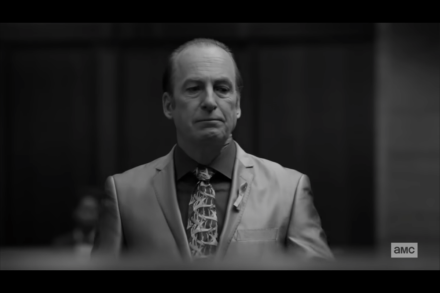
Say what you will about Breaking Bad and Better Call Saul creator Vince Gilligan, but there are few showrunners who are better at starting a series off with a bang. Who could forget the spectacle, from the pilot episode of Breaking Bad, of Bryan Cranston’s pants-less, intense-looking Walter White, addressing his family – and by extension, the audience – by saying “My name is Walter Hartwell White. I live at 308 Negra Arroyo Lane, Albuquerque, New Mexico, 87104. To all law-enforcement entities, this is not an admission of guilt?" Or Bob Odenkirk’s half-hapless, half-sly Jimmy McGill, aka Saul Goodman, leading a black-and-white half-life in Omaha, Nebraska, as we slowly, inexorably observe the circumstances that have led to his downfall?
pluribus

The greatness of Bob Odenkirk

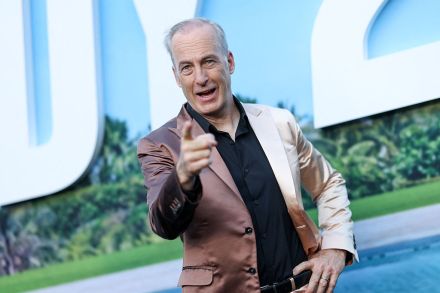
If viewers of Breaking Bad had taken bets during the show’s original run on which of the cast was likely to become a breakout action-film star a decade after the series finished airing, Bob Odenkirk would likely have been near the bottom of that list. The young actor Aaron Paul was perhaps the most obvious prediction, but Jesse Plemons, Dean Norris – even a grizzled and pumped Bryan Cranston – were all more predictable choices to do an alpha-male Liam Neeson-meets-Keanu Reeves act than the foppish comic relief Jimmy McGill, aka criminal lawyer (in both senses) Saul Goodman.

Bob Odenkirk (Getty)

Masters of the Air is an old-fashioned TV masterpiece

The greatest show of the "new” TV era is probably Better Call Saul. It’s introspective and cynical and novelistic — and even the “good guys” aren't good guys; they’re just flawed rather than evil. Among those who’ve sold their souls, and others who never had them, our charming lead, Jimmy McGill is working to get his back, having pawned it off. It’s the best storytelling and characterization that the current style of TV can produce, and a triumph for the medium. Masters of the Air is a very different beast. It has the young rising talent of today — notably, Austin Butler and his Elvis voice, alongside Saltburn’s Barry Keoghan and the always excellent Callum Turner — and a bloated 2020s TV budget.

masters of the air

The quiet end of the Golden Age of television

This week's finale of AMC's Better Call Saul represented a quiet end to the Golden Age of Television. It's a fitting end for Prestige TV — marked by lavish sets, sex, violence and episodes as expensive as feature films — to end with a small black-and-white ode to a spin-off. Bob Odenkirk's performance as Jimmy McGill/Saul Goodman, a pivotal bit character in Breaking Bad a decade ago, was marked by over-the-top colorful courtroom flair, but it ends with somber black-and-white drama and a quiet prison cell, serving almost as a muted on-screen act of penance for all that came before.

prestige tv golden age television better call saul

Bracing for the tension of Better Call Saul

Next week will see the final tranche of episodes of the sixth series of Better Call Saul swaggering onto Netflix. They follow a tense mid-season cliffhanger that saw the sudden death of one major character and the unexpected return of a former nemesis. Expectations for the last installment are appropriately high, not least because of the much-heralded return of the two characters who defined the Breaking Bad universe from which the series was spun off: Aaron Paul’s hapless Jesse Pinkman and, most excitingly of all, Bryan Cranston’s Walter White. Better Call Saul’s creators, Peter Gould and Vince Gilligan, are intelligent men. Gilligan was responsible for Breaking Bad, on which Gould was a writer, producer and director.