Bbc

I love that people assume I’m gay

From our UK edition

At a birthday dinner over the weekend I was introduced to this delightful party girl of a certain age whose diet for the evening consisted of chips and Grey Goose vodka on the rocks with lime. She launched straight into the praises of this marvellous gay couple she knew in the area who were mad keen on hunting, kept getting injured but didn’t care, and who she was sure I’d get on with like a house on fire. They did indeed sound like my kind of people. But it was only later, after my new friend had had a few more and she had expressed surprise at the existence of my wife across the table, that she fessed up. ‘I had no idea you weren’t gay. Those clothes. Your manner. That gaunt look...’ I didn’t mind, obviously.
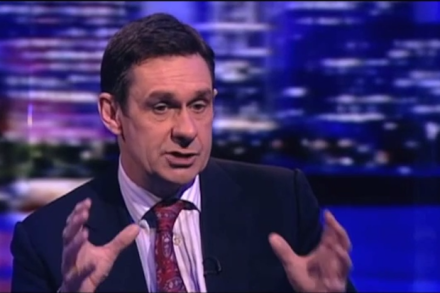
Former Newsnight hack slams Beeb’s referendum ‘propaganda’

From our UK edition

Former Newsnight correspondent Paul Mason seems rather happy to be free of Auntie, especially since the Scottish independence referendum campaign sent the establishment to panic stations: ‘Not since Iraq have I seen BBC News working at propaganda strength like this. So glad I'm out of there,’ he writes on his Facebook page, to the consternation of former colleagues. ‘It's on my friends-only Facebook page so not meant as any great statement other than weariness,' Mason tells Mr S, 'it says what it says.' Lucky, then that he is now at Channel Four News – that famed bastion of slant free news.

How independence will impoverish Scottish culture

From our UK edition

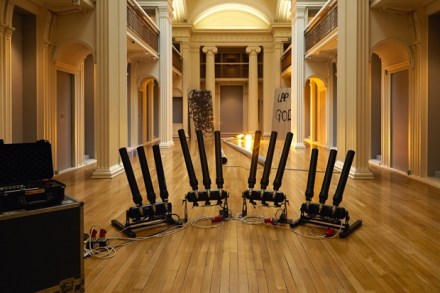
[audioplayer src="http://traffic.libsyn.com/spectator/TheViewFrom22_11_Sept_2014_v4.mp3" title="Fraser Nelson, Tom Holland and Leah McLaren discuss how we can still save the Union" startat=50] Listen [/audioplayer]An explosion of confetti will greet the announcement of Scottish independence. This isn’t another one of Alex Salmond’s fanciful promises, but an installation by a visual artist named Ellie Harrison. She wants Scotland to become a socialist republic. She has placed four confetti cannons in Edinburgh’s Talbot Rice Gallery. They will only be fired in the event of a Yes vote. Most artists in Scotland favour independence. Harrison’s installation is typical of the pretentious agitprop they produce. This isn’t a uniquely Scottish problem.

We need more opinionated English eccentrics making documentaries like, ahem, me…

From our UK edition

Is it just me or are almost all TV documentaries completely unwatchable these days? I remember when I first started this job I’d review one almost every fortnight. Always there’d be something worth watching: on the horrors of the Pacific or the Eastern Front, say; or castles; or Churchill; or medieval sword techniques. But now it’s all crap like The Hidden World of Georgian Needlecraft or In The Footsteps of Twelve Forgotten South American Civilisations Which All Look The Same or A Brooding, Long-Haired Scottish Geographer Shouts From Inside A Volcano Why Climate Change Is Worse Than Ever. The presenters have got more annoying too. I mean, I’m not saying some of the old ones weren’t infuriating with their hand-waving and tics and mannerisms and wheezings.

Rona Fairhead will be good for the BBC – but who was so keen to nobble her rival?

From our UK edition

Hats off to Rona Fairhead, the former Financial Times executive who will succeed Lord Patten as chairman of the BBC Trust. It requires a brave spirit to take on this poisonously politicised role — and Fairhead starts with the disadvantage that everyone thinks they know the roll call of candidates who might have been preferred but declined to apply, including her own former boss Dame Marjorie Scardino, for whose job as head of Pearson, the FT’s parent, Fairhead was passed over last year. But a mole tells me she’s ‘as steely as she’ll need to be’; and leading ladies of the non-executive circuit (she’s on the boards of HSBC and PepsiCo) are also full of praise, though one says: ‘She must like stress.

The real reason behind the BBC’s kicking of Nick Prettejohn

From our UK edition

This is an extract from this week's Spectator. Subscribe here: Hats off to Rona Fairhead, the former Financial Times executive who will succeed Lord Patten as chairman of the BBC Trust. It requires a brave spirit to take on this poisonously politicised role — and Fairhead starts with the disadvantage that everyone thinks they know the roll call of candidates who might have been preferred but declined to apply, including her own former boss Dame Marjorie Scardino, for whose job as head of Pearson, the FT’s parent, Fairhead was passed over last year.

The false paradise of Metroland | 29 August 2014

From our UK edition

Gaily into Ruislip Gardens runs the red electric train… Near the end of the Metropolitan Line, where London dwindles into woods and meadows, stands a Tudor manor house, built within the moat of a motte-and-bailey castle. Now a quaint museum, charting the history of the farms that once surrounded it, this modest landmark shares its name with the local Tube station, Ruislip Manor. A century after they built it, the railway that runs through here still feels out of place. There are fields on one side, suburban semis on the other. Welcome to Metroland, the bizarre no-man’s-land between town and country, created by the Metropolitan Railway, which celebrates its 150th birthday this year.

Who needs drugs when you have Radio 3?

From our UK edition

I’m willing to bet it’s only on the BBC’s Radio 3 that you’ll find yourself listening to a programme quite like Words and Music (Sunday evenings). You might want to disagree. Surely, it’s just a few bits of music stuck together with some poems and other readings on a random theme dreamt up by the production team? How easy must that be to pull off? Seventy-five minutes (or sometimes even longer) of dirt-cheap radio, quick to make, very few overheads, involving just a few hours per programme of research (nowadays so easy on Google) and a dead-simple edit job splicing everything together. But name another station anywhere that could make it work week-by-week with quite the same style, panache and sheer brio of the team at Radio 3.

BBC2’s Hotel India: slums? What slums?

From our UK edition

Viewers who like their TV journalism hard-hitting should probably avoid Hotel India, a new BBC2 series about the Taj Mahal Palace in Mumbai. The tone of Wednesday’s episode was set immediately when the narrator introduced us to ‘one of the oldest and grandest hotels in the world’, where ‘no detail is too small or demand too great’, and there’s ‘an army of staff dedicated to flawless service’. To prove it, head of housekeeping Indrani then strode fearsomely down a corridor like a more elegant version of Hattie Jacques’s matron in the Carry On films.

Frankie Boyle is a cowardly bully, and I’m ashamed I ever stood up for him

From our UK edition

‘Outspoken comic Frankie Boyle has called on the BBC to sack “cultural tumour” Jeremy Clarkson.’ Can anyone tell me what’s wrong with this opening sentence from a recent news report? Clue: it’s that first word. In order to qualify as ‘outspoken’, surely, you need to be the kind of person who fearlessly, frequently and vociferously sets himself in opposition to the clamour of the times. Does demanding that a public figure lose his job for some mildly sexist/racist/homophobic/ableist remark fit into that category? Hardly.

The Village: Sunday-night TV at its most unsubtle and addictive

From our UK edition

Proof that television has changed a bit since 1972 came with an archive clip shown on BBC4 on Sunday. 'My first guest:' Michael Parkinson announced matter-of-factly on his Saturday-night chat show, 'W. H. Auden.' Auden then made his way gingerly down the stairs, lit a fag and began by discussing the failure of the poetry of the 1930s to effect political change. 'Nothing I wrote,' he told Parky, 'postponed war for five seconds or prevented one Jew from being gassed.' The clip appeared in Great Poets in their Own Words, the first of a two-part series combining archive film with talking heads to provide a useful if workmanlike history of 20th-century British poetry.

Why is Radio 3 still leaderless?

From our UK edition

It’s happened almost by stealth but the number of listeners to 6 Music has now overtaken Radio 3, creeping up to 1.89 million per week (just .05 million more than the classical-music station). Actually the margin between them is probably greater because 6 Music has no analogue signal and can only be heard digitally. Whereas 6 Music sounds cool and with its digital playlist capability and big-star DJs is just so on-trend, 3 is being left behind. Even more disturbing, there was no controller available to defend the station and remind us that the listening figures will bounce back in the next quarter because of the Proms effect — two months of nightly concerts, live on air, available online, and heard (and perhaps more importantly admired) throughout the world.

Why won’t the Salmond / Darling debate be shown in England?

From our UK edition

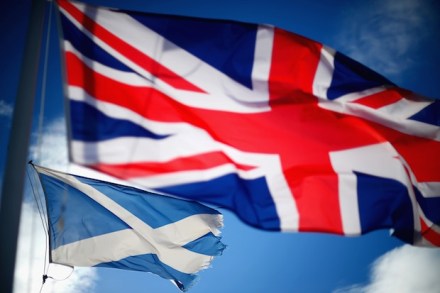
The future of Britain is at stake, but you wouldn't know it from how ITV is behaving. On Tuesday, STV will broadcast a live debate between Alex Salmond and the leader of the No campaign, Alistair Darling. This promises to be one of the pivotal moments in the referendum campaign.  But, depressingly, the only way anyone outside of Scotland will be able to watch it is on the internet via STV Player. The failure to put it on ITV across the whole of the UK reflects the failure to understand that, while only the residents of Scotland may have vote in the independence referendum, the result will affect all of us. If Scotland votes for independence, the rest of the UK will be much diminished. It won't be Great Britain anymore but little Britain.

Lunchtime lobbying from Tristram Hunt

From our UK edition

The search for a new Chairman of the BBC Trust is in utter chaos. After Mr Steerpike revealed that the job description had been altered to insert the ‘Seb Coe clause’, Robert Peston stuck his neck out and said that Lord Coe was a 'shoo-in' for the gig. But Coe has since ruled himself out (for whatever reason — maybe sporting, maybe mayoral) and the race is wide open again. With all to play for, Tristram Hunt, the shadow education secretary, has taken to Twitter to talk up his buddy, the sainted Neil MacGregor: A personal thought on the search for new Chairman of BBC: how about the British Museum's Neil MacGregor.... — Tristram Hunt (@TristramHuntMP) July 30, 2014   (Hunt is evidently a fan.

Spectator letters: In defence of women ministers, Handel and lefty sex

From our UK edition

Give the women a chance Sir: Melissa Kite’s article about the reshuffle seems downright unfair (‘A misogynistic reshuffle’, 19 July). Whatever David Cameron’s motives may be, the women he has promoted to cabinet and other posts in his government are presumably intelligent and hardworking and have certainly demonstrated great stamina. This is true of anyone who reaches these levels in politics. They are no doubt excited to be facing extremely tough challenges, but they must also be quite nervous. Instead of giving them congratulations and encouragement, the best Ms Kite can offer is a prediction that none of them will be very successful.

More big changes expected at the BBC

From our UK edition

Mr S hears that the race to succeed Paxo came down to two candidates: the PM programme's Eddie Mair and Today's Evan Davis. Davis’s move frees up the morning slot — with the berth potentially pencilled in for Nick Robinson after next year's general election. That, in turn, would trigger a race for one of the most coveted jobs in journalism: Political Editor of the BBC. Rest now; but Aunty's game of musical chairs is far from over.

It’s Evan Davis for Newsnight

From our UK edition

With the BBC set to make a formal announcement about Jeremy Paxman's replacement at Newsnight imminently, tweets from BBC staff revealing the news were hurriedly deleted. Not quite all of them, though. Evan Davis to join #newsnight following the departure of Jeremy Paxman. — Lucy Walker (@lucybellewalker) July 21, 2014   It's Evan Davis, apparently. Hardly a controversial choice for the increasingly lefty show, under the stewardship of former Guardian man Ian Katz. Incidentally, hipster Katz has taken to signing off his emails 'iKatz'. Enough said. Update: Talking of email signatures, journalist Neil Midgley tweets Mr S to say 'apparently James Harding uses 'Allbest, James'. Which one BBC wag said 'makes me want him to Shutfuckup'.

Letters: Lord Lawson is not banned from the BBC, and Wales is wonderful

From our UK edition

No ban on Lawson Sir: You write that the BBC ‘has effectively banned’ Lord Lawson from items on climate change unless introduced with ‘a statement discrediting his views’ (Leading article, 12 July). There’s a lot of muddled reporting of this story. Lord Lawson hasn’t been in any sense ‘banned’, and the Editorial Complaints Unit finding didn’t suggest that he shouldn’t take part in future items.

Will the BBC accept that Hamas wants to kill lots of Jews?

From our UK edition

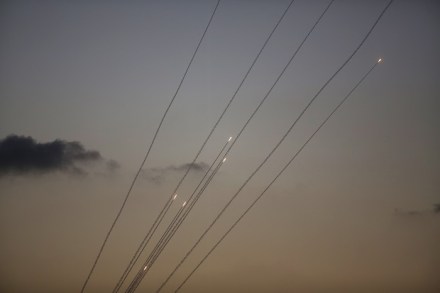
A fairly typically partisan report on the Israel and Palestine crisis last night on the BBC ten O Clock News. The focus was entirely on the killed or injured Palestinians, referred to exclusively as ‘civilians’; the point was made, at the top of the report, that Hamas had killed nobody. Yes, but only because Hamas is utterly useless: it clearly WANTS to kill lots of people, which is why, on a daily basis, it bungs over the rockets – indiscriminately – in an attempt to do so. The rockets which precipitated this crisis. We are enjoined to have sympathy for the Palestinians and treat the Israelis with odium because the former are murderous and incompetent and the latter murderous and adept. It is an infantile sensibility.

Tulisa tongue twister

From our UK edition

The BBC has departments devoted to pronouncing dialect and names; but they must have been in management meetings this morning, leaving news presenter Joanna Gosling to struggle with the name Tulisa Contostavlos: 'We'll just leave it at Tulisa,' said the tongue-tied presenter. The Spectator sympathises with Ms Gosling: try pronouncing Taki's name.