Bbc

Closing credits

From our UK edition

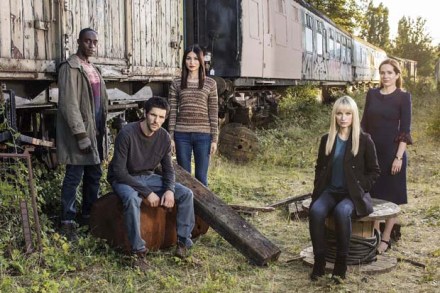
BBC1’s The Missing has been one of the undoubted TV highlights of 2016. Yet, even thrillers as overwhelmingly thrilling as this one have been known to blow it in the concluding episode, when the biggest revelation of the lot turns out to be that the writers couldn’t really answer all the questions that previous episodes had so intriguingly raised. And of course, The Missing had raised more than most, with its fiendish plotting ranging across three timeframes — until last week, that is, when it added a fourth. So could Wednesday’s finale possibly avoid giving us that sense of outraged disappointment that comes from realising we’ve spent weeks looking forward to a full-scale solution that never quite comes?
How can the BBC be allowed to break their own editorial standards?

From our UK edition

I recently had the misfortune of featuring in a BBC documentary that repeatedly breached the corporation’s own editorial standards. I happened to be at the gym when word reached me that BBC Inside Out London wanted to interview me the following day. It was late in the evening, and I was told that the documentary was looking at game shooting and game meat, and the growing popularity of both in London. Not an anti-shooting piece at all, I was assured. Arriving at Regent’s Park for the interview, the team from the Beeb were decidedly furtive. There was much fiddling with phones and muttered conversations between interviewer and producer, in which I clearly heard someone say: ‘Surely he needs to see it in order to have right of reply?’ ‘See what?

BBC attacks ‘lavish’ Netflix for propagating ‘myths’ about the royal family

From our UK edition

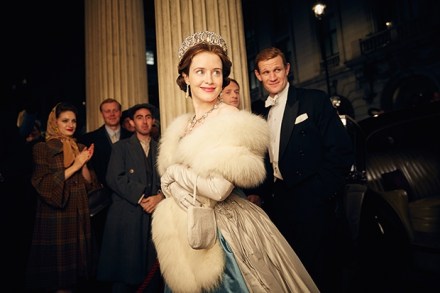
Since Netflix released The Crown, much praise has been heaped on the network for the royal drama. In fact, the series -- a dramatisation of the Queen's early years -- has proved so impressive that several critics have suggested the future of quality drama lies online rather than with broadcasters like the BBC. So, with that in mind, Mr S was intrigued to learn of a BBC article on the series that the corporation have been pushing of late. In a piece titled 'Did the Queen stop Princess Margaret marrying Peter Townsend?

Screen grab

From our UK edition

St James’s Palace. 1953. A dynamic Duke of Edinburgh is relishing a ding-dong with the antediluvian fossils of the Coronation Committee. He wants to embrace modernity by allowing the BBC to televise the ceremony. The ‘grey old men’ want to continue doing things in exactly the same way that they have been done since 1066. Modernity prevails and the coronation is the biggest television spectacular there has been. This episode, splendidly recreated with a little artistic licence in The Crown, Netflix’s epic about the Queen, was a tipping point in terms of the public’s acceptance of the medium of television. Many viewers acquired their first sets for the sole purpose of watching the coronation. Now, in the television world, the wind of change is rising again.

Faulty ignition

From our UK edition

Apart from the next Game of Thrones, there’s nothing I’ve been looking forward to quite as much as The Grand Tour (Amazon Prime). I like Clarkson, Hammond and May, I like banter, I like political incorrectness, I like exotic scenery, I like cars, I like puerile jokes and I liked Top Gear. Take the same ingredients but with a £4.5-million-per-show budget — more than four times what they had with the BBC — and you’d have to ask yourself: ‘What could possibly stop this from being the greatest TV show ever?’ Well, I hate to be a party pooper but it’s definitely not there yet. We had some friends staying for the weekend and we all sat down eagerly after supper, fully expecting to be wowed.

Interest-free credit

From our UK edition

When did you last experience a boring Sunday afternoon? If you’re over 16, probably not since you were last 16 and stuck at home, raindrops sliding down the window pane, nothing on TV until five o’clock, nowhere to go because everywhere is shut. But boredom, says Phill Jupitus, has become an endangered emotion. Now that we have smartphones, at a gentle swipe, the touch of a button, we have access to any amount of diversion, 24 hours a day. We need never find ourselves with nothing to do, nothing to read that takes our fancy, no one to talk to. He’s not happy about this.

Insulting people who think differently from you isn’t the way to engage people

From our UK edition

There were two items on BBC radio this morning which rather summed up the Corporation thinking about the State of the World. One was a brief but telling discussion on the Broadcasting House programme as to whether our political discussion now is getting to the point where we can’t actually air differences at all;  that, after Brexit and the Trump election, we are so utterly divided ideologically that common ground is impossible to find. It was an interesting conversation between Catherine Mayer, the co-founder of the Women’s Equality Party, and Iain Martin, who, while a Brexiteer, is also opposed to Trump.

Philip Hammond and John McDonnell go head-to-head – but are we any clearer on Brexit?

From our UK edition

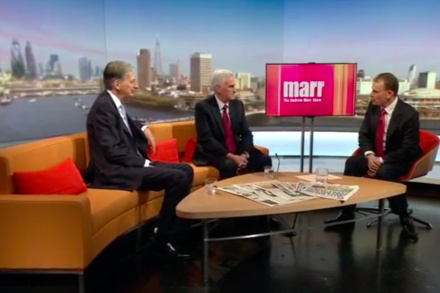
This morning’s Marr show was something of a financial matter, with the Chancellor, Philip Hammond, and Shadow Chancellor John McDonnell sharing the sofa. As Andrew Marr pointed out, having the pair of Chancellors share a sofa is a ‘great tradition’, but one that had a stop put to it when George Osborne was in charge. Now the tradition has come back – but it this morning’s performance might be a good example of why Osborne chose to put a stop to it in the first place. The general consensus seems to be that McDonnell came out on top – with commenters saying that he ran rings around Hammond. Naturally, lots of the talk was about Brexit. But Hammond stayed fairly quiet on the topic, refusing to reveal the government’s negotiating cards.

Brexit, Trump and the pious rage of the liberal clergy

From our UK edition

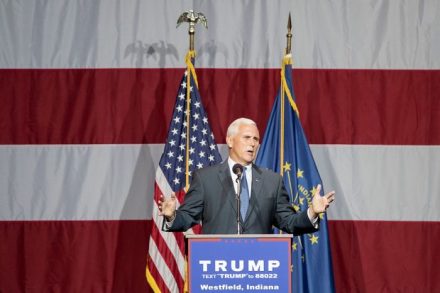
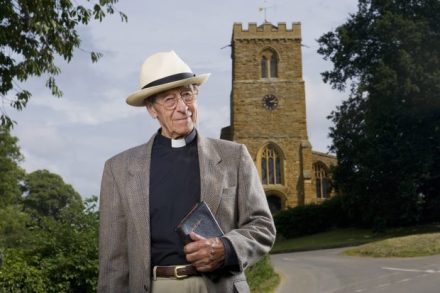
Here are some statistics you're unlikely to hear on Thought for the Day. Churchgoers in America backed Trump by 56 to 42 per cent – while six out of ten British Christians backed Brexit. Now, clearly these aren't identical constituencies: I didn't spot much enthusiasm for the US president-elect among Christian Leave voters. But we can spot one shared trend. Churchgoers on both sides of the Atlantic ignored the earnest but quietly hysterical entreaties of liberal church leaders to spurn Leave and Trump. (You might say: American evangelicals don't have left-leaning bishops – but American Catholics most certainly do, and they still voted for Donald Trump by 52 to 45 per cent.) What a nightmare for liberal clergy!

Old stamping ground

From our UK edition

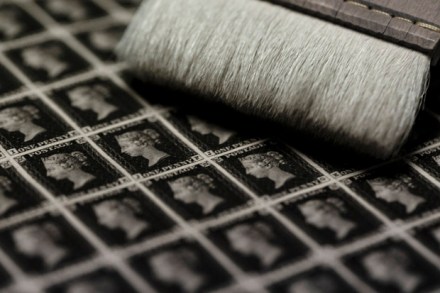
If I tell you that on Monday there was an hour-long documentary about the history of stamp-collecting, then you probably don’t need this column’s usual bit in brackets saying which channel it was on. Indeed, at times Timeshift: Penny Blacks and Twopenny Blues seemed determined to be the most BBC4-like programme in the history of BBC4: cheerfully niche, heroically indifferent to all notions of cool and so old-school in its production style that any mention of France was introduced with a blast of accordion music. Above all — and unlike so many other documentaries elsewhere — it was wholly confident that its viewers would be interested in interesting things without having to be shrilly reminded every few minutes of how interesting they are.

Music matters

From our UK edition

There’s nothing new about Radio 3 tearing up the schedules, temporarily abandoning regular favourites such as Private Passions, The Early Music Show, Choral Evensong in search of creative freedom. Its first controller was not just given permission but instructed by the director general, Sir William Haley, to ignore the demands of Big Ben and the news schedule in favour of allowing concerts to run on beyond the hour and to be heard just as they would have been in the concert hall, with ‘live’ operas broadcast in full from Paris or New York. There was to be ‘no annotation’, no commentary on the music that had just been heard.

Losing heart | 3 November 2016

From our UK edition

In 2015, the first series of Humans (Sunday) was apparently Channel 4’s most watched home grown drama since The Camomile Lawn: a programme broadcast when Neil Kinnock was still the Labour leader and given a obvious ratings boost by the tabloid outrage about its many nude scenes (and by its many nude scenes). In the case of Humans, though, the British people can’t be accused of ulterior motives, because this is a winningly intelligent piece of sci fi that ponders, among other things, the nature of consciousness and the future of the human race. Cleverly, too, it’s set, not in a domed city of jet packing commuters, but in a world very like our own.

Jeremy Clarkson takes one last swipe at Danny Cohen

From our UK edition

Although Jeremy Clarkson has now moved to Amazon Prime to host a new car show, it appears that the BBC is never far from the former Top Gear host's mind. In an interview with the Sunday Times over the weekend, Clarkson couldn't resist revisiting his ongoing feud with Danny Cohen, the former director of television at the BBC. With Cohen -- a darling of the liberal elite -- thought to be instrumental in his sacking, it comes as little surprise that Clarkson is boosted by the news that Cohen, too, has now departed the Beeb. Speaking of the former director of television's exit, Clarkson says it was 'inevitable'. 'Of course he’s gone. That was inevitable. You can’t have a man like that running anything,' he says. As for Cohen's outlook on the world?

Stand by your imam: Shakeel Begg and his apologists

From our UK edition

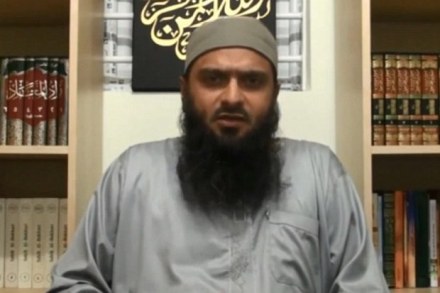
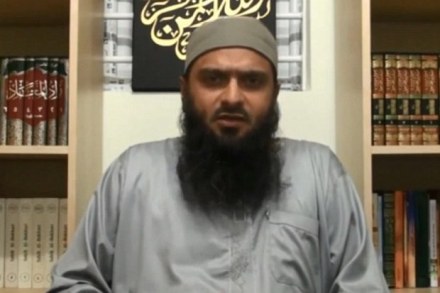
There have been two fascinating developments in the case of Shakeel Begg, the Imam of the Lewisham Islamic Centre. As I described here on Friday, Begg sued the BBC for describing him as an extremist, only for the judge in the case to last week dismiss the claim and confirm for the whole world to see that Begg is indeed an extremist. On Friday I mentioned that industry of clueless klutzes and sinister beards who make up much of the ‘interfaith’ racket in this country. Paragraphs 33 and 34 of the judgement in the case of Begg vs Beeb might serve as the purest distillation of this phenomenon.

The BBC wins a landmark victory in the fight against Islamic extremism

From our UK edition

Shakeel Begg is an influential extremist who is also chief Imam of the Lewisham Islamic Centre.  His radical views are readily available and well-known.  But despite these downsides a chap like him also possesses certain considerable advantages.  Not least is the fact that he lives in a society which is only very slowly waking up to the threat that people like him pose. If Begg were a Protestant preacher from Northern Ireland then he would not have been able to make any public appearance for years without being forced to bake the biggest, gayest cake possible right there and then.  If he refused, the whole of civilised society would round on him to explain what a great big ‘phobe’ he was.

Letters | 27 October 2016

From our UK edition

Bear baiting Sir: I couldn’t agree more with Rod Liddle’s exposé of western politico-militaristic hypocrisy (‘Stop the sabre-rattling’, 22 October). We’ve already poked the Russian bear way too hard — unnecessarily so. What Rod could have also highlighted was that Nato has spread so far eastwards that it’s a blessed surprise the next world war hasn’t already started. It almost did in 1962 when Khrushchev tried to move nuclear missiles into Cuba. The same principle applies to what ‘we’ are doing now — frontline, aggressive technologies, nuclear-implied, established in the old Soviet states of Latvia, Estonia, Lithuania and even Poland.

Sweet sorrow

From our UK edition

So, is that it? The end of sweetness, and the end of taste? Physically speaking, those things will no doubt carry on, when The Great British Bake Off moves to Channel 4 next year. We’ll still take vicarious pleasure in the mouth-watering sweetness of someone’s ‘crème pat’. The taste of lavender will still ‘come through’ in a contestant’s 12 identical puff pastry miniatures. But I’m referring to the abstracts: the sweetness, and the taste. I fear that those might have gone for ever.

Identity crisis | 27 October 2016

From our UK edition

You may not listen to them every year. Or even to every lecture in the current series. But the survival of the annual Reith Lectures on Radio 4 from the old days of the Home Service and Radio 3 (they were established in 1948 to honour what Reith had done for the corporation) is crucial to the existence of the BBC.

The Spectator’s notes | 20 October 2016

From our UK edition

Vote Leave was the most successful electoral campaign in British history. Against the opposition of all three political parties, it won, achieving the largest vote for anything in this country, ever. But voting to leave is only the essential start, not the fulfilment, and now there is no Vote Leave. After victory, the campaign’s leaders went their various ways. Some were lulled into a false sense of security by Mrs May’s clear declaration of Brexit intent, and by the fact that one of their top colleagues, Stephen Parkinson, is now installed in 10 Downing Street. Nick Timothy, now all-powerful in Mrs May’s counsels, was running the New Schools Network during the campaign.

Digging for the truth

From our UK edition

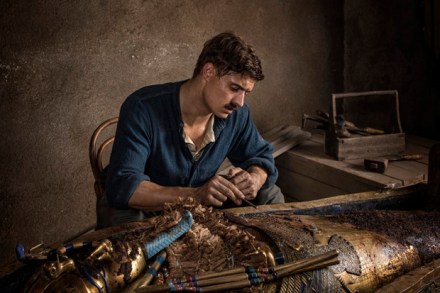
The discovery of Tutankhamun’s tomb may well be one of the 20th century’s great stories — but naturally that doesn’t mean a television drama won’t want to jazz it up a bit. Or, in the case of ITV’s lavishly produced but distinctly corny Tutankhamun, quite a lot. The programme gives us a Howard Carter younger and considerably hunkier than in real life. It throws in a couple of smitten hotties to emphasise the fact. Above all, it transforms Carter into the archaeological equivalent of a maverick TV cop: a man who doesn’t play by the rules, isn’t afraid to follow wild hunches but, by God, gets results.