Bbc

The terrible truth

From our UK edition

Here’s the bad news. One day you or someone like you will be shopping in a mall or enjoying a concert or about to catch a train when the first sudden, sharp crack will rend the air and your world will change forever. Around you, people will start to crumple and as the panic and horror finally dawn the screams will begin while the automatic rifle fire escalates and those still standing will begin to flee — but where to? If you run away from the gunfire you’re being herded into a trap. If you run towards it you’ll be shot, either killed immediately, or casually, later, as you lie wounded, probably by knife to save ammo.
All in the mind | 2 March 2017

From our UK edition

At the third UK International Radio Drama Festival held last week in Herne Bay, entitled ‘And Let Us Listen to the Moon’, the entries included an Australian play about Chekhov, the limericks of Edward Lear translated into Serbian, a Czech version of Hamlet in which the palace at Elsinore is transformed into a sporting arena, and a play from Palestine in Arabic about three female political activists. Fifty dramas from 17 countries and in 15 different languages were broadcast at various venues across the Kentish town.

Olden but golden | 23 February 2017

From our UK edition

This weekend Brian Matthew will present his last-ever Sounds of the 60s show on Radio 2. Now 88, he’s been in charge at breakfast time on Saturdays since 1990, his gravelly voice deepening and getting hoarser with the years. You could tell he was well past his clubbing prime, or for that matter being able to dance along to Bryan Ferry. Yet this has never mattered. Matthew’s band of devoted listeners have cherished his weekly two hours on air precisely because of his age. It has meant he was there when those classic Sixties’ records were made. He met the Beatles in their prime, and Dusty Springfield, Steve Winwood, Alan Price, Sandie Shaw.

Occupational hazard

From our UK edition

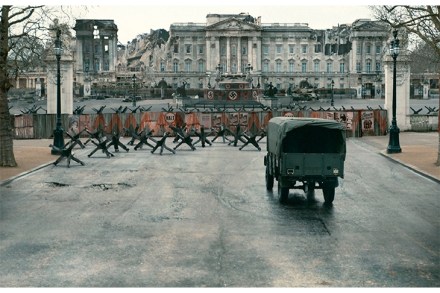
Rival law-enforcement agencies arguing about which of them should investigate a murder has, of course, been a staple of crime dramas for decades. Rather less common, though, is for the agencies in question to be the Metropolitan Police, the Gestapo and the SS. SS-GB (BBC1, Sunday), based on Len Deighton’s novel, poses the undeniably interesting question of what this country would have been like in 1941 if Germany had won the Battle of Britain. Its primary answer is that — in every way — it would have been very murky indeed. Again, plenty of crime dramas over the years have created a suitably noirish atmosphere, while cunningly saving on the lighting budget at the same time.

Mandy’s BBC interview riles the Corbynites

From our UK edition

Oh dear. Yesterday Peter Mandelson appeared on the Andrew Marr Show to warn of the dangers of Brexit. The New Labour grandee used the primetime slot to criticise the government's handling of Brexit and call for an Article 50 rebellion in the Lords. While Mandy managed to refrain from attacking Jeremy Corbyn, Mr S understands it wasn't enough for Labour's high command. In fact, a number of senior Corbynites are rather annoyed with the BBC that he was on so close to two crucial by-elections in Leave areas when the slot could have been given to a member of the shadow cabinet -- or the dear leader himself.

United nations

From our UK edition

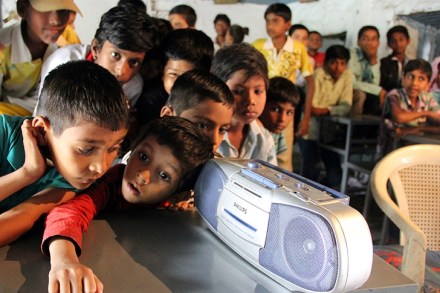
The Indian Prime Minister has twigged something that President Trump has yet to understand. On Monday, celebrated as World Radio Day, Narendra Modi tweeted his congratulations to ‘all radio lovers and those who work for the radio industry and keep the medium active and vibrant’. Modi uses radio to reach out to those in his country who live in its most remote and inaccessible corners, giving a monthly address to the nation known as ‘Mann Ki Baat’ (or ‘To mind’). He says it’s his way of ‘sharing his thoughts’ with his citizens, and a useful way of extending the tentacles of government into those areas where television sets are uncommon, let alone computer screens or smartphones.

Fatal attraction | 16 February 2017

From our UK edition

Recently on holiday I did a very bad thing. I nearly left the Fawn to die on a precipitous mountain path in the Canary Islands because she was having a terrible attack of vertigo that was threatening to spoil my fun. No, worse: it actually did spoil my fun. Now that I’m old and boring I desperately need little jabs of adrenaline to remind me I’m still alive, and this particular route was doing the job quite nicely. Although it’s actually so undangerous that even my eightysomething dad can do it, it’s reasonably steep, it’s gobsmackingly picturesque, and it does now and then give you at least the illusion of a thrill because if you were to slip over the precipitous edge you’d definitely, definitely die.

Why do liberal lefties cling to these unlikely heroes such as Bercow?

From our UK edition

The BBC again. A profile of the speaker, John Bercow, for Radio Four. His  pet cat is called 'Order' – hilarious! And he’s stood up for stuff like same sex adoptions and opposed the 'nasty' (qv- BBC again) tendencies of the Tory Party. What a lovely bloke! And he’s been bloody brilliant as a speaker! This was the conclusion we were invited to draw from Mark Coles’s profile, which ran on Radio Four just before 18.00 on Sunday. Aaah, you hold your heads in the hands and wonder. Mark Coles is a superb reporter and one of the most talented makers of radio packages I have ever come across – a dying art, incidentally. He is also an old friend who I haven’t seen for a long time but who nonetheless I like a lot.

Watch: BBC gives John Bercow a lesson in virtue signalling

From our UK edition

Yesterday James Duddridge, the Tory backbencher, tabled a motion of no confidence in the Speaker. It comes after John Bercow took the government by surprise on Monday by declaring that President Trump was not welcome to address Parliament on his upcoming state visit. Given that Trump had expressed no desire to do so and several world leaders with questionable human rights records have been welcomed by the Speaker in the past, Bercow's comments have led to calls for him to resign. As the row rumbles on, the Beeb have now followed suit and banned Trump from This Week.

Rules of engagement

From our UK edition

The BBC foreign correspondent Hugh Sykes was meant to be talking about how music has shaped his life with Sarah Walker on Essential Classics last week (Radio 3, Friday), but their conversation actually gave us far more crucial insights into why he has won awards for his work, reporting from troubled places such as Tehran, Baghdad, Belfast, Berlin and Islamabad. He stressed the importance of checking your facts, ‘Verify, verify, verify’, and especially now that the demand for instant news coincides and conflicts with the torrents of information flooding the internet. ‘Never report anything until you’ve got at least two sources,’ Sykes insisted. He also explained how easy he found it to get people talking. ‘I’m holding a microphone. I ask a question.

Protest all you like. I won’t listen until you burn

From our UK edition

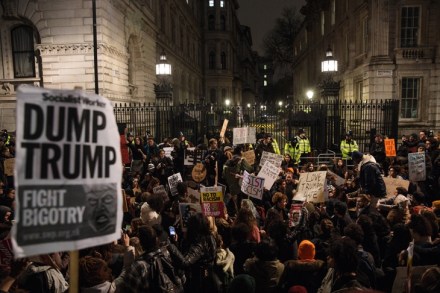
I think on balance I would prefer people to demonstrate their opposition to political developments — Brexit, the forthcoming state visit of Donald Trump and so on — by setting fire to themselves in the manner of outraged Buddhist monks, rather than simply by clicking ‘sign’ on some internet petition. I think the self-immolation thing carries more force. It is true that a mass conflagration of a million and a half people in Trafalgar Square would, in the short term, greatly exacerbate the appalling smog afflicting London as a consequence of wood-burning stoves. But as most of the signatories of the petition against Trump coming probably own all of those stoves, we would be killing two birds with one stone.

The real George III

From our UK edition

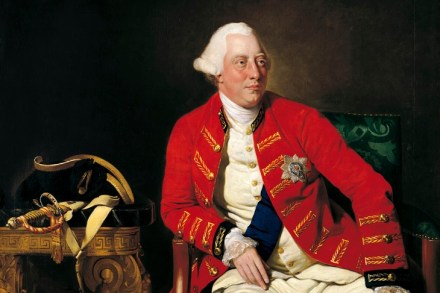
Before he died aged 44 (probably of a pulmonary embolism, poor chap), Frederick, Prince of Wales, compiled a list of precepts for his son, the future George III. ‘Employ all your hands, all your power, to live with economy,’ was one. ‘If you can be without war, let not your ambition draw you into it,’ was another. The result of such sensible parentage is that today, about the only things we know about our third-longest-reigning monarch are that his nickname was ‘Farmer George’, that he lost America, and that he went bonkers, providing a lucrative franchise for the significantly more famous playwright Alan Bennett.

Adult entertainment | 26 January 2017

From our UK edition

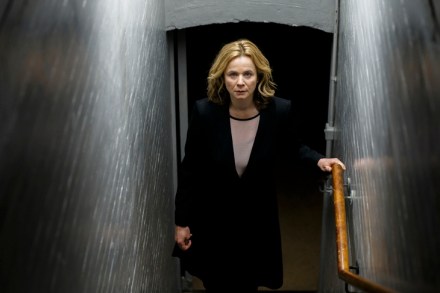
The mid-life crisis novel, I think it’s fair to say, is traditionally a male form. But in Louise Doughty’s Apple Tree Yard, the person feeling a bit trapped in what might seem a pretty nice life — while also fretting about how much (or how little) sex the rest of it will contain — is fiftysomething Yvonne Carmichael: wife, mother and all-round radiator of female competence. In BBC1’s adaptation of Apple Tree Yard (Sunday), Yvonne was first heard giving us a brief meditation on the provisional nature of civilised behaviour — a voiceover, it turned out, being delivered as she travelled in the back of a prison van.

Theresa May lost for words on Marr over Trident ‘malfunction’

From our UK edition

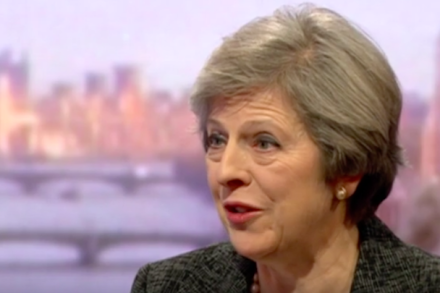
This morning Theresa May appeared on the Andrew Marr show to talk Trump and Trident. While the Prime Minister successfully batted away suggestions that she wasn't doing enough to challenge the US President on feminism -- stating that the fact she will be there 'as a female prime minister' when the two meet is the biggest statement to be made about the role of women -- she struggled on the latter topic. Following a report by the Sunday Times that a serious malfunction in June of Britain's Trident nuclear weapons deterrent was covered up by Downing Street, Marr asked May if she had known about the Trident misfire when she told MPs it should be renewed.

Spot the ball

From our UK edition

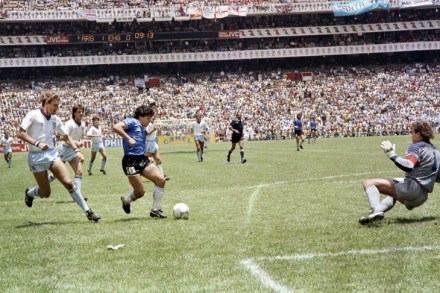
The purest form of radio is probably sports commentating, creating pictures in the mind purely through language so that by some magic the listener believes that they were there, too, when Geoff Hurst scored that final goal, Shergar ran out the field at Epsom, Mo Farah sped ahead on Super Saturday. As Mike Costello said last Thursday on Radio Five Live’s celebration of 90 years since the first outside broadcast from a rugby match on 15 January 1927, ‘We’re all blind when we listen now, just as we were back in the 1930s.’ The technology has changed radically but radio still relies on the skill of an inspired individual to communicate the atmosphere, the tension, the thrill of seeing something extraordinary happening in a sports arena.

Safe and sound

From our UK edition

This week the Southbank Centre began its ‘Belief and Beyond Belief’ festival — a series of concerts and talks claiming to explore the influence of religious inspiration on music. Last summer, after reading its miserably right-on publicity material, I wrote in this column that ‘Beyond Parody’ might be a better title. Jude Kelly, the Southbank’s artistic director, accused me of jumping to conclusions before the programme had been finalised. Well, now it has. In addition to concerts with no discernible connection to their composers’ faith, we’ll be treated to ‘How to be a Shaman’, ‘Mindfulness’, ‘What If God Was A Woman?’ and ‘Right to Die?’.

Dual control | 19 January 2017

From our UK edition

Revolting (Tuesdays) is the BBC2 comedy series that spawned the now-infamous sketch ‘Real Housewives of Isis’. It has been watched on the BBC’s Facebook page nearly 30 million times and rightly so because it is fearless, funny and near the knuckle. A pastiche of reality TV shows set in places like Beverly Hills, the sketch depicts three young British jihadi brides brightly discussing their domestic lives in some Raqqa-like hellhole. ‘Ali bought me a new chain,’ boasts one, ‘which is eight feet long. So I can almost get outside, which is great.’ Cue shot of black-hijabed housewife lurching towards the doorway of her bombed-out home, dragging the cooker to which she has been leashed.

Watch: Andrew Neil grills Max Mosley over Impress funding

From our UK edition

With the deadline for the government's public consultation on press regulation now passed, Karen Bradley must decide whether or not to trigger Leveson 2. Should section 40 of the Crime and Courts Act be activated, any publication not signed up to Impress — the press regulator largely funded by Max Mosley — would have to pay all the costs in a libel case even if it successfully defends the claim. So, with that in mind, Mosley appeared on the Sunday Politics this morning to put forward the case for Impress. Alas things didn't get off to the best start when Andrew Neil began by asking where Impress's funding comes from.

Question Time’s golden moment

From our UK edition

As David Dimbleby decamped to Solihull for the first Question Time of the year, it was Donald Trump's washing habits that were top of the BBC news agenda. With an ‘unverified and potentially unverifiable’ document suggesting Russian spies have compromising information on the President-elect, Dimbleby began by asking the panel -- comprised of David Lidington, Gisela Stuart, Arron Banks, Paul Mason and space scientist Monica Grady -- whether Trump was fit to be president. Alas Dimbleby struggled to keep a straight face as he asked Banks about his trip to the golden lift in Trump Tower: DD: I'll be careful what I say here, the golden lift... AB: If you could not linger on the word golden... DD: In the golden lift of Trump Tower, what were you talking about?

Word perfect | 12 January 2017

From our UK edition

All that’s needed for Radio 4’s One to One series (Tuesdays) to succeed is a sharp-eyed interviewer, ready with the right question at the right time, and an articulate guest, not afraid to speak freely and openly, but with integrity, all too rare these days. In the opening programme, Julia Bradbury talked to Dr Martin McKechnie, an A&E consultant, about the challenges he faces day in day out. It was a timely reminder that not everything in the NHS is broken beyond repair. Most striking, perhaps, was not so much Dr McKechnie’s calm fortitude in the face of terrible human distress (remarkable thoughthis was) but the way he casually dismissed the idea of talking about his work with his family.