Bbc

The musical event of the year: Wigmore Hall BBC Radio 3 Special Broadcasts reviewed

From our UK edition

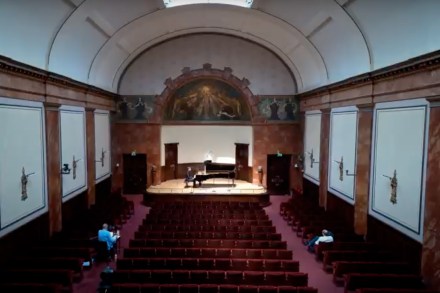
Remember when 2020 was going to be Beethoven year? There were going to be cycles and festivals, recordings and reappraisals; and if you weren’t actively promoting old Ludwig Van there was money to be made whinging about overkill. So was Stephen Hough’s decision to end his Wigmore Hall recital last Monday with Schumann’s Fantasie in C — a work conceived at least partly in homage to Beethoven, which opens with a fragmented musical landscape that Schumann at one point called ‘Ruins’ — a conscious reflection of the musical world’s changed circumstances? Or would that be reading too much into a situation in which a once-routine lunchtime concert suddenly feels like the musical event of the year?
The real problem with Newsnight

From our UK edition

The Twitter feed of BBC Newsnight editor Esme Wren (remember, I read this stuff so you don’t have to) is full of plaintive whining that no cabinet minister will agree to appear on her benighted programme. The Twitter feed of her chief presenter, Emily Maitlis, is largely a screed of bile and petulance directed at the government, some of which is usefully later recycled into her opening programme monologue. Unless Esme has had her brain scooped out with a soup spoon you might expect her to have found a connection between these two facts. Not a bit of it. ‘Cabinet minister, what is it about Newsnight, with its left-wing presenters, left-wing reporters, left-wing agenda and loathing of the government that makes you reluctant to travel across London for a late-night interview?

The ferocious bias against Dominic Cummings

From our UK edition

At Dominic Cummings’s press conference on Monday, reporters tried two lines of attack. One was to behave like local detectives, fixating on exact details of the Cummings family journey to Barnard Castle, such as why the car had stopped en route (answer: so that the Cummingses’ son, aged four, could have a pee). The other was to invoke viewers, readers, members of the public blind with fury that there was ‘one law’ for government bigwigs, and ‘another’ for everyone else. Yet Mr Cummings’s statement and answers made a good case that there had not been ‘one law’ for him, but that he had the ‘reasonable excuse’ that the law permits for everyone, given the needs of his son.

The best Macbeths to watch online

From our UK edition

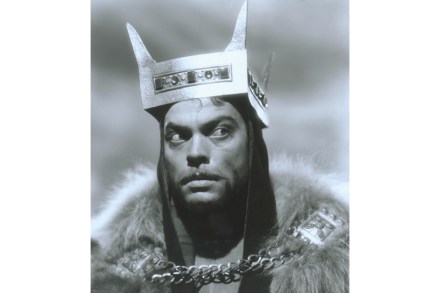
The world’s greatest playwright ought to be dynamite at the movies. But it’s notoriously hard to turn a profit from a Shakespearean adaptation because film-goers want to be entertained, not anointed with the chrism of high art. Macbeth is one of the texts that frequently attracts directors. Justin Kurzel’s 2015 version (Amazon Prime) didn’t triumph at the box office despite two fetching performances from Bamburgh Castle in Northumberland and the snow-wreathed mountains of Skye. The trailer is a marvel. Two exhilarating minutes of virile swordplay, ravishing scenery and dramatic cathedral interiors. The film itself is a cold, muddy slog. Michael Fassbender plays the thane as a gruff Celtic robo-hunk married to a skinny, nun-like beauty, Marion Cotillard.

How Tom Stoppard foretold what we’re living through

From our UK edition

A TV play by Tom Stoppard, A Separate Peace, was broadcast live on Zoom last Saturday. I watched as my screen divided itself into four cubes in which appeared the actors, performing from home. The play was written in 1964 and it’s well suited to the split-split screen format because no physical contact occurs between the characters. Director Sam Yates added some rudimentary music and a bit of wobbly background scenery. Mr Brown (David Morrissey) is a mysterious Englishman who asks to be admitted to a private hospital in the middle of the night. Though he has no symptoms he’s given a bed, and he pays his bills in cash. ‘There’s nothing wrong with you,’ complain the medics. ‘That’s why I’m here,’ he says.

I’ve lost patience with podcasts and their presenters

From our UK edition

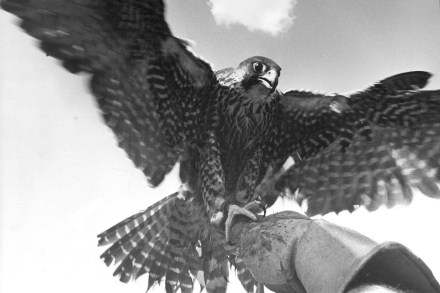
‘To be recognised and accepted by a peregrine,’ wrote J.A. Baker in 1967, ‘you must wear the same clothes, travel by the same way, perform actions in the same order. Like all birds, it fears the unpredictable.’ Sitting around in the same old clothes, performing chores in the same order, travelling by no way at all, I’ve found comfort in Baker’s assurance that I may at least prove attractive to birds in my slovenly purdah. Sir David Attenborough read The Peregrine beautifully on Radio 4 just before Christmas, but if you were too busy steaming puddings to listen, you may find this a good time for enjoying the series online.

Why do Radio 3 presenters adopt the tone stupid adults use when addressing children?

From our UK edition

Anyone who has listened regularly to Radio 3 over the decades — not to mention the Third Programme, which Radio 3 replaced in 1967, and which provided an incomparable musical education for many of us — can’t have failed to notice the change in style and standard of presentation. Listening to any radio announcer from 50 years ago is bound to cause hilarity: carefully read scripts, un-emotional delivery; all told, quite like the Queen’s Christmas broadcast. It would be ridiculous to expect no change in the way that the music, and the occasional talks, not to mention the regular poetry programme — a northern camp Thursday-night regular — are presented.

Riveting documentary about a remarkable man: Harry Birrell Presents Films of Love and War reviewed

From our UK edition

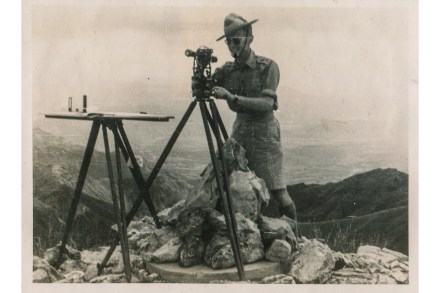
First shown on BBC Scotland, Harry Birrell Presents Films of Love and War (BBC4, Wednesday) was the documentary equivalent of a William Boyd novel, showing us a 20th-century life shaped by 20th-century history. The programme was made by Harry’s granddaughter Carina, who’d been eight when he died, and known him only as ‘a lovable, frail, blind old man’. But then she came across 400 carefully labelled reels of film in the family shed, together with an equally well-organised collection of diaries. Exactly — or even vaguely — when this discovery took place was one of many details that Carina tantalisingly failed to disclose. (Now and again, we did see her dusting off old cannisters with a look of surprise, but this felt distinctly like re-enactment.

Letters: The BBC licence fee is an anachronism

From our UK edition

Coronavirus predictions Sir: While precautionary advice regarding the coronavirus should be followed, Ross Clark is right (‘Feverish imaginations’, 29 February) to urge an open mind on the doomsday predictions which are edging us towards panic. In 1996 the then government’s chief scientific adviser, Professor Kenneth Calman, predicted that 500,000 people could die within a few years from the human form of BSE. Another official adviser, Professor Richard Lacey, described the disease as ‘the time bomb of the 20th century, equivalent to the bubonic plague’. In the event, the reported death toll was 177, while the scare cost the UK an estimated £7 billion.

How I fell out of love with the BBC

From our UK edition

One of the many technological things I don’t understand is, how come I’m paying to watch television? I know why I used to pay. I used to switch on a box in the corner of the room and marvel at the choice of three quite interesting programmes and something slightly racy on Channel 4. It was all reassuringly underwhelming, with everyone doing as well as could be expected given the circumstances. The cardboard sets on a lot of the shows wobbled and we were happier for it, one could argue. There was an obvious balance of earnestly attempted light entertainment and archly presented informative content and I for one didn’t mind paying a fee to the BBC for this arrangement because the BBC was providing precisely 50 per cent of it.

Why the BBC licence fee makes sense

From our UK edition

A consensus seems to be forming that the BBC licence fee is for the chop. In a digital age, the reasoning goes, we should not be forced to subscribe to huge bundles of content, with no choice over what we pay for and what we don’t. This argument, intriguingly, is both true and false at the same time. It is worth remarking that Netflix and Spotify succeeded by adopting a very similar model to, er, the BBC What’s true is that technology has removed two constraints which made the licence fee necessary in the first place. At the BBC’s outset, the airwaves were limited, creating a monopoly. Moreover it was impossible to charge for specific content: anyone with a wireless set could freely enjoy anything on air. Other than advertising, a licence was the only option.

Could coronavirus change British politics?

From our UK edition

Even if the Covid-19 coronavirus does not become a mass killer on the scale of, say, the Spanish Flu in 1918, the mere possibility of such severity still carries huge weight. Just the potential for a disastrous pandemic demands a response whose seriousness and nature will have political and social implications. Even in this first week of the full UK response, some of those implications are clearly visible. And some of the inferences and lessons that can be drawn from this week are, to my mind, quite positive - small points of light in a dark and threatening sky, if you like. 1.

Letters: How to really revitalise the North

From our UK edition

Devolved or decentralised? Sir: Paul Collier (‘Northern lights’, 22 February) conflates what devolution has come to mean, in UK terms, with decentralisation of authority. Thus it is adrift to imply that Edinburgh has benefited from a conscious decentralising of powers from central government. It was simply that Scotland as a whole got devolution and Edinburgh is its capital city, whereby it administers the devolved responsibilities. Until such time as commentators and politicians distinguish properly between devolution and decentralisation, they will continue to prompt fears that England could be balkanised rather than treated as a national entity on a par with Scotland.

Why are BBC dramas so obsessed with rewriting history?

From our UK edition

If there was a Bafta award for Most Woke Television Drama, a BBC production would win every year hands down. Consider some of 2020’s highlights alone: Noughts and Crosses, set in an alternate world where the ruling class is black and in which white people are the victims of racism; My Name is Leon, about a mixed-race boy growing up in care; and A Suitable Boy, a drama about arranged marriages with an entirely Indian cast. And of course, there’s always the female lead in Doctor Who, a series that now features storylines about civil rights, the environment and even allusions to Brexit. That’s fine really, and nothing new by the BBC’s dependably grating track record.

How low can the BBC go?

From our UK edition

Last weekend’s papers claimed that the government desires a ‘massively pruned back’ BBC. Former Conservative cabinet minister Damian Green and someone called Huw Merriman spoke out against this, which allowed the BBC to put the headline ‘BBC licence fee: Tory MPs warn No. 10 against fight’ atop its characteristically impartial coverage. I suppose there are various reactions one can have to this, ranging from outrage at supposed ‘cultural vandalism’, via a vague shrug, all the way through to the full Charles Moore. In recent years I have moved through all these stages. The discovery that mattered most was the realisation that the less BBC I had in my life, the better.

The blindness of cultural Marxism

From our UK edition

Words we are not allowed to use any more now include ‘cultural Marxism’. Suella Braverman, now the Attorney General, used them last year and was immediately upbraided by the organisation Hope Not Hate. Very right-wing people sometimes use it too, you see, so it must never be uttered by anyone else. Banning the use of the phrase ‘cultural Marxism’ is about as culturally Marxist as it is possible to get, but I don’t suppose the cultural Marxists at Hope Not Hate appreciated the irony. Cultural Marxism is a largely 1960s excrescence in which everything must be seen through the prism of unequal power relations, other than which nothing else matters at all. Especially power relations regarding race and gender, the basis of identity politics.

I’ve seen wars more amusing than BBC comedy

From our UK edition

Last weekend’s papers claimed that the government desires a ‘massively pruned back’ BBC. Former Conservative cabinet minister Damian Green and someone called Huw Merriman spoke out against this, which allowed the BBC to put the headline ‘BBC licence fee: Tory MPs warn No. 10 against fight’ atop its characteristically impartial coverage. I suppose there are various reactions one can have to this, ranging from outrage at supposed ‘cultural vandalism’, via a vague shrug, all the way through to the full Charles Moore. In recent years I have moved through all these stages. The discovery that mattered most was the realisation that the less BBC I had in my life, the better.

No. 10’s latest BBC row is a helpful distraction

From our UK edition

How do you move on from a week of torrid headlines over a power struggle between senior No. 10 aides and a recently departed Chancellor? The old Tory playbook – mastered by Boris Johnson's former election guru Lynton Crosby – would suggest throwing a dead cat. The dead cat strategy used when a party wishes to change the conversation by any means necessary. The idea is that by the time it's done people will stop talking about the thing you want to move away from and instead become distracted and effectively go: 'Jeez, mate, there's a dead cat on the table!' It's worth remembering this device when considering that we are in day three of No. 10's latest BBC row.

The BBC has much to learn from Japan’s national broadcaster

From our UK edition

NHK is Japan’s version of the BBC – it was actually modelled after the Beeb way back in the 1920s. It has four terrestrial, two satellite TV stations, and three radio stations. It is advert-free, and funded by a license fee. It could be seen as one of Auntie’s nephews perhaps, with many of the same family traits, but a few important differences that embattled BBC executives might do well to take notice of. Unless you have a weird fondness for the noisy and inane (see the Takashi Fuji episode in ‘Lost in Translation’) NHK is probably the only ‘terebi’ you would want to watch in Japan.

In defence of the BBC

From our UK edition

I sometimes wonder if I’m the last person left in Britain who loves the BBC and thinks it represents brilliant value for money. Yes, there is much with which to be infuriated - like most Leavers, for example, I find watching Gary Lineker present Match of the Day about as enjoyable as I imagine Remainers would watching Nigel Farage do the same job. And yes, the Today programme segment earlier this week on the latest developments in telephone hold music was idiotic. But does the BBC really deserve, once again, to be threatened with licence fee reform? The argument against the BBC licence fee is that it is effectively a tax. It isn’t – you can opt-out – but even if it were it would be a good thing.