Bbc

The BBC will regret cancelling Michael Vaughan

From our UK edition

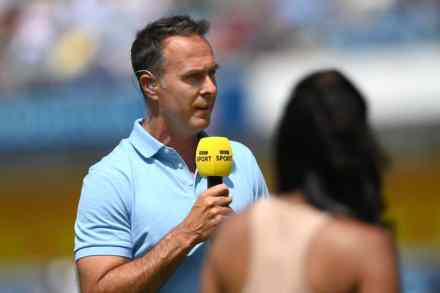
How cowardly of the BBC to axe Michael Vaughan from Test Match Special for the winter Ashes series on the basis of two words – 'you lot' – he might or might not have said more than twelve years ago.  Is this really how the BBC wants to play this? Anyone can make accusations of any type against someone famous that can’t be proved either way and then sit back and watch their life implode? If so then what’s to stop me, for example, from using this space to recall that in 2003 BBC Director General Tim Davie told me something deeply transgressive about, say, the trans community?

It’s Harry, not Meghan, who’s the real problem

From our UK edition

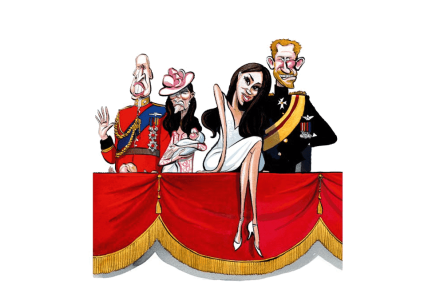
Who or what drove Harry and Meghan to leave the royal bosom for the land of slebs on the other side of the Atlantic? That’s one of the central questions of a new two-part documentary, The Princes and the Press, that aired on the BBC last night. The obvious suspect is the dreaded British media — barging, intrusive, xenophobic — riddled with prejudice, we’re told, against a mixed-race American in the monarchy. But the jostling between royal households seems equally responsible. After the early days of Hazza and Megz, a clear jealousy from some of William and Kate’s people began to seep into the media. The younger brother and his American wife were suddenly the darlings of the British press.

In praise of Stonewall

From our UK edition

This morning saw a profound breakthrough in the trans debate. I say that on the basis of an interview Nancy Kelley, Stonewall's CEO, did with the BBC’s Emma Barnett on Woman’s Hour.  What’s important is not really anything that Kelley said, though some of that was indeed interesting and I’ll come to it in a second. What matters is that the interview took place at all, since that constitutes a significant shift in the way Stonewall does its work. Stonewall's instinct has been to largely avoid mainstream media and other political debates about its work on trans issues that is now its primary focus.

Nadine battles the BBC

From our UK edition

It seems that the fruits of high office haven't changed Nadine Dorries. The Culture Secretary, who took up her brief eight weeks ago, last night hit out at Laura Kuenssberg on Twitter after the BBC's political editor reported receiving a text from a Tory MP at the 1922 committee which said Boris Johnson 'looked weak and sounded weak' and that his 'authority is evaporating.' Dorries responded angrily, declaring: Laura, I very much like and respect you, but we both know, that text is ridiculous, although nowhere near as ridiculous as the person – obviously totally desperate for your attention – who sent it. Shortly thereafter the tweet was deleted but not before numerous screenshots went viral.

Is Laura Kuenssberg leaving Westminster?

From our UK edition

Is Laura Kuenssberg’s time as BBC political editor coming to an end? That’s the suggestion tonight after the Guardian reported she is in talks to step down from the role and move to a plum gig hosting the Today programme.  Rumours of Kuenssberg’s impending departure have been circulating around Westminster for some time now to little avail. But this time it is being talked up as part of a wider shake up of the Beeb’s lead presenters, with Jon Sopel recently announcing he is ending his US beat and returning to the UK. Rumours of Kuenssberg’s impending departure have been circulating around Westminster for some time now Kuenssberg’s time in the role has not exactly been smooth sailing.

The Sunday Feature is one of the most consistently interesting things on Radio 3

From our UK edition

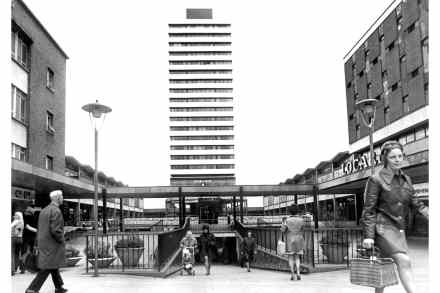
The story is likely apocryphal — and so disgraceful I almost hesitate to tell it — but it goes like this. On the night of 14 November 1940, as more than 500 Luftwaffe rained bombs on the people of Coventry, the newly appointed city architect Donald Gibson was watching the fires. Gibson had been appointed to the newly created position of ‘city architect’ three years earlier by the radical Labour council that had come to power in a local election. His job was to modernise what was then Britain’s best-preserved medieval city, and build the ideals of social justice and equality into the city’s brick and mortar.

The true enemy of political interviews

From our UK edition

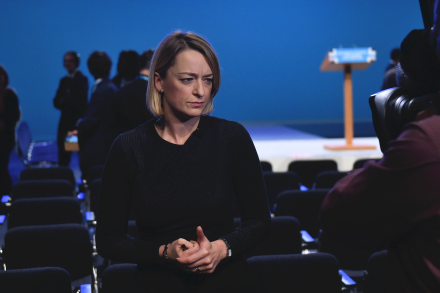
The rhythm of the big party conference leader interviews is a strange one. First come days of slow, repetitive, detailed preparation, much of which we know will be junked on the day. My brilliant team play Keir Starmer or Boris Johnson, being as cheerily obstructive, long-winded and deflecting as possible, until all of us could repeat the key facts and graphs and quotes in our sleep. Next, a frantic early Sunday morning (up well before five) to fillet the latest news, discarding what had been favourite questions and lines of attack, and boil everything down to a manageable size. By now my heart rate is rising and I’m eating more pastry then anyone really needs. Finally I am in the chair, wired up and facing the guest.

In blockbuster Britain, the BBC is being left behind

From our UK edition

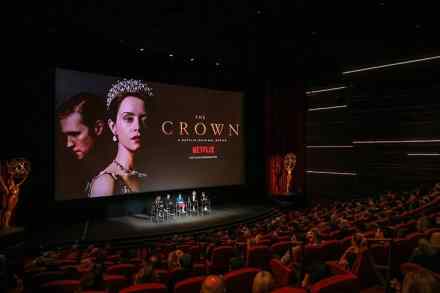
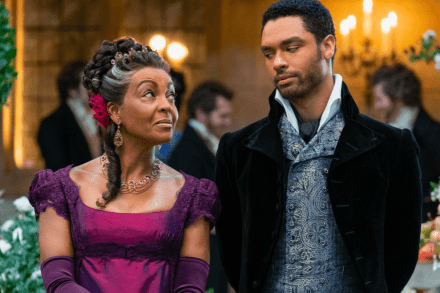
There’s a great revival under way in the British TV and film industry, but it’s not the BBC that’s behind it. Netflix is normally secretive about its figures but this week published a list of its most popular shows and top of the pile is Bridgerton, which imagines Regency London as a racially mixed society. Although funded with US money, it is shot in Yorkshire with a British cast, using British technical know-how, and, thanks to Netflix’s global audience of more than 200 million, this British show has now become the most-watched series in the history of television. Not so long ago, it was argued that subscription television would never work in Britain because we had all the broadcasting we could wish for.

The BBC is being left behind in blockbuster Britain

From our UK edition

There’s a great revival under way in the British TV and film industry, but it’s not the BBC that’s behind it. Netflix is normally secretive about its figures but this week published a list of its most popular shows and top of the pile is Bridgerton, which imagines Regency London as a racially mixed society. Although funded with US money, it is shot in Yorkshire with a British cast, using British technical know-how, and, thanks to Netflix’s global audience of more than 200 million, this British show has now become the most-watched series in the history of television. Not so long ago, it was argued that subscription television would never work in Britain because we had all the broadcasting we could wish for.

Jess Brammar isn’t the problem

From our UK edition

We need to talk about Jess Brammar. No, not the fact that Ms Brammar has landed the plum job of executive editor of the BBC’s news channels, despite cries of opposition from various Tories who insisted that Brexit-bashing Brammar is too politically partisan for such a position. My view is that it should be up to the Beeb who it employs, and politicians and their advisers should keep their beaks out of broadcasting. Rather, Jess Brammar represents a wider problem. It’s the fact that so much of the cultural elite is hostile to Brexit, which, lest we forget, is the most popular political idea in living memory in this country.

A defence of Jess Brammar

From our UK edition

I noticed with interest that Gigalum island — off the Kintyre peninsula in Argyll — was up for sale for half a million quid or so. Nineteen rather barren acres, slightly warmed by the Gulf Stream. These little parcels of desolation quite often become available for purchase and I do wonder if Gigalum should be purchased by the state for the dumping of toxic waste. Gruinard island, further north, was used by the government during the second world war as a site for testing militarised anthrax, for example. My proposal for Gigalum is that it should be a repository for everyone in the country with the word ‘diversity’ anywhere in their job title.

BBC promote convicted arsonist

From our UK edition

The BBC has been plunged into a fair few impartiality controversies recently. But while such rows can often be a matter of subjectivity and taste, you would hope that Corporation staff would draw the line at promoting a convicted arsonist accused of orchestrating a 'terrorist campaign' against Oxford University. Yikes. This latest BBC East drama hails from Cambridgeshire and was caused by Auntie's coverage a fortnight ago of an animal rights protest outside a facility that breeds dogs for laboratory research. Activists have been protesting outside Marshall BioResources against such breeding for the past two months, with 15 arrests made at the time the Beeb published its original article. Among those protestors interviewed for online and broadcast was one Mel Brown.

Is the life of Jimmy Savile a suitable subject for drama?

From our UK edition

One day in 1975 the Israeli cabinet found themselves being lectured on the most intractable political problem of our age — how to bring peace to the Middle East — by a peculiar white-haired British entertainer wearing a pink suit with short sleeves. His name? Jimmy Savile. That’s how he told it anyway. Remarkably, witnesses back up the generality if not the specifics of the anecdote. Savile indeed visited the Holy Land in 1975. And he did talk to the Israeli president Ephraim Katzir, saying (so he claimed): ‘I’m very disappointed because you’ve all forgotten how to be Jewish and that’s why everyone is taking you to the cleaners.

The BBC’s strange obsession with remakes

From our UK edition

BBC Director General Tim Davie, in his proclaimed push to create 'landmark' TV shows appears to be steering the Corporation in an increasingly conservative (small 'c') direction, intent on trading off past glories. Former soft drink marketer Davie’s lack of programming and editorial experience is often painfully apparent; he is increasingly given to sweeping crowd-pleasing statements, such as the remarks he made to the public about BBC's staff's attendance of Pride marches, telling staff to stop virtue-signalling on social media. Despite having spent 16 years in various senior roles at the Corporation, Davie doesn’t appear to have the antennae to pick up on the mood of his workforce.

The central performances are tremendous: Glyndebourne’s Luisa Miller, reviewed

From our UK edition

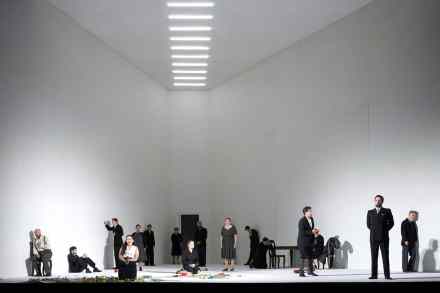
Opera buffs enjoy their jargon. We all do it, scattering words like ‘spinto’ and ‘Fach’ like an enthusiastic pizza waiter with an outsize peppermill. It’s principally a means of signalling that you’re part of the club. But occasionally it’s genuinely useful, and Glyndebourne’s new production of Verdi’s Luisa Miller had me thinking about the concept of ‘tinta musicale’, a term used to describe Verdi’s sense that each of his operas should have its own distinctive sonic colour. The late-summer warmth that suffuses Falstaff, for example, or the maritime translucence of Simon Boccanegra. Or take La traviata: the enervated violins of the prelude, the hectic brilliance once the curtain rises.

Contains moments of spellbinding banality: Radio 4’s The Poet Laureate has Gone to his Shed reviewed

From our UK edition

The interview podcast is a genre immoderately drawn to gimmicks, as the logical space of possible formats is gradually exhausted. The interviewee, quite often themselves a podcaster, might be, for example, invited to noisily eat lunch while nominating their top-five deceased childhood pets. The theory is that fanciful formats encourage the interviewee to open up. Under such conditions, the interview itself can come to seem incidental to the main event, the atmosphere chummy, comfortable, back-scratching, but fundamentally uninterested: you do my interview, I’ll do yours, no real questions asked.

Why did the BBC bury this detail about a homophobic attack?

From our UK edition

In the last decade or so, a sinister group of individuals from a range of organisations have spent their energies trying to rein in the free press. Specifically they try to stop the reporting of stories that might portray any follower of Islam in a negative light. So, for instance, when someone goes full 'Allahu Akbar' during an attack, the press is likely to report the fact and conclude that the attacker might have been inspired by a certain religion. At which point the army of anti-media mujahideen get to work to complain to Ofcom, Ipso and whatever other regulators they can find. In time, their work has an effect. If every story about Islam causes editors to receive a blizzard of complaints then soon they start to wonder whether it wouldn't be easier to cover some other story.

Revealed: the BBC guide for covering climate change

From our UK edition

Climate change is once again dominating the news agenda. A report from the Intergovernmental Panel on Climate Change warned that even if emissions are cut rapidly, the effects of global warming will be felt across the world. The report – which Boris Johnson has declared sobering reading – leads the news today, with the BBC dedicating seven stories on its homepage today to climate change. So just as well then that BBC staffers were recently treated to an internal audience research briefing telling them how best to convey messages about climate change to different audiences.

Switch over to Eurosport: BBC’s Olympic coverage reviewed

From our UK edition

I’ve not been allowed anywhere near the TV remote control this week because of some kind of infernal sporting event taking place in Japan. You may gather that I have mixed feelings about the Olympics: on the one hand, I like most of the competitors, who are so much more affable and modest (those delightful Gadirova twins!) than the overpaid, overindulged prima donnas who recently took part in the Euros. Also, it’s impossible not to get sucked into the drama of individual stories such as that of Beth Schriever, the humble, underfunded former teaching assistant who took gold in the women’s BMX.

Chris Packham’s suggestions to save the world

From our UK edition

On Monday 2 August, the BBC Today programme offered its ‘Countdown to COP26’. For the rest of the month, Amol Rajan announced, Chris Packham would give us ‘a different suggestion’ about climate change EVERY DAY. I make that 26 Packham slots — Sunday being Today-free — on the main national news magazine programme. Chris’s Day One suggestion to address the ‘colossal, planet-threatening mess that we find ourselves in’ was that everyone should buy an alarm clock (second-hand if possible to save on emissions), set it to wake up 15 minutes earlier and devote that quarter of an hour to doing something helpful, rather as we did, he said, when we abolished slavery.