Barack obama

Not yet a post-American Europe

From our UK edition

I'm in Brussels where the only news is Obama's cancellation of a trip to Madrid to join an annual EU-US confab.  The FT's Gideon Rachman explains the anxiety caused by the decision: 'There is no doubt that the Spanish government, which currently holds the rotating presidency of the EU (You thought it had been abolished? Fooled you!), will treat this as a bitter blow. The Spanish prime minister Jose Luis Zapatero was royally snubbed by George W. Bush and so it was really important to him to underline that he has a great relationship with the sainted Obama. (...) The Spanish are not the only Europeans feeling snubbed by Obama.

Talking to the Taliban | 29 January 2010

From our UK edition

After the London conference, it is clear that “talking to the Taliban” will become part of the strategy in Afghanistan. But the conference left a number of important questions about what this means in practice unanswered. Talking to the Taliban is not a new idea. Even though he expelled a British and Irish diplomat for holding secret talks with Taliban in December 2007, President Karzai has become an advocate for such negotiations over the last two years. In the Spring of 2009, Saudi Arabia hosted tentative negotiations between Karzai’s representatives and former Taliban, with links to the current movement. But the idea now has a head of steam behind it.

Negotiate, Negotiate, Negotiate

From our UK edition

Whitehall has turned into the lobby of the UN General Assembly, as dignitaries gather to give NATO’s Afghan campaign renewed impetus. Will it all amount to much? It depends. In this piece for the magazine E!Sharp I set out my stall: '[if the conference] is to achieve anything more than fill out the evening news, the gathering must have only one aim: to help Hamid Karzai begin reaching out to insurgents and fence-sitters, drawing them into a negotiation that can drain the insurgency of all but the religiously-committed warriors.' Part of this will involve giving money, jobs and security guarantees to foot-soldiers, as I recommended in a report back in 2008. But now this will probably not be enough.

The Eikenberry cables: today’s Ellsberg papers

From our UK edition

Sometimes government leaks tell the public what they did not know. But sometimes leaks just confirm what everyone knew. The view held by the US ambassador in Kabul that President Hamid Karzai “is not an adequate strategic partner” and “continues to shun responsibility for any sovereign burden,” will come as no surprise to anyone. But the timing of the leak of Ambassador Eikenberry’s cables in The New York Times will nonetheless be quite explosive. Does it matter? Not really. Hamid Kazrai has in most people’s minds joined Anastasio Somoza García, Ngo Dinh Diem, even for a while Saddam Hussein as the West’s, well, what was that phrase used by FDR? He is what there is. Period.

Why Osborne is getting it right on banking

From our UK edition

Oh dear. After Massachussetts, it seems like the usual sneering about "populist" politicians, and about voters who aren't happy with the bankers, is back.  So here are a few facts of life for those knocking people who think the banking sector could still do with a lot of fixing: 1) The financial performance of the financial services industry over the past decade, in aggregate, has been shocking. Someone who had invested in the US or UK stock market would have seen their investment in real terms (net of inflation) fall by over a third. Shareholders have been brutalized for the best part of a generation now.

Obama is playing politics<br />

From our UK edition

FDR was plainly confident when he indicted the "practices of unscrupulous money lenders" during his 1933 inauguration address; Obama’s speech yesterday was scented with desperation. He exchanged eloquence for provocation. “If these folks want a fight a fight, it’s a fight I’m ready to have.” Bankers do not want a fight with a President seeking cheap political capital; they want to turn profits and do business. Obama’s proposals frustrate that aim - by carving up corporations and neutering investment banking on the grounds of excess risk. As Iain Martin notes, Obama has departed from the G20’s emerging narrative, and though the details are imprecise there is no doubt of the direction Obama is headed. It is the wrong one.

In a major blow to Obama, Democrats lose Ted Kennedy’s old Senate seat

From our UK edition

In a stunning result, the Republicans last night won Ted Kennedy’s old Senate seat in a special election in Massachusetts. The defeat is a major blow to President Obama as he begins the second year of his presidency. The loss means that the Democrats no longer have a filibuster proof majority in the Senate, calling into question whether the healthcare bill—the domestic centrepiece of Obama’s first year in office—can pass. If a year ago, anyone had said that Obama’s first year in the White House would end with the Democrats losing a Senate seat in Massachusetts you would have assumed that something had gone very wrong. The defeat does show that the Obama presidency is in trouble. Obama now faces a choice.

Losing in Massachusetts

From our UK edition

It is a sign of the problems that Obama is having that on the eve of the anniversary of his inauguration, the Democrats look like losing Ted Kennedy’s old Senate seat in Massachusetts. To put it in context, this is a bit like Labour losing Sunderland Central in a by-election. There are a whole host of reasons why the Democrats might lose this seat: an unappealing candidate, how few things Obama has actually delivered, the cost of the health-care bill, the fact Massachusetts, basically, already has universal health care. But this along with the Democrats losing in governors' races in Virginia and New Jersey shows that it is just an awful time to be an incumbent. The electorate is, understandably, both nervous and impatient.

Helping Haiti

From our UK edition

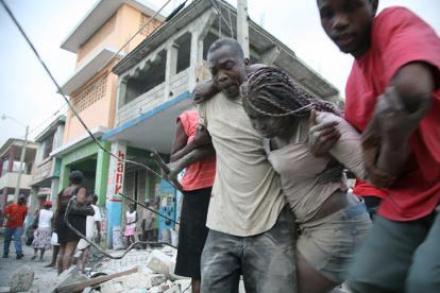
As the world has geared up to help a devastated Haiti, new challenges came into view. Destroyed ports, a crumbling airport and the lack of a local counterpart are hampering the international effort to help people still trapped under the rubble. Survivors, many of whom have no place to sleep, may have lost friends and family, and are now left to scavenge for food.  President Obama has pledged $100 million and is dispatching 5,000 soldiers, as well as a hospital ship. Britain, China, France, Belgium and even debt-saddled Iceland have followed suit.  But the scale of the disaster is frightening. When it becomes clearer how best to help, I will donate money; you should too. Even the most civilised society would struggle in those current conditions.

Google poses Obama a problem

From our UK edition

Google’s decision to publicly confront the Chinese government over cyber attacks that have been hitting Google customers for the past year or so poses a difficult challenge for the Obama administration. The threat by Google to shut down its operations in China over the attacks is the first public acknowledgement by a major US corporation of the attacks which the US intelligence community has known about for almost a decade. The facts are that China has been waging a cyber war against the US government and companies that involve literally millions of attacks each day. Every major US corporation operating in China has been targeted, as have universities, research laboratories and other American companies that have intellectual property worth stealing.

Where’s the accountability?<br />

From our UK edition

The verdict is in and just about every part of the US intelligence community failed to perform. The Solomonic decision of President Obama is that no individual is at fault - no systemic leadership problems here - and so nobody will be held accountable. Instead, there will be improved processes and better technology. This was exactly the response after 9/11 when 3,000 people died. At that time, the man in charge of US intelligence, George Tenet, stayed in his job and was later given the Medal of Freedom - America's highest honor. This week's verdict was over the intelligence failures that led to a Nigerian boarding a flight in Amsterdam destined for Detroit, over Christmas, with explosives concealed in his underwear.

Oh dear, Gordon’s done it again

From our UK edition

The knicker-bomber must love this. Twice Gordon Brown has jumped on the bandwagon and bounced straight off on both occasions. Sky News reports that the UK did not pass vital information to the US, despite the claims of a Downing Street spokesman. Here’s the key section: 'During a briefing to journalists today, the Prime Minister's spokesman said: "There is no suggestion the UK passed intelligence to the US that they did not act on." But Sky's political correspondent Joey Jones said it had been an "awful" briefing. "He tried to clear things up but only succeeded in muddying the waters still further," Jones said. "After he read Downing Street's statement, the spokesman said there would be no further comment on intelligence issues.

The failures of American intelligence

From our UK edition

The terrorist attacks on 9/11 succeeded because US intelligence failed to bring the various pieces of information together to prevent them. The attempted terrorist attack on a North West Airlines plane headed for Detroit almost succeeded because US intelligence failed to bring different pieces of information together that would have prevented the bomber getting on the plane. Between 2001 and today, the US has spent around $40 billion on counter terrorist improvements and even more on trying to improve intelligence. And yet, nothing much seems to have changed. In the current case, there was intelligence that the Yemen branch of Al Qaeda was using a ‘Nigerian’ as a bomber.

What will 2010 mean for Iran?

From our UK edition

If you're looking ahead to 2010, it's a safe bet that Iran is going to be an even bigger issue than it was this year.  The violence currently rocking the country is an echo of June's presidential election, and a reminder, too, of the continuing internal pressure that the Iranian regime faces.   The question now is whether that will be joined by external pressure of some form.  After provocation after procovation on Tehran's part, it's hard to envision the West keeping its "hand of friendship" outstretched much longer.  But it's also unlikely that  Barack Obama – his eyes on the domestic polls – will want to talk too tough after committing 30,000 more troops to the unpopular Afghan conflict.

Welcome to Obamastan

From our UK edition

After months of deliberation, endless consultation and reams of paper, President Obama came to the same conclusion that he himself had reached only a few months ago, and that which his handpicked commander, General McChrystal, had arrived at more recently: the US-led intervention is just, right and demands more resources. As usual, Obama's oratory was impressive - though without the personal anecdotes he normally works in. He rejected comparisons with Vietnam and evoked World War II with a reference to President Roosevelt. The West Point cadets added a kind of battle-evoking gravitas that Obama, who has never worn a uniform or been in war, often struggles to evoke.

There are troops – and there are troops

From our UK edition

The waiting will soon be over. Later today, the President Obama is expected to order around 34,000 troops into battle, including into Helmand province. This surge will be added to the additional 500 troops Gordon Brown committed yesterday and what sources tell me are cast-iron troop offers by another eight countries, including Turkey, Australia, Montenegro, and Georgia. If all these countries do sign up to send more troops, the credit must primarily go to Anders Fogh Rasmussen, the NATO Secretary-General, who has travelled far and wide in the attempt to drum up more military muscle.

The doubts that remain after Brown’s Afghanistan statement

From our UK edition

So there we have it.  Gordon Brown has confirmed what we all expected: that 500 more British troops will be sent to Afghanistan, bringing the total UK presence up to around 10,000.  The "surge" will be rounded off when Obama announces something like 35,000 extra US troops tomorrow. Although greater manpower is A Good Thing for the mission in Afghanistan – and the mission in Afghanistan is certainly an important one – I can't help but have some qualms about the twin UK and US announcements.   For starters, there's the simple issue of numbers.  500 more UK troops and 35,000 more US troops falls short of the bar of 2,000 and 40,000, respectively, that some military figures had set.  It may not make much difference.

With friends like these | 25 November 2009

From our UK edition

Bob Ainsworth has publicly criticised President Obama’s slothful deliberation on an Afghan troop surge. The Defence Secretary said: ‘We have suffered a lot of losses. We have had a period of hiatus while McChrystal's plan and his requested uplift has been looked at in the detail to which it has been looked at over a period of some months, and we have had the Afghan elections, which have been far from perfect let us say. All of those things have mitigated against our ability to show progress... put that on the other side of the scales when we are suffering the kind of losses that we are.

The case for 40,000

From our UK edition

As President Obama continues to consider his options on Afghanistan, The New York Times has a good primer on what the military could do with the various levels of reinforcements being considered. This is what the military believes it could do with an extra 40,000 troops: "Should President Obama decide to send 40,000 additional American troops to Afghanistan, the most ambitious plan under consideration at the White House, the military would have enormous flexibility to deploy as many as 15,000 troops to the Taliban center of gravity in the south, 5,000 to the critical eastern border with Pakistan and 10,000 as trainers for the Afghan security forces.

Britain’s AWOL ally

From our UK edition

Cameron just made a very good point in his speech – namely, that Brown claimed just days ago that Obama would make an Afghanistan announcement in the “next few days”. Now, we have no idea when the announcement will come. But this isn't Gordon Brown’s fault – it’s Obama’s. The way Washington is treating Britain is deplorable and the subject of an excellent cover piece tomorrow by Con Coghlin (cover image above). As Con says in his piece: 'The Afghan issue has made clear the astonishing disregard with which Mr Obama treats Britain . As he decides how many more troops to send to Afghanistan – a decision which will fundamentally affect the scope of the mission – Britain is reduced to taking a guess.