Barack obama

Events that are shaking the special relationship

From our UK edition

Barack Obama knows language and innuendo: he will know what he’s doing by deploying what Boris Johnson rightly calls “anti-British rhetoric” in the BP disaster. BP has not – for many years – stood for British Petroleum’ – you won’t find the two words anywhere in its annual report. But you hear them plenty tripping off the presidential tongue, as if to point the finger on the other side of the Atlantic. It makes you wonder how highly he values UK-US relations: Bush was genuinely grateful for the fact that Britain was America’s most dependable ally in Iraq and Afghanistan. It’s hard to imagine Bush using the rhetoric that Obama has so quickly resorted to.

What can Cameron do about Obama’s war against BP?

From our UK edition

Very little is my immediate answer. The President’s approval ratings are biting the dust. Powerless to stem the tide of oil and unpopularity, Obama can only victimise a ‘foreign’ oil company. Obama may be embattled at home, but if any doubt the US President’s ability to influence global events, they need only look at BP’s share value and the pension funds derived thereof. BP is mired in an expensive oil disaster, but the President’s rhetoric about the ‘habitual environmental criminal’ and threatening BP with criminal proceedings demolishes market confidence. If the British government had condemned AIG, Goldman Sachs and Merrill Lynch in similar tones, the US administration would have retorted. Cameron can do nothing.

Obama’s antagonism to BP is rooted in desperation and prejudice

From our UK edition

To all bar Tony Hayward, it is clear that BP is finished in America. A Macarthyite degree of opprobrium has been cast against the interloper. As Matthew Lynn notes, BP’s PR flunkies are grovelling across the networks, apologising in that singularly lachrymose British fashion. They should stop demeaning themselves and fight back. BP is to blame for the leak, but it is being demonised by an American President whose desperate populism and prejudice is masquerading as principled leadership; it is the latest British institution to be victimised by Barack Obama. Owing largely to the demands of the insatiable US market - which Obama has done nothing to abate, despite his green credentials - oil exploration has never been so risky as companies drill in deeper and rougher seas.

Post-2011 Afghanistan: Plan B

From our UK edition

Having returned from Washington DC, where I spoke to a range of senior policy-makers about Afghanistan and Pakistan, I am struck by how much confusion there is about what President Obama meant when he said that he wanted US combat troops return home in 2011. Did he mean that 2011 would allow the first assessment of the progress and his strategy and a tokenistic reconfiguration or forces? Or did he genuinely mean that the date would see the beginning of a real, if drawn-out withdrawal? For what it is worth, I am convinced the US president meant the former. This is crucial to the UK, since so much of what the Britain does – and presumably much time was spent on this at the recent Chequers discussion – is about staying close to the US.

A PR disaster for Israel

From our UK edition

Prematurely, the world’s press has condemned Israel. As I wrote yesterday, the facts have to be established before Israel can be adjudged to have acted disproportionately. At the moment, the facts seem to support Israel. Video footage shows commandoes descending into a maelstrom of baseball bats and knives, armed with items that resemble paintball guns. The latest pictures released show a hoard of improvised explosives, machetes, bats, crowbars etc. Those sources’ veracity should be scrutinised, but there is nothing else to go on at the moment. Iain Martin has debunked Jon Snow’s absurd genuflection that this is our fault. Being British I apologise for everything, but not this time.

War, Statesmen and Soldiers

From our UK edition

Fifteen days ago Newsweek had an extract, no not from Alistair Campbell’s diaries, but about something that actually matters – Jonathan Alter’s book about President Obama’s AfPak strategy. I have only just read it – apologies -- but a soggy May weekend is just the time to snuggle up on a sofa and read about warfare. Alter charts the discussions in the ten meetings on last year in the Situation Room in the basement of the White House when the Obama administration settled on a new strategy. Three things spring to mind when reading the passages. First, that the maintenance of civilian control over the military is not automatic; it is a constant struggle, particularly in a media-lacked environment.

Under false colours

From our UK edition

‘With time,’ writes David Remnick, ‘political campaigns tend to be viewed through the triumphalist prism of the winner.’ Never more so, perhaps, than in Remnick’s idolatrous new biography of Barack Obama, which presents the First Black President’s ascension to the White House as nothing less than a glorious saga. Deeply read — if not rooted — in the civil rights movement of the 1950s and 1960s, Obama is said to have derived his spectacular political success from the great and martyred prophet Martin Luther King, Jr and King’s closest disciples, especially John Lewis.

The G-men or the Granola Army

From our UK edition

In the last stretch of political campaigns, things tend to get ugly as the real cost of winning and losing becomes clear. This one is no different, with its suggestions of tactical voting and disagreements about tactical weapons. The latter has become particularly viscious with a former spymaster, an ex-general and a former CT chief calling into question the securty and defence policies Nick Clegg and the Liberal Democrats. In their defence, the Lib Dems have positioned their biggest weapon, Paddy Ashdown, who fired a volley against Richard Dearlove, the former head of MI6, saying that "things had changed since he supplied intelligence to Tony Blair about Iraq and WMD". Bull's eye! But who is right - Britain's G-men or the Granola Army?

Tories would look to withdraw from Afghanistan in the next parliament

From our UK edition

Today’s Express is reporting that David Cameron has said it would be wrong to set an 'artificial deadline' for withdrawal of British troops from Afghanistan, but that he hoped troops would come home during the course of the next Parliament.   In many ways this is smart politics. Given that President Obama has said that US troops would be looking to come home from 2011 onwards, it is hardly surprising that the Tory leader hopes British troops would return within the next five years. Other countries in Helmand, like Denmark, have begun signaling the same. The statement may – I say may – help those who care passionately about the war and who don’t feel at home with Labour and the Lib Dems.

Ex-Obama aide “worried” about Tory Euroscepticism

From our UK edition

One of Labour’s talking points during the election has been that even the US administration is worried about Conservative Europe policy and how a government led by David Cameron may marginalise Britain in Europe and hobble Europe in the world. Until now, there has been very little to prove the concern. US Secretary of State Hilary Clinton has said nothing, nor has anyone in the White House. But two days ago came the clearest sign that the US administration may indeed be worried.

Labour’s nuclear no-show

From our UK edition

Today, President Barack Obama hosts leaders from 46 countries for a two-day nuclear security summit that will focus on how to better safeguard weapons materials, both old and new, and to keep them out of the hands of terrorists. Labour’s manifesto was also launched today. What do the two things have in common? Not a lot, really. But they could have had a lot in common – if the Labour government had been willing to be bold. Here's how. As preparation for the summit, the US signed a new treaty with Russia last week to reduce the nuclear stockpiles of both nations, and the Obama administration issued a revised nuclear arms strategy intended to reinforce the nation's nuclear deterrent.

How do you solve a problem like Karzai?

From our UK edition

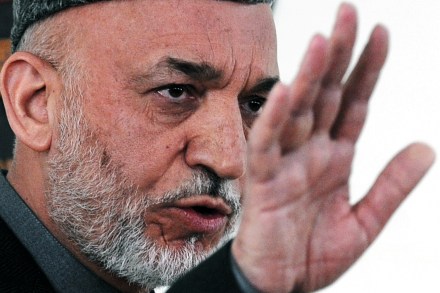
A few days after President Barack Obama flew to Kabul to look Hamid Karzai in the eye and demand that he combat corruption, drugs, crime and the influence of notorious warlords in his government, President Karzai has blamed foreigners, including UN and EU officials, for "very widespread" fraud during presidential and provincial elections last year. He is quoted as telling a meeting of election officials: "There was fraud in presidential and provincial council elections - no doubt that there was a very widespread fraud, very widespread ... But Afghans did not do this fraud. The foreigners did this fraud." As insane notions go this one is quite extraordinary – even by Karzai’s quixotic standards. And it demands a response.

US-Israeli spat ends, but may have long-term effects

From our UK edition

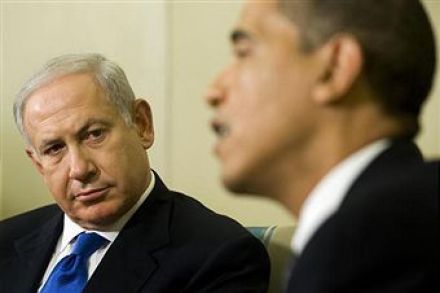
Week two and the US-Israeli spat has calmed. More than a dozen Republican and Democratic Congressmen have pressed the Obama administration to tone down its criticism, following initial outrage of Benjamin Netanyahu's plan to build 1,600 homes in the disputed East Jerusalem territory - announced during Vice President Joe Biden’s visit. Claims that the US-Israel relationship have sunk to the worst level for 35 years were rejected by Hillary Clinton. And in his first public comments on the controversy, President Obama downplayed criticism of the Israeli government over the illegal settlement expansion plan. But I am with Israel’s ambassador to the US: there is real risk of a lasting rift with the United States.

Will we lose Turkey?

From our UK edition

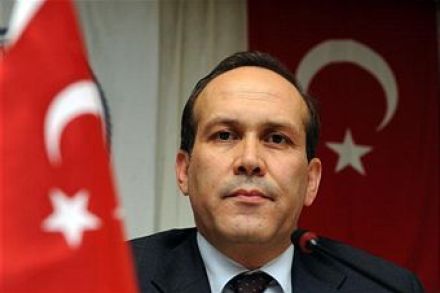
Earlier this year, Transatlantic Trends, an annual survey of public opinion on both sides of the Atlantic, was published. Key highlights from the survey included a quadrupling of European support for President Obama's handling of foreign policy. But what really caught my eye was how badly the relationship between the West and Turkey had frayed. 65 percent of Turks do not think it is likely their country will join the EU. Nearly half of Turks polled think Turkey is not really part of the West, while 43 percent think Turkey should not partner with the EU, the US or Russia in solving global problems.

ISAF = I Saw Americans Fight?

From our UK edition

The imminent Dutch withdrawal from NATO’s Afghan mission will ignite the question of allied troop contributions. But what are the real numbers and how do they compare to past missions? In a new article for the Spanish think tank FRIDE, I have done the sums, as part of a broader analysis of transatlantic “AfPak” policy since President Obama came to power. The contribution of EU member states to NATO’s ISAF has grown from 16,900 soldiers in 2007 to 22,774 in 2008, 25,572 in 2009 and 32,337 in 2010. Soldiers from EU countries have until this year made up 45–53 per cent of the total force and for three consecutive years.

Going Dutch | 23 February 2010

From our UK edition

"Going Dutch" will take on a whole new meaning now that the collapse of the Dutch government looks set to result in the country's departure from Afghanistan. Withdrawal had been on the cards for at least a year - especially as the coalition Labour party had campaigned to return Dutch troops at the last election. But now the process has gone into overdrive.   Militarily, the competent Dutch forces will be sorely missed. They have done a really quite impressive job in Uruzgan province. But the Dutch pullback will be an even bigger problem politically. NATO likes to refer to the dictum it formulated during the Balkan operations - "in together, out together".

Sunny side up?

From our UK edition

Earlier this week I asked what Obama's experience could teach a Cameron government. At the same time, there has been a well-argued debate in The Times about whether the Tories should go negative or not. There is one point where the two issues converge - and that is in how a newly-elected government should deal with the country's economic legacy. Once in power, a Tory government will be tempted to be optimistic, to point to the sunny uplands. General Colin Powell said "positive thinking is a force multiplier" and the Cameron team come across as natural adherents to this viewpoint. There is also the fact that the modern Tory agenda - of decentralisation and trust in people - is at heart a positive philosophy of government, not a mistrustful statist one.

What can Cameron learn from Obama’s situation?

From our UK edition

President Obama was going to be different. He was going to learn from Jimmy Carter's failures. He was going to avoid Bill Clinton’s fate. Like his well-run campaign, Obama's tenure in the White House was going to be cool, calm and effective. If Clinton failed by sending an over-cooked healthcare reform to Congress, Obama would succeed by leaving the details to lawmakers. If McCain's campaign was psychodrama, Obama's administration was going to be all collegiality.    It did not work out that way and now the knives are out for Obama's team. First there was Ed Luce's piece in the Financial Times. Now Leslie H. Gelb, a veteran DC insider, comes out and says it: the President must change key personnel now.

The new AfPak strategy in action – decapitation, reintegration and reconciliation (DRR)

From our UK edition

It’s not quite the “we got him” moment, as when US soldiers unearthed the fugitive Iraqi dictator. But the capture of Mullah Abdul Ghani Baradar, a top militant commander who is said to be second in command to elusive Afghan Taliban chief Mullah Mohhamad Omar, may be even more significant. By the time Saddam Hussein had been caught, the US was fighting a different enemy, though the Pentagon leadership had not realised yet. Baradar, who was in charge of the insurgency’s day-to-day operations on behalf of the so-called Quetta Shura, the Taliban’s leadership council, is very much today’s enemy - and his seizure should not be underestimated.

It’s what comes after Operation Moshtarak that matters

From our UK edition

Fighting is now well under way in southern Afghanistan, as NATO forces are executing Operation Moshtarak. The plan is aimed at shoring up security around Kandahar city and recapturing the remaining Taliban strongholds in Chah-e-Anjir, Western Babaji, Trek Narwa and Marjah in Helmand province, though the latter is getting all the publicity. The operation has been billed as "NATO's biggest" and a "test" of the new counter-insurgency policy, designed to first eradicate militants and, then, follow up re-establish government control and civil services. These claims may have been exaggerated for effect.