Barack obama

Time for jaw-jaw

From our UK edition

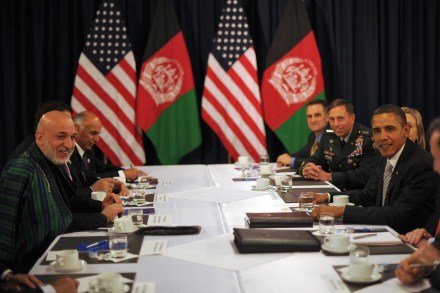
Today I joined number of leading Afghan experts, from Ahmed Rashid to Gilles Dorronsoro, in calling on President Obama to change the American strategy in Afghanistan. Based on our work in and on Afghanistan, we wanted to make a number of points just as the White House begins reviewing its strategy: First, that the cost of the war is now over $120 billion per year for the United States alone. This is unsustainable in the long run. Second, despite these huge costs, the situation on the ground is much worse than a year ago because the Taliban insurgency has made progress across the country. The military campaign is suppressing, locally and temporarily, the symptoms of the disease, but fails to offer a long-term cure.

Will the US become more isolationist in the years to come?

From our UK edition

Isolationist sentiment seems to be on the rise in the United States. At an annual foreign policy event in Halifax in Canada, US Senator Lindsay Graham warned about the risk of an "unholy alliance" developing between the far left and far right that calls for greater US retrenchment from the world – and, potentially, a new era of isolationism. Or neo-isolationism. Such an inward focus is likely sound meet with the approval of an increasingly domestically-occupied public. Last year, 49 percent of Americans told Pew Research that they believed the US should "mind its own business" and let other nations get along on their own.  That was up from 30 percent in 2002.

Julian Assange: the new face of anti-Americanism

From our UK edition

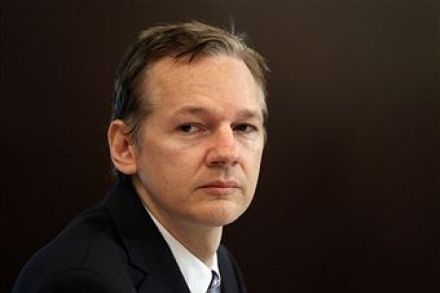
Like everyone else, I have poured over the latest cache of Wikileaks - the publication of which I find irresponsible and destructive. There are several pieces of information now in the public domain that will cause the US diplomatic embarrassment or worse may even help the regimes in Tehran, Pyongyang and Moscow. Just ask yourself a few questions. Will the West be safer if the Saudi leader cannot trust that a conversation he has with a US envoy will remain secret? Will that help or hinder Iran's nuclear prpgramme? Will US-German links be improved by the knowledge that US diplomats are sceptical of Angela Merkel's policies? Will that aid G20 coordination or hamper it?

Obama stands firm on Korea

From our UK edition

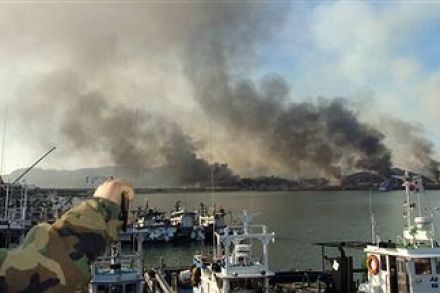
There is no diplomacy with maniacs. North Korea has been the grip of one or another lunatic for 60 years; with the succession still unsettled, Pyongyang is now a salon for the insane. The escalation of posturing, violence and the nuclear programme is a brazenly mad strategy to bribe other countries in exchange for good behaviour; it’s piratical. The world’s geopolitics may be changing, but the US President remains supreme among leaders. Yesterday, Iain Martin argued that Barack Obama had to make a strong and unequivocal statement about the situation, at least to encourage China to reprimand its errant ally. The President did so.

The end of the Wall Street world

From our UK edition

Over the last decade, Wall Street has become an important foreign policy actor in its own right, almost as important as the lobbyists on K-Street and the White House on Pensylvania Avenue. The ebb and flow of capital has been a decisive international force in determining the fate of nations - most recently illustrated in the cases of Greece and Ireland. As an aide to President Clinton once said: in a second life he would like to come back as the bond market. But Wall Street has influenced foreign policy in a deeper way too: by changing the way that successive US administrations see the world. Not by focusing on the bottom-line. International relations cannot be reduced to cost/benefit analyses.

From The Annals of the Gord

From our UK edition

This snippet from Anthony Seldon and Guy Lodge’s latest book merits repeating: ‘As Barack Obama waited in a cavernous building in London, he suddenly noticed Gordon Brown stomping towards him down a corridor, with a flurry of aides in his wake. Unfortunately — probably because he has a glass eye as the result of a rugby injury — the Prime Minister didn’t see the President. To the surprise of Obama and his entourage, the British premier was doing a passable impression of an erupting volcano. He was clearly furious about something his aides had or hadn’t done. It was hardly the behaviour anyone would expect of a G20 summit host, and the American President watched with growing disbelief.

Progress towards an Afghan solution?

From our UK edition

Nato has agreed to the Afghan plan, or so they say. As Lieutenant-Colonel David Eastman says, Afghan security forces are deemed to be sufficiently capable for the handover to begin next year, as Obama and Petraeus hope. There are those who disagree - some doubt the Afghans, some doubt success itself. Nato secretary general, Anders Fogh Rasmussen may have to be added to that former group of dissenters. He said earlier today: ‘If the Taliban or anyone else thinks they can wait us out, they can forget it.’ The problem for those of Rasmussen’s thinking is that the Taliban can wait; Nato can’t.

Nato – from the glass half empty point of view

From our UK edition

Nato leaders are in Lisbon and Daniel Korski has argued that the most successful military alliance in history isn’t done yet. Writing in the Independent, Patrick Cockburn gives an alternative. He contends that Nato will never recover from the Afghan mission, and he has three substantive points: 1). Nato's solutions are the problem. ‘It is not just that the war is going badly, but that Nato's need to show progress has produced a number of counter-productive quick fixes likely to deepen the violence. These dangerous initiatives include setting up local militias to fight the Taliban where government forces are weak. These are often guns-for-hire provided by local warlords who prey on ordinary Afghans.’ 2).

Will there be peace in the Middle East in time for X-mas?

From our UK edition

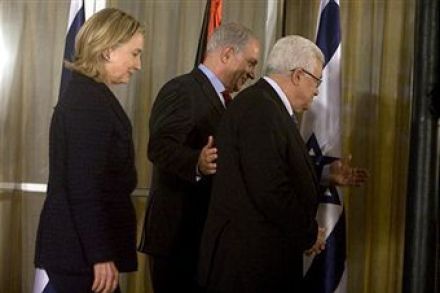
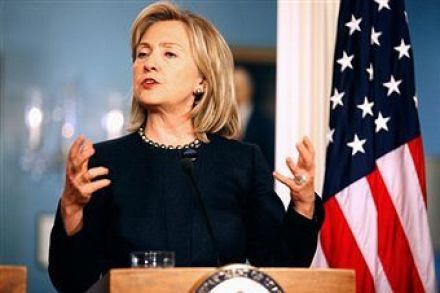
Two years into her term, and after carefully avoiding any success-free issues, Hillary Clinton has finally launched herself into the Middle East peace process. According to Roger Cohen in the New York Times, "The heavy lifting is now in Clinton’s hands". As evidence of Clinton's new role, Cohen lists a video conference with the Palestinian prime minister, where the US secretary of state announced $150 million in US aid to the Palestinian Authority and said the Obama administration was “deeply disappointed” by recent Israeli behaviour. Mrs Clinton's foray into the Middle Eastern quagmire  is interesting.

The London-Jakarta link should be strengthened

From our UK edition

President Obama's return to Indonesia this week was remarkable, in part, for the limited attention it has garnered outside his childhood nation. You can't walk through an airport bookshop without being inundated by bestsellers about China's rise. India has always occupied a special part in British hearts. But Indonesia is different. There are few in the British foreign policy establishment who really know the place. Some British military officers know a few Indonesian counterparts through their time at Sandhurst and the Defence Academy. The human rights lobby grew familiar with Indonesia over years of protests against the Sukarno/Suharto dictatorships and the country's mistreatment of East Timor. But, on the whole, little is still known about Indonesia.

The new Iraq is beginning to look a lot like the old

From our UK edition

Nouri Maliki was last night appointed Iraqi prime minister after the country broke the world record for the slowest process of government formation. Eight months passed between the election and the formation, beating even previous Belgian records of procrastination. Hours after his appointment, however, members of al-Iraqiya, the main Sunni-backed alliance led by former Prime Minister Ayad Allawi, walked out of the Parliament. Their concern: Maliki's failure to do as he had promised and reinstate four Sunni leaders who had been banned for alleged ties to Saddam Hussein's Baath party.

Playing with fire | 11 November 2010

From our UK edition

As the G20 summit begins in Seoul, the emphasis in much of the papers is on the economic hostility between America and China. The FT's Gideon Rachman wrote a cover piece on this matter for The Spectator two weeks ago, which we've reprinted here for the benefit of CoffeeHousers: In a couple of weeks’ time, David Cameron and George Osborne will arrive in China and witness at first hand an economic boom that is shaking the world. The British duo will doubtless receive a polite and outwardly respectful reception. But, as I discovered on a visit to Shanghai last week, Chinese diplomats and academics have noted the deep cuts in British spending — and they are drawing the obvious conclusions about the relative fortunes of the two nations.

Ten highlights from the Bush serialisation

From our UK edition

Number 43 is back. And judging by his interview (£) with the Times editor James Harding – and that paper's serialisation (£) of his memoirs – he is standing defiant. As Bush himself puts it to his critics, "I ask those people to read the book. I understand that the filter can be harsh. But I think people will see someone who deliberated carefully on key issues, someone who did not sell his soul for politics, that he was willing to stand on principle and people can draw their own conclusions." "The book" is out tomorrow, so we will be able to draw our own conclusions then. But, in the meantime, here's a selection of extracts from the first part of the Times serialisation. The second part will come tomorrow, and cover 9/11, Blair and Katrina.

Obama’s Hurt Locker

From our UK edition

The backlash that Barack Obama is now experiencing seemed almost impossible when the neophyte senator swept into the White House. It was, in fact, predicted by some. In 2007 when Barack Obama was but an ambitious Illinois senator, American defence expert Kori Shake penned an essay called the Coming Crisis of High Expectations. It was about how the EU and the US would inevitably slide apart - but its message was broader. Beware of exorbitant expectations, she seemed to be saying. Reality hurts. How much it hurts will become clear today. It looks like a House of Representatives-sized hurt but not a Senate-shaped one. Harry Reid clung on to his Nevada Senate seat, and California will be Democrat-run.

Victory, but there’s little triumphalism as Republicans look to court America

From our UK edition

Hysteria has lapsed into disaffection: it was a bleak night for President Obama. But, despite the apparent immediacy of a ‘conservative moment’, there is caution in Republican circles this morning: both Clinton and Reagan won from similar positions in 1982 and 1994. The G.O.P's leadership knows that elections are not won from the extremes, as Barack Obama has discovered to his cost, and it is trying to calm the party’s often excitable fringe, which will be no easy task if Rand Paul's 'Tea Party tidal wave' is anything to go by. Ben Brogan recently highlighted the G.O.P’s growing ‘Stop Palin’ campaign, and David Frum adds his voice again.

Republicans take control of the House, Democrats cling on in Senate

From our UK edition

The Democrats have lost control of the House of Representatives. The Republican party looks to have picked up more than 60 seats in the lower house, slightly more than they were expected to, and they will have a comfortable majority there. The Democrats have lost six seats in the Senate but held onto their majority in the upper chamber. These results are a blow to President Obama. The loss of the Democratic majority in the House will force him to compromise to get things done.  The results do seem to be a rejection of his agenda, 56 percent of voters in the exit poll felt that government is now doing too much. A Republican controlled House will also be able to use its subpoena power to make life difficult for the White House.

A conservative revival in the States

From our UK edition

Election night two years ago was not a good night for the GOP. Not only had it lost the White House but also all those predictions about how social trends and demographics were making America more Democrat appeared to be coming true.  In the south, Virginia and North Carolina shifted to the Democratic column. In the mid-West, Indiana went for the Democratic candidates for the first time since 1964. I was watching the results come in that night with an informal adviser to the McCain campaign and that evening it was hard to see how the Republicans could get to 270 in future with the upper south moving into swing state territory. But just two years on, the Democrats are about to get hit by a Republican wave.

Barack Obama: suspicious packages contained explosives

From our UK edition

The terror scare surrounding two planes in the UK's East Midlands Airport and Dubai is now, officially, serious. In a statement this evening, Barack Obama has confirmed that packages on both aircraft contained explosive devices. The packages were sent from Yemen, and were headed for synagogues in Chicago. As Obama put it, this is a "credible terrorist threat" against the US. There is little detail yet, although the Yemeni connection suggests that this is an al-Qaeda plot. And the White House is not ruling out the grim possibility that there are more packages out there. Sadly, Islamist terror is casting its shadow across the West once again.

The insidious fingers of Iran are all over Iraq

From our UK edition

Wikileaks is the story of the day. The Guardian has extensive coverage of unsubstantiated allegations made by unnamed Iraqis. That is not to prejudge the revelations, just to provide balance against the sensational headlines before proper investigations called for by the UN. In addition to the alleged atrocities and cover-ups, Wikileaks’ disclosures support what Blair and Bush said and maintain: Iran incited dissidence to exploit instability. In fact, it is still doing so, despite the Obama administration’s protests to the contrary. The New York Times has eviscerated Biden and Obama this morning.

Groupthink and doubletalk

From our UK edition

Soon after his historic victory over John McCain, Barack Obama was ushered into a Sensitive Compartmented Information Facility (SCIF) located deep inside the Federal building in Chicago to receive his first top-secret intelligence briefing as President-elect. According to Bob Woodward, the Watergate icon and Washington journalism grandee, the space was designed to prevent eavesdropping and thus ‘unusually small . . . windowless and confining, even claustrophobic’.