Banking

Cheer up: we’re robust enough to withstand a shock from China

From our UK edition

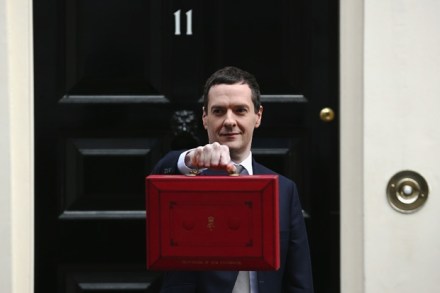
Home from the hot Aegean, huddled by the fire as rain ruins the bank holiday weekend, I’m thinking: what gloom has descended since I’ve been away — and doesn’t it call for a round-up of cheerful news? So here goes. The UK economy grew by 0.7 per cent in the second quarter and a respectable 2.6 per cent over the past year. US growth has been revised sharply higher to 3.7 per cent, scotching our claim to be the fastest growing western economy, but George Osborne can still say convincingly that ‘we’re motoring ahead’ — and weak first-quarter performance can be seen as a blip rather than the revelation of doom it was declared to be by Ed (‘Where is he now?’) Balls. Tax receipts are rising at an annual rate of 4.


The Libor trader’s long stretch is a big message to the banking world

From our UK edition

Fourteen years is a long stretch. The punishment imposed on former UBS and Citigroup trader Tom Hayes for his role as ‘the hub of the conspiracy’ to rig yen Libor rates is the same as the maximum sentence for burglary with intent to commit GBH. Even though no public attempt has been made to quantify his fraudulent profits or identify victims, Hayes’s punishment is twice that imposed on rogue trader Kweko Adeboli, who lost UBS $2.3 billion — both having pleaded ‘not guilty’. With remission, Hayes will serve about half the term: Adeboli, jailed in late 2012, came out this June. But even so, the socially awkward Hayes has forfeited a chunk of his life for the spurious gratification of peer-group esteem and bonuses he did not seem to enjoy spending.

Angry, funny, timely

From our UK edition

It’s not Paul Murray’s settings or themes — decadent aristocrats, clerical sex abuse, the financial crisis — that mark him out as original, it’s his handling: the wild plotting, the witty dialogue and the eccentricity of his characters. The follow-up to his widely admired second novel Skippy Dies swaps the adolescent funk of a Catholic boys’ boarding school for the testosterone whiff of a fictional investment bank in Dublin. The Bank of Torabundo rode out the demise of the Celtic Tiger thanks to its cautious and effective CEO, but he has now been replaced by a flamboyant financial genius whose last bank collapsed in tatters.

Farewell to the City’s stroppy regulator: a modest sop for the new bank tax

From our UK edition

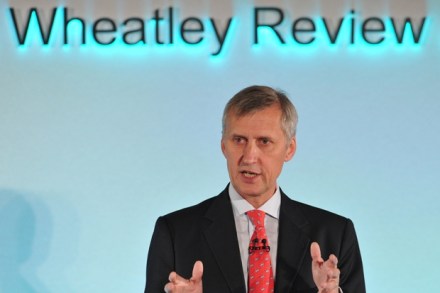
A City insider at last month’s Mansion House dinner told me the Financial Conduct Authority had become ‘a bit of an embarrassment’ — or rather, that was my bowdlerisation of what he actually whispered. So it comes as no surprise that FCA chief executive Martin Wheatley has resigned, having been told by the Chancellor that his contract would not be renewed. A former London Stock Exchange director and Hong Kong securities regulator, Wheatley has a knack of making enemies: Hong Kong investors, unhappy with his handling of alleged misselling of Lehman Brothers ‘minibonds’, once burned a funeral effigy of him outside his office.

Barometer | 2 July 2015

From our UK edition

Bank job Should we buy shares in companies which print banknotes in expectation of one getting to print millions of drachma notes? — In May, according to the ECB, there were a total of 17.6bn euro notes in circulation. Given that Greece accounts for approximately 2.5% of the GDP of the eurozone, 441m of these were Greek, and might need replacing with drachma notes in the event the country leaves the euro. — However, there is already a good business in printing replacement euro notes. In May, 2.76bn notes were taken out of circulation and 2.88bn new ones were put into circulation.

The wrong man

From our UK edition

For the final three years of his 18-year career at Goldman Sachs, Jim O’Neill, the Treasury’s new commercial secretary with responsibility for developing the Northern Powerhouse, served as chairman of Goldman Sachs Asset Management, the company’s least-regarded and most bothersome unit. While two younger executives ran the business, O’Neill was dispatched to faraway conferences to bore audiences of docile suits with his views on whether Nigeria or Malaysia offered a better investment opportunity. When finally in early 2013 he resigned his sinecure, he was not replaced and his title was mothballed. Since then, he has been all but marching up and down Whitehall wearing a sandwich board pleading for a government job.

Late news: what was really served at the Mansion House banquet

From our UK edition

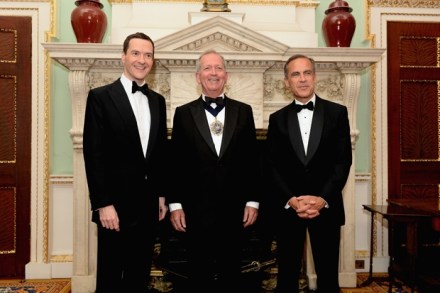
Last week’s deadline did not allow me to report from ringside at the Mansion House dinner, but there was so much to observe that I hope you’ll forgive a late dispatch. What a vivid guide to City psychology and precedence it offered. In the anteroom, Lord (Jim) O’Neill, the Treasury’s new Northern Powerhouse minister, could be seen chatting to ex-BP chief Tony Hayward, now chairman of mining giant Glencore Xstrata. At the top table, HSBC chairman Douglas Flint was carefully separated (by António Horta-Osório of Lloyds) from Governor Carney, so they could avoid discussing HSBC’s plans to move back to Hong Kong.

The surfer, the sailor and the horseman: prosperity is all about personal stories

From our UK edition

The tectonic plates of economic life rumble and shift. As ever, market watchers are obsessed by big themes — and the demand for predictions about them even though so many past predictions have turned out wrong. Right now, we’re gripped by the endgame for Greece, the timing of the first US rate rise, the future of energy prices given Opec’s decision to maintain output above demand, the slowing of Chinese industrial growth, and the unresolved destiny of the global debt bubble. Yet we also know that wealth creation is fundamentally a matter of individual risk and endeavour, often pursued in defiance of the adverse alignment of market forces.

Unequal struggle

From our UK edition

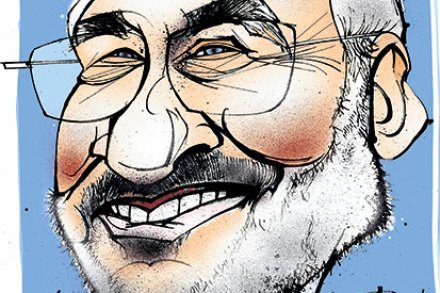
‘How do you feel when you go back to Gary?’ I ask Joe Stiglitz. ‘Well, frankly, I get depressed,’ he replies. ‘The American middle class was created in places like my home town and is now struggling badly — which makes me sad.’ Stiglitz, a Nobel prize-winning economist and the closest thing the left has to an intellectual superstar, grew up in Gary, Indiana, during the 1950s, when it was the heart of the booming US steel industry. His father sold insurance and his mother was a teacher. ‘We had a modest detached brick house, with a lawn all around — it was safe and secure,’ he recalls. ‘Back then, if you worked hard and played by the rules in America, you’d make it — you could get ahead.

Which behaved worse: callous Thomas Cook or cynical Barclays?

From our UK edition

Which is worse, morally and reputationally — to be Thomas Cook, shamed by its refusal to show proper human concern, for fear of being taken to admit responsibility, over the death of two children by carbon monoxide poisoning from a faulty boiler while on holiday in Corfu; or to be Barclays, fined almost $2.4 billion (heading a list of banks fined more than $9 billion between them for similar offences) for conspiring to manipulate the foreign exchange market over a five-year period? Ethicists could agonise over that one for weeks.

Only the Tories can meet the aspirations of Ikea’s hard-working families

From our UK edition

If Ikea were a constituency, it would be a three-way marginal. That was my thought one morning last week as I walked a mile and a half round the Batley branch of the great Swedish retailer behind two keen shoppers (one wearing a pedometer) whom I had driven there as a birthday treat. Here are middle-aged parents buying nursery stuff for pregnant daughters, engaged couples fitting out first flats, Polish families bickering over bargain kitchenware, Muslim housewives chattering behind niqab facemasks, and even what I thought might be a transsexual under a blond beehive. There’s a Scandinavian sense of equality: no fast track through the labyrinth, no exclusive luxury floor. The customers all seem to belong to that floating-voter category now labelled ‘hard-working families’.

Cheap shots and uncosted bribes are drowning out vision, wisdom and optimism

From our UK edition

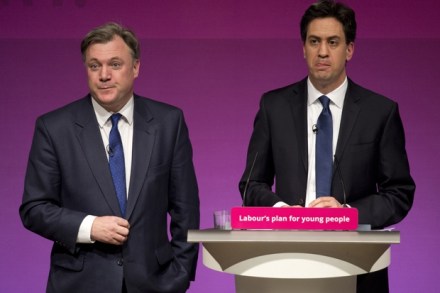
The interesting thing about Labour’s pledge to abolish non-dom tax status — a squib designed to trap Tories into expressing sympathy for the rich, in the knowledge on the part of Ed Miliband and Ed Balls that it might cause loss of tax revenues and inward investment — is that it has been welcomed by influential voices in the City. The Eds must be astonished to find Sir Roger Carr, chairman of BAE Systems and former deputy chairman of the Bank of England, bang on message: he told the FT that non-dom rules are ‘a relic of the past that unfairly favours the few at the expense of the many’.

So the FTSE100 has finally broken its record – it’s still not doing nearly as well as executive pay

From our UK edition

The FTSE100 index has at last breached 7,000, surpassing its peak of 30 December 1999 and provoking moderate celebration among investors who have enjoyed such poor returns all these years. A thousand pounds invested in FTSE100 stocks on Millennium Eve, with dividends reinvested, was worth £1,670 by last month, an annual return of 3.4 per cent compared to inflation over the period of around 2.9 per cent. The same sum invested in a London house would have been worth £3,200, nearly twice the return on shares if we ignore running costs and the leverage effect of mortgage borrowing; invested on the rollercoaster of gold bullion, it would have been worth £4,500.

Here’s what a real reform of business rates would look like

From our UK edition

Of all the measures talked up ahead of the Budget, the reannouncement of a ‘radical’ review of the business rates was the least concrete in content but the most important in potential impact on the domestic economy, and especially on business investment. This column has banged on for years about the iniquity of a system that imposes the highest local taxes on businesses of any EU country, based on pre-crash rental assessments and bearing no relation to the value of diminishing local authority services. It’s a system that, on top of other economic woes, has brought devastation to town centres — and gets away with all this because it has no democratic accountability, since businesses have no votes.

Won’t someone please unleash the challenger banks?

From our UK edition

In my Yorkshire town of Helmsley the NatWest branch, originally an outpost of Beckett & Co of Leeds, has closed down — collateral damage of its crippled parent RBS’s continuing struggle for viability. Our branch of the Australian-owned Yorkshire Bank, descendant of the West Riding Penny Savings institution, became an antique shop some time ago. HSBC, formerly Midland, is now a hairdressing salon. When they arrived a century ago, all three were ‘challenger banks’ of their day. But now they have gone, no challengers have ridden in to replace them — unless we count Handelsbanken, the progressively old-fashioned Swedish retail bank that has a thriving franchise down the road at Scarborough.

Watch out: Standard Chartered is even trickier to manage than credit default swaps

From our UK edition

One day you’re an elder statesman, chairing top committees and pontificating on Question Time, and the next you’re out in the cold, reading terrible headlines about yourself in the newspapers you’re trying to sleep under on a park bench. Well, perhaps not as bad as that — but as it is for former foreign secretaries, so it is for overseas bankers. Standard Chartered chief executive Peter Sands, I wrote in 2012, was ‘one of the few British bankers whose reputation has actually risen in recent years’; his bank was a ‘dull old dog’, but it was also steadily profitable and sensibly managed. Then came sanctions-busting scandal, unwise expansion, slipping profits and disgruntled shareholders.

Paul Mason’s diary: My Greek TV drama

From our UK edition

It’ll be a Skype interview, says the producer from Greek television, and not live. In TV-speak that usually means not urgent and not important, but I’ve become vaguely interesting to Greeks because of the ‘Moscovici draft’ — a doomed attempt to resolve the crisis, leaked to me amid denials of its existence. The interview goes on a bit and the tone is deferential. At the appointed time, I fire up Greek television to see how many clips they’ve used. Instead of me, a panel of five bearded men in an expansive studio are conducting an earnest preview of my interview.

How Labour’s 50p tax trick has ended up helping George Osborne

From our UK edition

Last week’s public borrowing and tax-receipt figures, headlined ‘Chancellor hails biggest monthly surplus in seven years’, received considerably less attention than the employment and wage-growth numbers a week earlier, underlining my belief that voters care a lot less (or indeed not at all) about the intangible ‘fiscal deficit’ and its implications than they do about their own prospects and spending power. And rightly so. Failure to shrink the deficit at the rate he first promised is nevertheless the one major issue on which George Osborne is seriously open to criticism as Chancellor. But what matters in political terms at this stage is that borrowing this year is 7.

Lord Green must answer for HSBC’s sins – but maybe it was always too big to manage

From our UK edition

Stephen Green — the former trade minister Lord Green of Hurstpier-point, who became this week’s political punchbag— was always a rather Olympian, out-of-the-ordinary figure at HSBC. This was a bank that traditionally drew its top men from a corps of tough, non-intellectual, front-line overseas bankers typified by the chairmen before Green, Sir John Bond and Sir Willie Purves. As the dominant bank in Hong Kong and a market leader throughout Asia and the Middle East, it was habituated to dealing with customers who took big risks, hoarded cash when they had it, and did not necessarily regard paying tax as a civic duty.

Why Switzerland should have listened to Hong Kong on currency pegs

From our UK edition

The Swiss National Bank usually ticks away as quietly as one of its nation’s more expensive timepieces, but when the cuckoo does occasionally burst out of the clock, all hell breaks loose. After a policy was introduced in September 2011 to depress the Swiss franc against the euro (as traumatised investors continued to pour money into safe-haven Switzerland), governor Philipp Hildebrand resigned when it came to light that his wife Kashya had sold a huge bundle of francs ahead of her husband’s market intervention, then bought them back at a handsome profit. Now, weeks after Hildebrand’s successor Thomas Jordan called the informal fixing of the franc at €1.