Banking

Despite rumours to the contrary, the high-speed loco has left the drawing board

From our UK edition

There’s a lot of negativity around HS2, and I sniff a Brexit connection. You might think Leave campaigners whose aim is to boost British self-belief would promote the idea that we have a talent for grands projets such as the Olympic Park and Crossrail, rather than a propensity to deliver half what’s promised at double the cost. But there’s also an overlap between Tory MPs opposed to the northbound high-speed rail link, usually because it bisects their constituencies, and Tory MPs opposed to the government on the EU referendum. So I suspect that’s where the trouble lies. The spin is that cabinet secretary Sir Jeremy Heywood is reviewing the project ‘as fears grow’ that it will bust its already inflated £55 billion budget.

Scrapping RBS’s toxic brand should be a step towards a final break-up

From our UK edition

Royal Bank of Scotland is at last about to dump the ‘RBS’ logotype promoted by its fallen chieftain Fred Goodwin, who thought ‘Scotland’ too parochial for a bank with global ambitions, though he was famously keen on royal connections. The wonder is that this decision has taken seven-and-a-half years since the bank was saved by £46 billion of taxpayers’ money.I suppose Goodwin’s successors, now led by Ross McEwan, have had too many other fires to fight, what with losses piling upon losses (first-quarter results twice as bad as last year’s), delays in the spin-off of the Williams & Glyn subsidiary, computer problems, and a looming scandal in the Swiss branch of Coutts, the group’s wealth arm.

The death of investment banking will lead to the rebirth of something better

From our UK edition

Oh woe. Investment bank profits are evaporating after a disastrous contraction of trading revenues reflecting zero-to-negative interest rates, weak commodity prices and worries about China and other emerging markets. Not to mention the stagnant eurozone, the possibility of Brexit, increased capital requirements (which will rise further for banks that must ‘ringfence’ their trading operations) and the demoralising impact of regulatory moves to cap and force clawback of bonuses. Across the Atlantic, Goldman Sachs, Morgan Stanley, Citi and Bank of America have felt the chill, as have Credit Suisse, UBS and Deutsche in Europe.

If you’re riding the FTSE rebound you might still want to sell in May

From our UK edition

When the FTSE100 fell close to 5,500 in February, we all said ‘Mr Bear is back’. On Tuesday the index hit a high for this year of 6,400, and we all wondered whether Mr Bear had done what I said he wouldn’t, and shuffled back to hibernation. But the truth is that shares have lately moved in parallel with the oil price, which has perked up partly for technical reasons including temporary curtailment of supply from Kuwait; and a major element of the FTSE recovery is in commodity stocks that had been wildly oversold. So we shouldn’t read any great swing of confidence into a market still 600 points down on a year ago.

Better that the Americans take over the London Stock Exchange

From our UK edition

The London Stock Exchange is no longer the red-hot crucible it once was, given the multifarious ways by which shares, bonds and derivatives now change hands. But the prospect of the LSE passing into the control of Deutsche Börse — in what was announced as a ‘merger of equals’, but with the Germans holding the larger stake and the top job — is a mighty provocation to Brexit campaigners. The Express claims it would reduce the London market ‘to an insignificant regional afterthought’. Brexit or not, there’s logic to a pan-European trading platform with shared technologies and harmonised listing rules: but who can doubt that the German agenda must be to hoover as much business as possible from London to Frankfurt?

What went wrong

From our UK edition

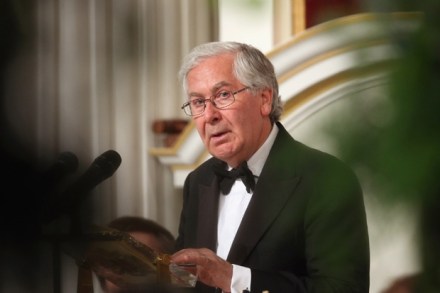
I once asked an American friend to come and talk to the Centre for the Study of Financial Innovation. He told them that he was against it. That put him ahead of his time, but Mervyn King agrees with him. In his decade as Governor of the Bank of England, he had seen what innovation could do, in good times and bad — in crisis, and in the fitful recovery that followed. He has resisted any temptation to write a memoir with himself as hero. Instead, he has set out to explain what went wrong and what must change to stop it happening again—and since we all need to know that, he wanted to write, not in economists’ algebraic shorthand, but in English. That shorthand gave an illusion of certainty.

The City says it’s for staying in but I wonder what the big beasts think

From our UK edition

‘The City is in no doubt that staying in Europe is the only way ahead,’ declared Mark Boleat for the City of London Corporation. Likewise Chris Cummings of the lobby group TheCityUK praised David Cameron for delivering ‘a really special deal’. The official Square Mile is squarely for ‘remain’, confident that the Prime Minister has secured safeguards to let the UK keep control of a thriving financial sector in a multi--currency EU. But with all due respect, I wonder what the real players think. The economists Gerard Lyons and Ruth Lea are two other respected City voices, and they warn that those safeguards won’t be worth much as Paris, Frankfurt and Brussels pursue their long-term aim of grabbing financial activity from us.

Apocalypse now? Markets seem set on a self-fulfilling prophecy

From our UK edition

All this talk of a new financial apocalypse, so soon after the last one, is starting to annoy me. Partly because investors as a crowd are so irrational; -partly because so much that governments and central banks have done to contribute to the current market mayhem seems to work against the sensible efforts of ordinary folk to build a bottom-up recovery. Markets first. We’ve had hissy fits about China, even though connections between the Chinese and UK economies are so marginal. We’ve had near-hysteria about the prospect of (and in the US, the start of) rising interest rates.

How is it where you live? A tale of two nations and a message for George

From our UK edition

Upbeat or downbeat? I asked last month whether the mood where you live is energised by enterprise or demoralised by public-sector retreat — or both. Replies poured in while the news mostly got worse. Governor Carney warned that ‘the UK cannot help but be affected by an unforgiving global environment and sustained financial market turbulence’ as shares took another dive. BP and Shell announced profit falls and job cuts. The Brexit debate took off, but the migrant benefits row overwhelmed any sensible discussion of economic pros and cons, on which voters must so far be utterly confused. Then again, it wasn’t all bad: like-for-like retail sales surged by 2.

The banks have serious problems, but a European-wide crisis? Let’s be serious

From our UK edition

A new European banking crisis. Seriously? Starting at Deutsche Bank? That’s the way markets were pointing on Tuesday as Deutsche’s shares plunged, inter-bank liquidity shrivelled, would-be investors in bank bonds hid in the toilets and speculative short-sellers did the work of the devil. And we all know there’s no smoke without fire, right? Let’s pause for thought here. The clue to whether Deutsche is ‘rock-solid’ (as its British chief executive John Cryan asserts) or tottering is in its name. Can anyone seriously imagine the German state and corporate establishment allowing the bank that bears their country’s name to go down? Of course they won’t.

I told you so: the UK electricity gap looms wider than ever

From our UK edition

Amid all the turmoil in global energy markets, we should not lose sight of the UK power programme that we’re praying will keep our lights on a decade hence: it is, as you know, a hobbyhorse of mine. So how’s it going down at Hinkley Point in Somerset? My man with big binoculars in the Bridgwater Bay nature reserve tells me he’s seeing plenty of lorry movements on the nuclear site, but signals from EDF of France — which has a two-thirds interest in this £18 billion project, alongside Chinese investors — are very worrying. Having already spent £2 billion, the French state utility has deferred until at least the middle of this month a final commitment that was expected last week.

Another banking review is pointless: just carry on naming, shaming and jailing

From our UK edition

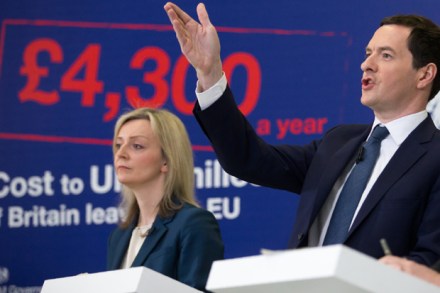
Was the Financial Conduct Authority leaned on by the Chancellor to scrap its ‘review of banking culture’? Or did it decide pragmatically that its resources would be better devoted to pursuing individual cases of cheating and criminality? I suspect the answer is a bit of both. Acting FCA chief Tracey McDermott — a no-nonsense northerner and former litigation lawyer — is reputed to be just as tough as her predecessor Martin Wheatley, who was ousted by Osborne last year, apparently for being too much the turbulent priest. Tracey became a regulator because she was interested in seeing ‘if human behaviour could be improved’ — in particular, the behaviour of people who are not dishonest by nature but are swept along by the tide.

The human element: highs, lows and loose ends of 2015

From our UK edition

Last year was a bumper year for mergers and acquisitions. Recovering prospects and relatively low price-earnings ratios made the takeover arena alluring: the global volume of deals looks certain to have passed the $4.3 trillion record of 2007. Among the new giants are Shell-BG, Heinz-Kraft, Pfizer-Allergan and monster brewer AB InBev-SAB Miller; bonuses reaped by London M&A bankers will fund basement diggings bigger than Crossrail. So you might expect me to name my deal of the year: but no.

After the Black Friday flop, shops can get back to what they do best

From our UK edition

The high street flopperoo that was ‘Black Friday’ may have something to do with terrorism fears, or even the downturn of the Chinese economy: in last year’s ugly scenes of bargain-hunters wrestling over televisions, Chinese tiger--shoppers seemed to win most of the spoils. But this year you could have held a picnic in the entrance of an Oxford Street store without fear of being trampled; trade had migrated massively online, where total UK sales are estimated to have passed £1 billion in a day for the first time and to have peaked (how sad is this?) between midnight and one in the morning. Amazon alone processed 7.4 million purchases in 24 hours.

We must play the blame game over HBOS. How else will bankers learn?

From our UK edition

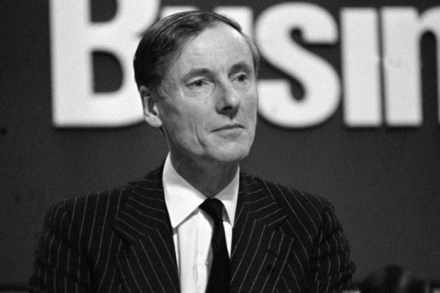
‘Everyone remembers the names of Applegarth of Northern Rock and Goodwin of RBS, but history may judge the HBOS men to have been the worst of the lot,’ I wrote four years ago. Judgment has arrived at last in a Bank of England report on the 2008 HBOS collapse — plus a second report, by Andrew Green QC, on the adequacy of investigations by the now-defunct Financial Services Authority. The Bank does not go as far as I did with ‘worst of the lot’.

Letters | 19 November 2015

From our UK edition

The NHS and politicians Sir: The NHS is indeed in need of fundamental reform, but Max Pemberton’s excellent article (‘The wrong cuts’, 14 November) exemplifies why politicians are least well qualified to conduct it. The public loves the NHS and has every reason to distrust political meddling. NHS England should become a public corporation with a five-year charter similar to that applying to the BBC. Of course politicians must decide the total budget and agree the strategic goals, but that is a far cry from deciding the pay and hours of every category of staff. Politicians have no managerial skills and should leave that to the professionals.

If the world economy crashes again, blame the central bankers

From our UK edition

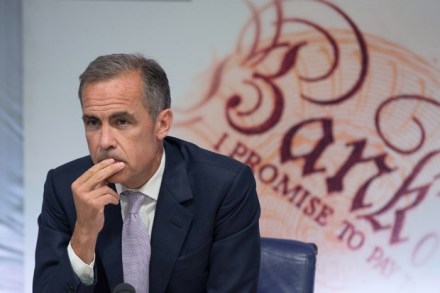
Like the Christmas pudding sampled by Hercule Poirot at Kings Lacey — but six weeks early — our Spectator Money supplement contains a little treasure in every portion, and perhaps even a priceless gem. I particularly commend the essays by Warwick Lightfoot and Subitha Subramaniam on interest rates, and why central banks have become so hesitant to raise them. In recent days we’ve had an indication from Mark Carney of the Bank of England that UK rates will stay at their current low well into next year, maybe until 2017; in the US, strong job numbers have pumped expectations that the first rate rise for nine years will be delivered by Fed chairman Janet Yellen in December.

I may have to revise my view that crypto-currencies are Satan’s work

From our UK edition

I confess to being an out-and-out Luddite when it comes to bitcoin and other so-called crypto-currencies. To the extent that I think about them at all, I think that they are an ephemeral by-product of those creepy ‘virtual worlds’ in which obsessed gamers eventually go mad; that only such lost souls could seriously believe unregulated online money might eventually supplant the state-backed real thing; and that fashionable belief in them can only lead to fraud and loss. In short, I concluded some time ago, they are probably the work of Satan.

TalkTalk shows us the internet is only three clicks from anarchy

From our UK edition

I’m not a customer of TalkTalk, the phone company which revealed last week that a hacker had potentially compromised the personal data of four million users. But I feel I’m on the front line of the cyberwar nevertheless. In August, someone unknown to me tried to spend £1,200 at House of Fraser on my credit card account. The bank, to its credit, sniffed a fraud, rejected the transaction, cancelled the card and invited me to speak to a nice young man in India who talked me through the corrective procedure, including deleting a false email address inserted by the fraudster and setting up a new password to add extra security for future contacts.

For better, for worse | 17 September 2015

From our UK edition

Before I read this book, I wasn’t aware that I was a creationist. But Matt Ridley tells me I am, in his broad sense of someone who foolishly believes that any good can come of ‘human intentionality, design and planning’. With no little intellectual chutzpah, he offers to treat us to a ‘general theory of evolution’ of everything, surpassing Charles Darwin’s ‘special’ one that applied only to living organisms. According to the author, ‘top-down’ is always bad, ‘bottom-up’ is always good. By what evolutionary method he avoided consciously designing this book itself remains a mystery to the end. The book’s many short chapters are determined to find evolutionary virtues in different arenas.