Banking

Cesspits and the City

From our UK edition

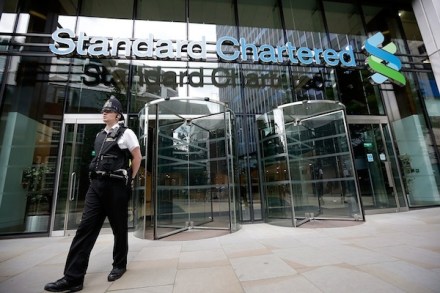
It's becoming difficult to predict just when the period of remorse and apology for bankers really will be over. Bob Diamond claimed that it had finished in January 2011, and found to his cost this summer that this was not true. The Libor scandal that cost the Barclays boss his job wasn't the only unpleasant thing to crawl out of what Vince Cable described as the 'cesspit' in the City of London, though. Today Standard Chartered's shares fell by 16 per cent following allegations from US regulators that the bank had covered up £160bn worth of transactions with the Iranian government. And at Southwark Crown Court this morning, Jessica Harper, head of fraud and security for digital banking at Lloyds bank admitted a £2.4 million fraud.

RBS next in line for Libor heat

From our UK edition

The Guardian has published an interview on its site with Stephen Hester in which the RBS chief executive predicts his bank is facing a huge fine for its part in the Libor fixing scandal. He says: 'RBS is one of the banks tied up in Libor. We'll have our day in that particular spotlight as well.' Hester can to a certain extent afford to be upfront about what is coming down the line for his bank. Even though it was clear from the start that there were other banks wading around in this swamp, Barclays took the majority of the flak as the first one to be fined. There might be another round of emails about bottles of Bollinger to feast upon, but the revelations will not be as shocking the second time around.

The odd omissions from the banking inquiry

From our UK edition

The difficult birth of the parliamentary inquiry into Libor and banking standards continued today with a controversy over which members of the Treasury select committee have been appointed to it. To general surprise, Andrea Leadsom, one of the better questioners on the committee, has been left off. This is particularly odd given that she is a former banker with real knowledge of the industry. John Mann, the pugnacious Labour MP, has also not made the cut. He has responded by labelling the coming inquiry a ‘whitewash’. What makes Leadsom’s omission particularly odd is that the Tory MP selected to join Tyrie on the inquiry is Mark Garnier, who is also a member of the 2010 intake. So, this is not a question of parliamentary seniority.

After LIBOR, why tolerate central banking?

From our UK edition

&"Did you encourage them to make up the made up thing to their own advantage?” That’s how one Twitter correspondent paraphrased a question to the Deputy Governor of the Bank.  The LIBOR scandal has exposed the institutions and culture of the City to popular scrutiny as never before.  The population is reacting with justified incredulity to the absurdity it is finding.   LIBOR submissions from Barclays and everyone else were based not on the rate at which they would lend, not on what they actually had to pay to borrow, but on what they said they thought they might have to pay. On the face of it, that is the flakiest of the three possible metrics. What system of financial regulation could cope with the inherent moral hazard?

Tucker denies Labour leant on Bank over Libor

From our UK edition

So Labour ministers did not 'lean on' the Bank of England to encourage lowballing of Libor rates, according to Paul Tucker. The Deputy Governor of the Bank told the Treasury Select Committee this afternoon that he had held conversations with officials about how able Barclays was to fund its operations. This is the exchange between Pat McFadden and Mr Tucker. McFadden asked whether any minister had tried to 'lean on' him over Libor: 'Absolutely not.' Asked whether Shriti Vadera had leant on him: 'I don't think that I spoke to Shriti Vadera throughout this whole process.' Ed Balls? 'No' Other ministers?

Tucker’s down on his luck

From our UK edition

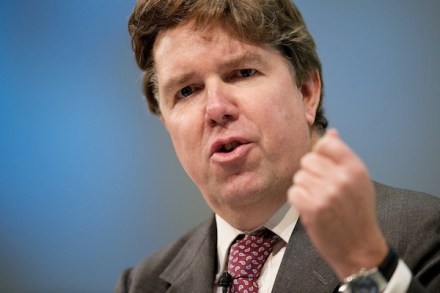
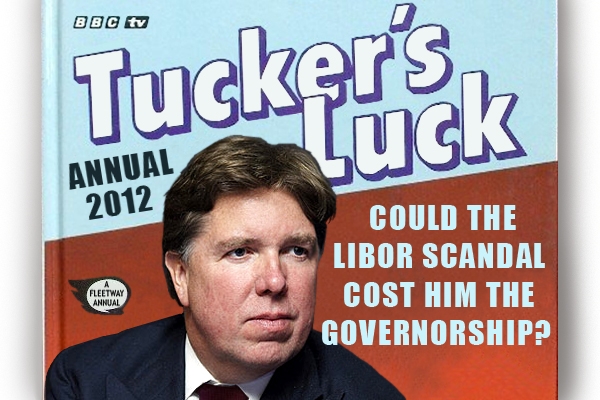
'This doesn't look good, Mr Tucker.' Andrew Tyrie made this observation towards the end of his Treasury Select Committee's evidence session with Bank of England Deputy Governor Paul Tucker. He was talking about the minutes of a meeting in 2007 which suggested Tucker was aware of the lowballing of Libor, but he might as well have been summing up the witness's hopes of taking the reins as the Bank's next Governor. Tucker insisted he was not aware that lowballing was taking place, but the minutes themselves said: 'Several group members thought that Libor fixings had been lower than actual traded interbank rates through the period of stress.' John Mann leapt on this, saying the minutes quite clearly referred to 'people submitting returns below what in fact were the traded rates'.

QCs could be the solution to the banking inquiry row

From our UK edition

There are, though partisans don’t want to admit it, problems with both a judicial inquiry and a parliamentary inquiry into the Libor scandal and the wider culture it has revealed. A judicial inquiry would drag on and, judging by the Leveson Inquiry, there’s no guarantee that the judge would understand the industry he’s meant to be examining. But, as yesterday demonstrated, the standard of questioning at any parliamentary inquiry is going to be patchy.   John Thurso, a Lib Dem member of the Treasury select committee and one of the most respected MPs, has been out floating a compromise solution. His idea is that the Joint Committee should have the power to take on QCs.

Inquiry debate leaves acrimonious atmosphere

From our UK edition

Following the vote just now, there will be a parliamentary inquiry into the Libor scandal. Andrew Tyrie, chairman of the Treasury select committee, will chair it because Ed Balls has agreed that Labour will participate in it as long as it concerns about membership and the secretariat are addressed; presumably, this means that Labour will argue that as it is a joint committee of both House there should be no government majority on it. The debate, though, has left an atmosphere of acrimony behind. It was noticeable that during the vote, Ed Balls walked past George Osborne who appeared to be trying to engage him in conversation.

The View from 22 — chancellor on the charge

From our UK edition

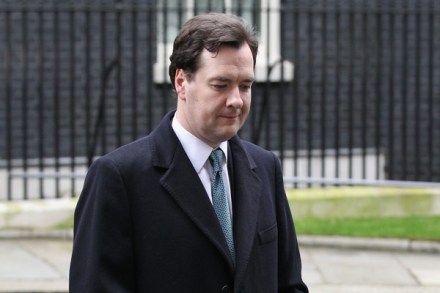
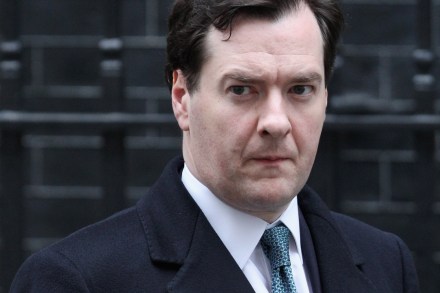
Did those around Gordon Brown create the conditions for the Libor fixing scandal? According to George Osborne, the answer is yes.  In his cover feature this week, James Forsyth speaks to the Chancellor of the Exchequer, who takes aim at his opposite number, stating those in the last government were 'clearly involved.' In our latest View from 22 podcast, James discusses how the trail may lead to these key figures from the last government: 'During the 2008 financial crisis, it seems there was a concerted effort to keep Libor low. This prevented banks from being nationalised. But it also raises the question of whether anyone from the last government was involved in these attempts to keep the Libor rate down.

Osborne and Balls are playing high stakes on Libor

From our UK edition

The exchanges between Balls and Osborne just now are some of the most heated and most personal in parliamentary memory. I suspect that Balls would now not offer to cook Osborne ‘my 14-hour pulled pork South Carolina barbecue. I’d know he, as an American aficionado, would truly appreciate it’. The cause for this row is George Osborne’s interview in the new issue of The Spectator. The following paragraphs have sent Balls into a rage: 'If exonerating the Bank is his first priority, his second is tying this scandal to the last government. He starts by blaming the regulatory system devised by Brown and Balls for allowing these abuses to happen.

A Jubilee moment of historic significance

From our UK edition

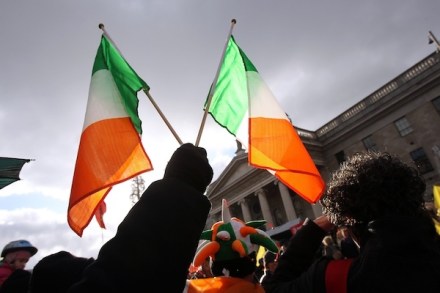
Martin McGuiness will meet Her Majesty the Queen and shake her hand in Northern Ireland. This is a seminal moment. It does not change McGuiness’s commitment to a united Ireland, but it is a strong statement from the Republican side that bygones are bygones. It is also a sign, perhaps, that the sacrifices Britain made over the Bloody Sunday Inquiry where worthwhile, because McGuiness is making a brave sacrifice by doing this: there will be those who condemn him for it. It is also significant that the Palace has achieved this. The conflict in Northern Ireland and the dark historical relations between Britain and Ireland are causes close to the Queen’s heart; and she has made peace and reconciliation a mission of her reign.

Osborne, competitiveness and confidence

From our UK edition

George Osborne will formally unveil the government’s banking reforms in a speech at Mansion House later this evening. The reforms are in line with the recommendations of Sir John Vickers’s Independent Banking Commission (ICB), as laid out by the Treasury, which published this White Paper earlier today. For those who’ve forgotten, Vickers suggested splitting retail and investment banking through a Glass-Steagall-type ‘ring-fence’ mechanism that would protect retail, SME deposits and overdrafts while commanding that the ring-fenced part of the bank is not dependent on other departments for liquidity.

Basel III and the EU’s strange desire not to compete

From our UK edition

Greece is the centre of European attention, but as George Osborne met with other EU finance ministers today there was another issue bubbling in the background — Basel III. This had been brewing for a while and is yet one of those matters that threatened to isolate Britain from the rest of the EU (though some would argue this is a good place to be). The Chancellor this morning appears to have agreed to the Basel III accord, which stipulates the amount and quality of capital that banks are required to keep. But this was after much haggling — and an Osborne outburst where he said signing on to the original banking capital rules would make him look ‘like an idiot’ — saw amendments being added.

Fears heighten as the Eurocrisis rumbles on

From our UK edition

For all the coverage of hacking, pasty tax and the like, the continuing crisis in the eurozone remains the most significant political story. Until it is resolved, it is hard to see how the UK returns to robust economic growth. I suspect that the market reaction to a Hollande victory will be limited as it is already pretty much priced in. Those expecting a degringolade will be disappointed. However, if Hollande does actually try and implement some of his more extreme ideas, the markets could take fright. What is far more worrying than France is Spain. There’s a growing sense of inevitability that the Spanish banks will need a bailout before the autumn.

From the archives: the fall of Saloman Brothers

From our UK edition

Back in August 1991, Michael Lewis examined the disintegration of his ex-employer — investment bank Salomon Brothers — for The Spectator. His semi-autobiographical story, Liar's Poker, went onto to become an international best seller. Here is the article in full for CoffeeHousers: The Judgement of Salomon, Michael Lewis, The Spectator, 24 August 1991 We never be told the truth about what happened at Salomon Brothers over the past few years. I'm not even sure that it matters. The firm has admitted to breaking the rules in five separate US Treasury auctions, to fraudulently using the names of its customers, and to submitting an illegal bid for $1 billion worth of US Treasury bonds as a 'practical joke'.

From the archives: Rowan Williams on capitalism and idolatry

From our UK edition

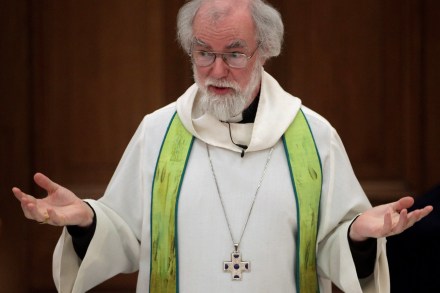
To mark today’s news that Rowan Williams will be stepping down as Archbishop of Canterbury, here’s a piece he wrote for The Spectator during the financial crash of 2008: Rowan Williams, Face it: Marx was partly right about capitalism, 24 September 2008 Readers of Anthony Trollope will remember how thoughtless and greedy young men in the Victorian professions can be lured into ruin by accepting ‘accommodation bills’ from their shifty acquaintances. They make themselves liable for the debts of others; and only too late do they discover that they are trapped in a web of financial mechanics that forces them to pay hugely inflated sums for obligations or services they have had nothing to do with.

How Mervyn King’s role has changed

From our UK edition

A week devoted to Mervyn King and his eight-year reign at the Bank of England sounds like pretty turgid stuff. But, already, the series that has started in the Times (£) this morning — building up to an interview with the man himself — is anything but. Here, for instance, is a snippet from one of its articles, by David Wighton, on how Mr King reacted to the crumbling of Northern Rock: ‘As the plight of Northern Rock and other banks worsened, Sir John Gieve and Paul Tucker were urging Sir Mervyn to act, but he would not budge. “He mocked them as ‘crisis junkies’ and more or less accused them of enjoying it,” one former official says. Sir Mervyn took a different approach.

Project Merlin may not wield a magic wand

From our UK edition

Are Project Merlin's lending targets just a myth? On the basis of today's figures it's still rather hard to tell. The arrangement between the government and the banks did yield £214.9 billion of gross lending to businesses in 2011 — against a target of £190 billion, and a 20 per cent increase on 2010. But net lending also declined in every quarter of the year. And the target for lending to small businesses of £76 billion was missed by £1.1 billion.  The banks have put this shortfall down to fewer small businesses coming forward for credit — and there's actually some truth in that. This survey suggests that small businesses did indeed withdraw their begging bowls as the year progressed.

Transcript: Stephen Hester on bankers and bonuses

From our UK edition

This morning, the chief executive of RBS Stephen Hester appeared on Radio 4's Today programme to discuss the recent furore over his bonus. Hester revealed he nearly resigned over the crisis and agreed that bankers have been making too much. Here's the full transcript for CoffeeHousers. James Naughtie: Banker without a bonus? You might say he’s a lonely figure in his business; he’s Stephen Hester, Chief Executive of the Royal Bank of Scotland. The public furore about executive pay in a bank that’s 83% owned by the taxpayer caused him to forego the bonus he was awarded this year in the form of more than three and a half million shares, worth probably about a million pounds.

Peston: Hester will not take bonus

From our UK edition

Stephen Hester’s decision to waive his bonus, revealed by Robert Peston just after 10 o’clock, will be a source of great relief to David Cameron and George Osborne. A story that could have dragged on for weeks, undermining their argument about fairness has just lost most of its potency. Ed Miliband, though, will be able to claim — with some justification — that it was the threat of a Commons vote on the matter that led to Hester renouncing his bonus. But this isn’t quite the end of this business. There’s now the question of what happens to the bonuses for other members of staff at RBS and then there is next year’s round. There’s also the whole issue of RBS’ status.