Banking

Bad banking

From our UK edition

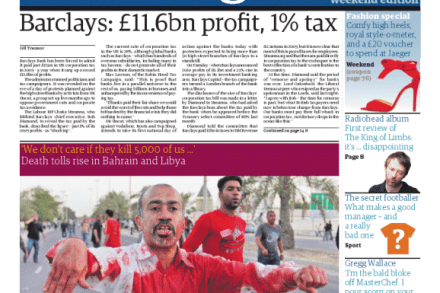
No wonder the banks like Britain's corporation tax regime. This morning’s newspapers all tell that Barclays paid just £113m in corporation tax in 2009, despite making profits of more than £11bn. In a rare instance of justified anger, Labour’s chosen men have launched an attack on the government’s failure to ‘take the robust action needed to make sure that the banks which caused the crash pay their fair share, and will stick in the stomachs of small businesses struggling to borrow and ordinary people feeling the pinch of the government's austerity measures.’ Whatever the absurdities of Labour’s position, this news will ‘stick in the stomachs’ of the little people, whose wealth is withering before their eyes.

The coming coalition compromise on the banks

From our UK edition

One of the questions that most fascinates Westminster is what would make Vince Cable walk out of the coalition Cabinet. Cable might be a diminished figure and have lost standing on the Lib Dem left by pushing through the tuition fees hike, but his departure would still shift the tectonic plates of politics. As James Kirkup blogs today, banking reform, or the lack thereof, is the most likely cause of Cable going nuclear. Cable is a firm believer that retail and investment banking need to be separated, a view that he pretty much reiterated on Marr this morning. Osborne and the Treasury are far more cautious on this front. Everyone in government is waiting to see what the Vickers Review recommends.

Rooting out the cause of the crisis

From our UK edition

David Frum is doing a great series on the Financial Crisis Inquiry Commission report. The report is, obviously, US-centric but its argument that the problem was not with the regulation but the regulators strikes me as highly important: “[W]e do not accept the view that regulators lacked the power to protect the financial system. They had ample power in many arenas and they chose not to use it. To give just three examples: the Securities and Exchange Commission could have required more capital and halted risky practices at the big investment banks. It did not. The Federal Reserve Bank of New York and other regulators could have clamped down on Citigroup’s excesses in the run-up to the crisis. They did not.

The crash from an Austrian perspective

From our UK edition

It’s not all politics at Westminster. There’s a pretty good think-tank scene too, with lectures on topics that you’re unlikely to read about in the newspapers. One took place today: the Adam Smith Institute hosted a lecture by Steven G. Horwitz, from St. Lawrence University, entitled “An Austrian perspective on the great recession of 2008-09”. As many CoffeeHousers will know, "Austrian" refers to von Mises, Hayek and the others whose analysis of bubbles and crises certainly seems to fit current events. My colleague Jonathan Jones was there, and took some notes – which I have moulded into a six-point briefing.  It’s not often we do a post based on a think-tank talk – we may do more, if CoffeeHousers find them useful.

The Guardian’s Wiki-spin

From our UK edition

In today's Wikileaks revelations, it is Mervyn King's turn to be pushed through the mill. Did he act politically when pushing for a deficit reduction plan? Was he critical of David Cameron and George Osborne or just pointing out the obvious: that the Tory leaders had not held power before and - shock horror - were keen to get elected? The Guardian's reading of the cables suggests that the government's Batman and Robin (to keep with US diplomatic style) were unprepared for the task ahead. But re-read the key passages and it is clear that Cameron and Osborne were no different from any other opposition leaders - reliant on a small staff, and unprepared for the special pleading they would face as they entered government and tried to cut the deficit.

Iberian blues

From our UK edition

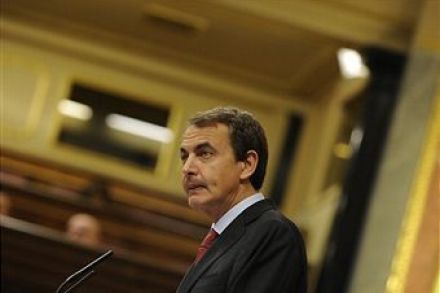
I’m finishing a two-day trip to Spain and am about to board a plane, just as the bond markets turn their attention to the Iberian Peninsula. As James wrote yesterday, the gap between Spanish 10-year government bonds and those of Germany has widened to as much as 2.59 percentage points - the biggest gap since the introduction of the euro. For its part, the Portuguese government said it was under no pressure from the European Central Bank or other Eurozone member-states to accept financial aid to ease its debt and deficit problems. That sounds like the noise before the defeat. Portugal was brought to a halt yesterday by a strike in protest at the government’s spending cuts and tax rises, which aims to reduce the budget deficit from 9.

Why Spain matters to Britain

From our UK edition

So far Ireland and Greece have been bailed out with relative ease. If Portugal required external assistance, Europe could run to that too. But bailing out Spain would be another matter entirely. As The New York Times points out today, the Spanish economy is twice as big as the Irish, Greek and Portuguese ones combined. Spain’s situation is not yet critical. But as the NYT piece sets out very clearly, there are some extremely worrying signs. The gap between Spanish and German gilt yields is now at the biggest point it has been since the introduction of the euro. Spanish banks are also heavily exposed to Portuguese debt.

Ireland’s crisis is the fault of Fianna Fáil, not just the euro

From our UK edition

In all likelihood, George Osborne will rise this afternoon to groans if not jeers. Britain looks set to lend Ireland £7bn as part of multilateral and bilateral bailouts. Many, particularly the Eurosceptic right, question our involvement, given our straitened financial circumstances and the apparent fact that Britain is sustaining the eurozone’s monetary and debt union, and will have to borrow to do so.     George Osborne has been adamant throughout: Ireland is too important to Britain’s recovery to risk collapse – British and Irish banks are closely linked, debts and borrowing are often co-dependent, trade is very profitable. That the bailout should strengthen the euro is a natural consequence of Ireland being a member of the euro.

Ireland’s nightmare becomes Europe’s problem

From our UK edition

"We certainly haven't looked to Europe." That was the message spilling from the mouths of Irish Cabinet ministers last night – but, as Alex suggested in a superb post on the matter this morning, their utterances may come to naught. After all, Europe has certainly looked to Ireland – and it doesn't like what it sees. Already, Brussels' moneymen are urging a bailout on the country, and Ireland's moneymen are thought to be in "technical discussions" about how that might work. The upshot is that a financial intervention from Europe is now considerably more likely than not. And with that come European demands over how Ireland should manage its public finances – and raise its taxes. There are plenty of lessons for all sides in this.

G-20 in Seoul: Beyond “Camerkelism”

From our UK edition

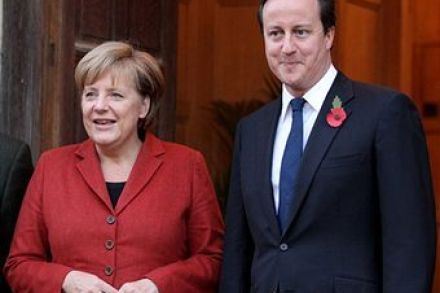
David Cameron is now in Seoul for the first G-20 summit hosted by a non–G-7 member state. It will be the Prime Minister’s second G-20. But things have changed dramatically since he came to power and had to jet to Toronto for his multilateral baptism. Then the Prime Minister’s arguments for austerity measures were theoretical - and a minority position. Now, they are real and have become the majority view. “Camerkelism”, the idea that short-term fiscal consolidation will induce sufficient private-sector activity to more than fully offset the fiscal drag seems to be in the ascendant. Yet the forced smiles at the traditional G-20 class photo will belie a number of continuing problems. The biggest issue will be about the Chinese exchange rate.

Apocalypse soon

From our UK edition

Writing in the Irish Times, Morgan Kelly has denigrated the Irish government’s handling of the economy. Comparisons are often counter-factual – Irish politics is not divided along lines of left and right, and the Celtic Tiger was made of tissue paper. But, to English readers - servicing a colossal national debt with their punitive tax bills, facing crumbling house prices, waiting for the moment when mortgages become beyond the reach of all but the cash rich, and encumbered with billions in worthless global bank assets - it is a truly terrifying read. I urge CoffeeHousers’ to read the whole piece, but here is its essence: ‘By next year Ireland will have run out of cash, and the terms of a formal bailout will have to be agreed.

Why the Tories didn’t win

From our UK edition

Courtesy of John Rentoul, Tim Bale, professor of politics at the University of Sussex, offers this appraisal of the 2010 election: 'For all the talk in opposition of decontaminating the Tory brand, of making the party more tolerant and inclusive and less ‘nasty’, the key task facing Cameron when he took over in late 2005 was reassuring voters that the Conservatives could be trusted on welfare and public services.  All the market research suggested that this was the sine qua non — a necessary if not a sufficient condition — of a return to office. When the global financial crisis hit and Britain’s budget deficit ballooned, however, this task remained unfinished and work on it practically ceased.

Bonuses: a question of political economy

From our UK edition

There is a reason why the coalition has used the Lib Dem conference to step up its rhetoric about the bankers and their bonuses. The coalition believes, rightly, that balancing the budget is a matter of political economy. It is acutely aware, and has been for some time, that the sight of banks paying out huge bonuses later this year just as the public sector begins to lay people off and cut services would be disastrous. This view is shared by everyone in the coalition from Cable to Osborne. Bumper bonuses would increase calls for new punitive measures against the banks and produce precisely the kind of political atmosphere that the more aggressive trade union leaders want.

Cable shows his true colours

From our UK edition

‘[Capitalism] takes no prisoners and it kills competition where it can’. ‘Markets are often irrational or rigged.’ A snob would describe those as the ravings of a chippy provincial university lecturer. In fact, they are the considered thoughts of Vince Cable, the business secretary, the very man tasked with selling Britain to international markets. Cable will address the Lib Dem conference later today, vowing to shine the ‘harsh light into the murky world corporate behaviour’. Limiting short-term speculation when linked to high pay is government policy, but Cable will go further than a spot of banker bashing. Much further.

The “progressive coalition” cuts its teeth

From our UK edition

Trust Bob Crow to turn down the charm. Explaining why he was boycotting Mervyn King's address to the TUC today, the RMT union boss managed to liken the Governor of the Bank of England to both the "devil" and the "Sheriff of Nottingham". Unsurprising, perhaps – but it's yet another reminder of why, for the Labour leadership contenders, marching in lockstep with the unions may not be such a good idea. To Harriet Harman, a Labour Party bound to Crow & Co. might be a “progressive coalition”. But to the rest of the country, it will probably look slightly left of sane. Only David Miliband, to his credit, seems to have properly grasped this fact – and the fact that he might hope to work alongside people like King one day.

Stephen Green’s double-dip warnings

From our UK edition

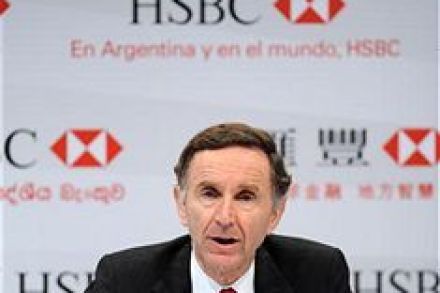
The Big Tent just got a little bit bigger with the appointment of Stephen Green as trade minister. As most of the papers point out, landing the HSBC boss is something of a coup for the coalition. David Cameron was struggling to fill the role, but he's ended up with someone who is widely credited with steering his bank through the worst of the financial storm. Even HSBC's purchase of a dodgy sub-prime company in 2003 has done little to tarnish Green's reputation. Now that he's in government, though, it's worth pointing out that he is yet another minister who has warned of a double-dip recession. Here's how the FT wrote up a speech of his in July: "'We are three years into a crisis that is far from over,' he said.

Hard going for the government

From our UK edition

A tough morning for the government at the hands of Tyrie, Fallon and rest of the Treasury Select Committee. Sir Alan Budd apologised for his naivety, Robert Chote described the Budget as ‘regressive’ in the main and the banking levy has been criticised on the grounds that is de-stabilising banks’ capital bases, which will affect lending. The government would prefer silence on these issues but the damage was far from total. Budd was an interim figure and the spat that has developed around him is largely political – there is no question that Budd was ‘nobbled’. Robert Chote deserves his reputation but he is not infallible. And Treasury Chief Economic Advisor, Dave Ramsden, put paid to the criticism of the banking levy.

A good war

From our UK edition

As Allister Heath notes in City AM this morning, Mervyn King has had a good war. Well, not so much a good war as a profitable peace. King contributed to the domestic crisis by sustaining very low interest rates whilst ignoring asset prices. Brown may have forced the Governor’s hand, but King was groggily supine until a sovereign debt crisis threatened. George Osborne is dismantling Gordon Brown’s regulatory imperium. King is the major beneficiary as the FSA is subsumed by the Bank of England. How will exercise that power? Obviously, time will tell; but monetary tightening will moderate excess (and spruce up banks' balance sheets) in the short-term.

Ten questions for Gordon Brown tonight

From our UK edition

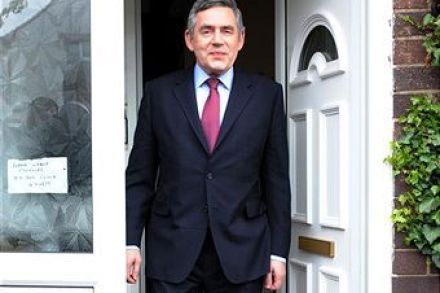
By rights, Gordon Brown should fear this debate on the economy more than any other. Here are ten questions I would like to hear him answer:   1. You told Gillian Duffy yesterday that you have a "deficit plan to cut the debt in half over four years." This was a lie, wasn't it? Our debt is £771bn now. Your deficit plan ­- ie, to run huge deficits for years - will actually double it to £1,406 billion within four years according to the Treasury. The debt for which Mrs Duffy and other taxpayers are liable would double under your plans ­- yet you told her it would halve. How can you tell a lie of that magnitude, to the very sort of women whose taxes you intend to use to service this extra debt? 2.

Brown comes under heavy fire on Today

From our UK edition

Woah. I doubt Brown will endure many tougher twenty-minute spells during this election campaign than his interview with on the Today Programme this morning. You could practically hear the crunching of his teeth, as John Humphrys took him on over Labour's economic record; practically smell the sweat and fear dripping down his brow. It was compulsive, and compelling, stuff. Humphrys started by putting a grim story to Brown: that his "handling of the economy was not prudent ... your record suggests that the economy is not safe in your hands."  The PM's mission was to deny all this, and he did so with his usual stubborness and disingenuity.  His pitch here was all about inflation: about how we'd avoided the high inflation of recessions past, and how we should be grateful for that.