Avignon

The perils of being pope

From our UK edition

Rome in the 1st century AD pulsated with religion. The knowledge that they lived in a sacred city, protected by the gods, permeated the daily lives of its citizens. They would see oxen being led down cobbled streets to be sacrificed on marble altars or offerings of incense and wine being made when the gods or the emperor demanded. There were constant religious festivals. At the Lupercalia, childless women were beaten with goatskin thongs that promised fertility; at the Saturnalia, Romans shed their togas, drank heavily and gambled. Even non-citizens and slaves were obliged to take part in these religious ceremonies.
The heady reds of Avignon

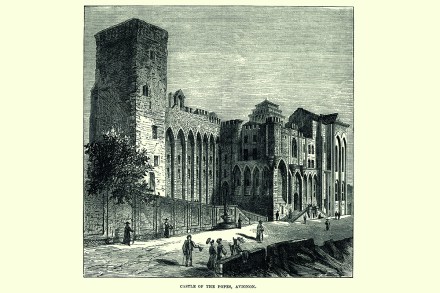
To you and me, “Châteauneuf-du-Pape” means the bold, dark, spicy red wine from the Rhône region of southeastern France, a bit north of the town of Avignon, with bottles usually featuring a glass-embossed representation of the keys of St. Peter. If you were Jacques Duèze, known to history as Pope John XXII, second and longest reigning (1316-34) of the Avignon popes, Châteauneuf-du-Pape meant first of all that “new castle of the pope” he built on the hill overlooking the town. After the popes left, it fell into desuetude and was raided for stone by local builders. During the Revolution, all the buildings except the great tower or donjon were sold off. During World War Two, the Germans attempted to dynamite the structure but succeeded in destroying only the northern half.

Châteauneuf-du-Pape