Australia

Zero-Covid is wishful thinking if Australia wants to rejoin the world

From our UK edition

As former Australian foreign minister and High Commissioner to the UK Alexander Downer wrote in last week’s magazine, almost all Australian states, like neighbouring New Zealand, are determined to eliminate Covid-19 at all costs. At the beginning of this year, Australia seemingly had defeated Covid. Total numbers of people infected, out of 25 million, were in the few thousands, with related deaths in the hundreds (mostly in care homes). Even now, with a major Delta variant outbreak across our two biggest states, New South Wales and Victoria, less than a thousand Australians have died from or with Covid, almost all elderly or people with other health complications.

sydney australia

Aussie’s rules: COVID is becoming Australia’s state religion

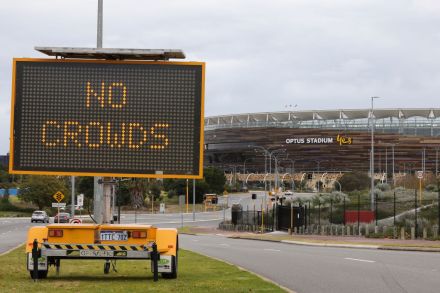
Sydney Social media is depressing at the best of times, but when you are on Day 60 of a lockdown that doesn’t let you stray more than five kilometers from your house, it’s a nightmare. Open up Facebook, and there’s an old high school mate smugly plopped down in a business class seat heading for Hawaii, toasting you with a glass of second-rate fizz. Flick over to Instagram, and your favorite little hotel in Tuscany has got the long table set for a 'celebration of love’ and the union of a couple who live someplace that doesn’t require exit visas of its citizens.

Can Australia escape its Covid lockdown cycle?

From our UK edition

In the early days of the pandemic, Australia was the envy of the world. The country was lauded as a model of how to handle the virus. Australian states recorded few cases; and when there were outbreaks, authorities brought them under control quickly. All that has changed. Now, well into the second half of 2021, Australia is losing its grip on the virus. While other major cities such as New York, London, and Paris, are opening up, Sydney is under lockdown. Even outside the nation’s major cities, travel restrictions are severely limiting movement for Australians within the country. Australia’s politicians have sought to blame the Delta variant of coronavirus. But in truth, the new strain is only part of the story.

How Australia was caught in lockdown limbo

From our UK edition

Sajid Javid’s deleted weekend tweet about Britain ‘learning to live with, rather than cower from Covid’ upset just about everyone – from frontline NHS workers to Covid-19 victims’ groups. But Javid could actually have been talking about Australians. While the UK’s Freedom Day went ahead despite 40,000 people testing positive for Covid daily, over half of Australia’s population has been cowering under lockdowns imposed by their state governments, while the other half are exhorted to treat their locked down fellow Australians as pariahs. For what? Yesterday, Australia’s health department reported just 157 positive cases in the previous 24 hours, mostly in the Greater Sydney area.

Australia shows the cost of zero Covid

From our UK edition

The UK is growing at the fastest pace in 80 years. The United States, fuelled by President Biden’s stimulus programme, is expanding at a breath-taking pace, while Sweden is growing at a rapid rate. Most of the global economy is bouncing back from the Covid recession at remarkable speed. There is, however, one exception. Australia. What has long been one of the most successful economies in the world is heading back not just into lockdown but into recession as well — and giving the world a sharp lesson in the cost of ‘zero Covid’. Over the last year, Australia, along with New Zealand, has been heaped with praise for the way it has managed to keep Covid-19 under control. There is, of course, plenty of justification for that.

Portrait of the week: Covid in cabinet, pingdemic pandemonium and Ben & Jerry’s boycott

From our UK edition

Home On the eve of the day that most coronavirus restrictions were to be lifted, the Prime Minister and Chancellor of the Exchequer had to react to having been in close contact with Sajid Javid, the Health Secretary, who, despite being doubly vaccinated, had contracted Covid. At first Boris Johnson said that under a pilot scheme he would continue to work at Downing Street. Within hours, during which Labour exploited the idea of privilege, he backtracked, declaring it was ‘far more important that everybody sticks to the same rules’. So he would isolate himself (at Chequers) until 26 July.

Portrait of the week: Mixed messages on masks, protests in Cuba and good news for pandas

From our UK edition

Home England expects everyone to wear masks in crowded places, Boris Johnson, the Prime Minister, said in a televised address, even though the law requiring it was to be dropped on 19 July. He said: ‘We’re removing the government instruction to work from home where you can but we don’t expect that the whole country will return to their desk as one from Monday.’ He added that the ‘single most crucial thing’ people could do was to get vaccinated. He declared it ‘a matter of social responsibility’ for nightclubs and other venues to demand a Covid pass, proving vaccination or a recent negative test, to allow entry. The Night Time Industries Association resented being used as a cat’s paw.

Revealed: How the UK-Australia deal was struck

From our UK edition

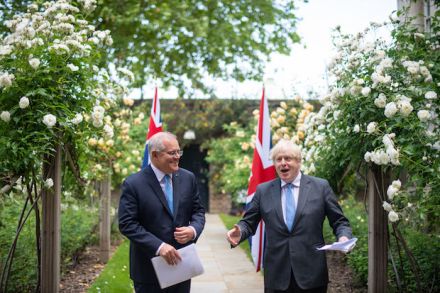
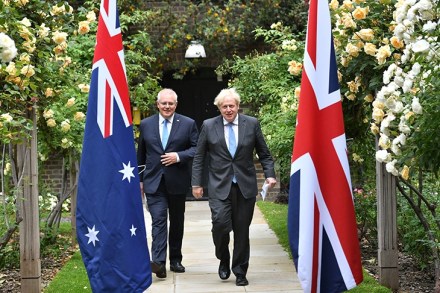
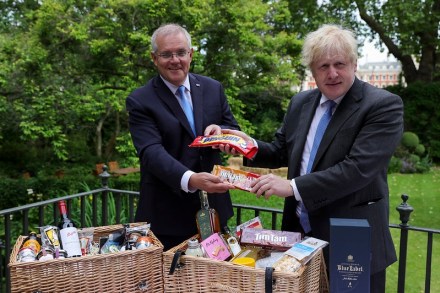
The basis of the UK’s first bespoke trade deal since leaving the EU was finalised with Australia over two dinners. One took place in the garden of the residence of the Australian High Commissioner to the UK, where guests were fed Australian lamb. The other in Downing Street where Welsh lamb was on the menu. They were menu choices that pointed both to what the deal would achieve – zero tariffs, including on agricultural goods – and the main point of contention in a negotiation that has spanned nearly a year since talks began last June. In that time, there has been a Cabinet row over protectionism on Australian meat imports and a diplomatic incident that nearly hampered the talks.

The real value of the Australia trade deal

From our UK edition

If Britain had been unable to agree a trade deal with Australia, then Brexit really would have been pointless. The country is one of our greatest allies and we have no rational reason to fear its beef, its sugar or its people. A free trade deal, aligned with visa-free travel, ought to have been the easiest deal to do. A deal is now done, phasing in these freedoms over 15 years. But even this sluggish pace is too fast for the protectionists who are popping up. Some have predicted that our beef farmers will be ruined and the countryside laid to waste as our markets are opened to competition. Many of the claims revolve around the fact that just under half of the beef produced in Australia comes from animals treated with growth hormones — a practice banned within the EU.

Why the BBC believed Martin Bashir

From our UK edition

If it is true, as Lords Hall and Birt told a Commons committee this week, that Martin Bashir succeeded in duping all the five top BBC executives involved about the forged invoices by which he convinced Diana, Princess of Wales of the establishment’s conspiracy against her, then those executives must be very, very unworldly people. I am reluctant to believe that of them. There must be a different explanation, one with which, as an ex-editor, I have some sneaking sympathy. The interview got the BBC a wonderful story, so when trouble started shortly afterwards, that trouble had to be smoothed away. The problem was not only the BBC’s reputation, but also the careers of the five executives.

The UK-Australia free trade agreement is a triumph

From our UK edition

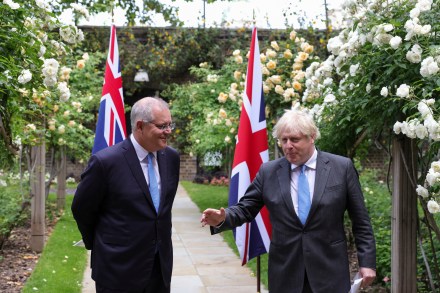
How significant is the UK-Australia trade deal announced this week during Prime Minister Scott Morrison’s visit to Britain? Well, Australia already has 17 genuine free trade agreements, including with the United States, Japan and China. But the free trade agreement with the UK is undoubtedly one of the highest quality agreements Australia has ever reached. In terms of the liberalisation of markets, it is only exceeded by the free trade agreement Australia has with New Zealand. This demonstrates something very important: that the UK, having left the European Union, is going to be a genuine champion of global trade liberalisation.

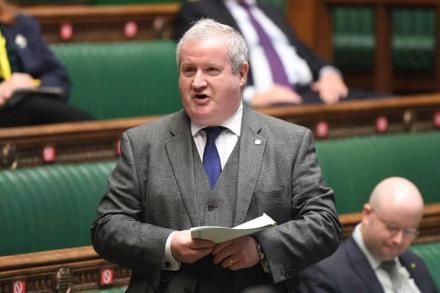
PMQs: Ian Blackford’s trade rage

From our UK edition

Covid changes its identity more often than Grant Shapps. The latest strain emerged with the appealingly exotic name ‘Indian’. Now it’s been given a more military-sounding tag, ‘the Delta variant.’ Today’s PMQs featured a tussle over the date on which this dangerous mutant sneaked through the UK’s borders. Sir Keir Starmer waved a file of papers at Boris. ‘It’s all here in the transcript,’ he said and he accused the PM of waiting too long to slap a ‘red list' notice on India.  For once, Sir Keir had his timelines in a twist. Boris flourished a counter-file at the opposition leader. It was written, said the PM, by the general secretary of the Labour party. ‘This is the document on which I believe he is relying.

The political advantages of the UK-Australia trade deal

From our UK edition

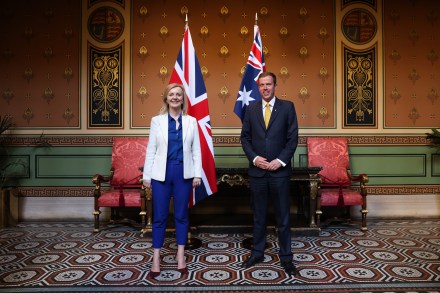
The UK government has agreed its first bespoke trade deal since leaving the EU. After Boris Johnson met with Australian Prime Minister Scott Morrison on Monday night, a deal has been agreed between the two sides. The deal on the table offers tariff free trade for all British goods, enhanced access for British tech companies and ought to make it easer for Britons under the age of 35 to travel and work in Australia. As for the Cabinet row over whether an influx of Australian meat could threaten the livelihoods of UK farmers, a 15-year cap on tariff-free imports has been agreed – though the specifics are yet to be published. The deal shows that free marketeers in government are still being heard So, what does this mean for the country?

We don’t have to swap sovereignty for trade

From our UK edition

A new court will be established with powers over both countries. Labour and product laws will be harmonised. Flags with kangaroos and crowns will flutter over buildings, there will be a special parliament moving weekly from Cairns to Coventry and an anthem that mashes up Rolf Harris and The Beatles will be played at every opportunity.  For years, we have been lectured by europhiles that free trade requires a pooling of sovereignty There were lots of things that could have been in the Australian-UK trade deal that was finally agreed today but which aren’t. In truth, the most significant point about the deal is not what it includes, but what it doesn’t. It liberalises trade, reduces tariffs and at the margin will help the economies of both countries.

The Australian trade deal is about more than just trade

From our UK edition

What happens with an Australia trade deal won’t just reveal how serious this country is about free trade but also how committed it is to helping democratic countries stand up to China. China is Australia’s largest trading partner but since Australia called for an independent inquiry into the origins of coronavirus, Australian-Chinese relations have severely deteriorated. Beijing is now trying to use this economic relationship to get Canberra to fall into line.  China has imposed huge tariffs on Australian barley and on wine for the next five years, while technical reasons have been found to bar most Australian timber and beef from the country.

Boris must stand up to farmers – and back the Australia trade deal

From our UK edition

Farms will be devastated. The countryside will be ruined. And we will all be forced to eat weird food that will probably kill us. As the government tries to finalise a free trade deal with Australia, there are already reports of fierce rows over the future of agriculture played out against a backdrop of a angry backlash from the farming lobby.  It's time for the government so face up to these critics. True, farming is not crucial to the future of the British economy, and neither, as it happens, is trade with Australia. But the principle is important – and if the UK doesn’t embrace free trade then leaving the EU will hardly have been worth the bother.

How to have an Australian weekend in London

From our UK edition

The news that Australia’s borders could remain closed until 2024 will be a blow to anyone hoping for a trip down under after lockdown. If you can’t wait that long (and fingers crossed you won’t have to) here’s our guide to having an Australian themed weekend here in London. Where to eatBrunch at Daisy Green Though London’s Aussie population has shrunk in recent years, the standard of Antipodean cuisine has been very much on the rise - not that we’re alleging any correlation there, of course. Leading the charge has been Daisy Green, a collection of Australian-run restaurants managing to gain a foothold in London’s already crowded brunch market with their inspired take on Melbourne and Sydney cafe culture.

Britain’s vaccine success was supposed to lead to freedom. What happened?

From our UK edition

In November, when cases were surging and a second lockdown was under way, Boris Johnson made a big promise: things might look bleak, he said, but the ‘scientific cavalry’ would arrive. It duly did, with a vaccination programme that became the envy of Europe. The mood of the country lifted. Today, Britain is still on course to become the first country in Europe to vaccinate its way out of the pandemic — and lockdown. The economy can reopen in time for summer: truly a great escape. Science achieved the seemingly impossible. Produced in record time, Covid vaccines are proving more effective than most predicted. In Britain, cases and deaths have fallen by 95 per cent since the latest peak, a stunning descent.

Why is New Zealand afraid of criticising China?

From our UK edition

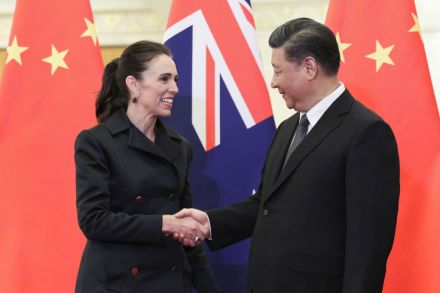
It is becoming harder and harder to ignore China’s aggressive behaviour. As I say in the magazine this week, China wants to pick off its opponents. Only a unified western response can stop this, but all too often that has been lacking. New Zealand was strikingly absent from the statement issued by 14 countries When Beijing turned on Australia for suggesting that there should be an independent inquiry into the origins of the coronavirus, there was a shocking lack of solidarity from New Zealand. Wellington’s trade minister, while negotiating an upgrade to its trade deal with China, suggested Australia should ‘show respect’ to China. New Zealand now exports almost half its meat and wool to China.

Australian school makes innocent 12-year-old boys apologize for rape 

As America itself chokes to death on debt, drugs, and deep-fried Oreos, as its military trades war-fighting for wokeness, its culture still spreads across the globe inexorably. In years past, complaints about American culture dominance focused on its music, its movies, its fast food and its hyper-capitalist economics. But America has now adopted a radical new ideology that it is exporting worldwide with vigor. Belgium has Black Lives Matter riots. Romania has church vandalism in the name of progress. And now, Australia has America’s particularly malignant approach to sexual disharmony.

12