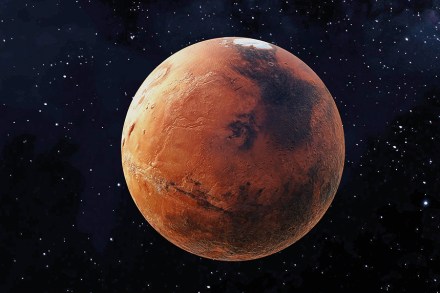
Why most scientists don’t want us to believe in life on Mars
From our UK edition
‘Is there life on Mars?,’ asked David Bowie, and would not stay for an answer. The astrobiologist Steven Benner has an answer – which is that Mars not only has had life but still does. The first part of that answer is broadly accepted; the second remains highly contentious. His book is a scattershot plea for increased attention to be paid to searching for evidence – or, as he sees it, more evidence. The stakes are high. As he says in his introduction, if life exists only on Earth, that’s a coincidence; if it exists on Earth and a close neighbour, that’s the start of a pattern. Mars has always excited the imagination. No one has ever speculated hubristically about the chances of anything coming from Mercury. C.S.