Astrophysics

Why Stephen Hawking will forever embody the triumph of mind over matter

From our UK edition

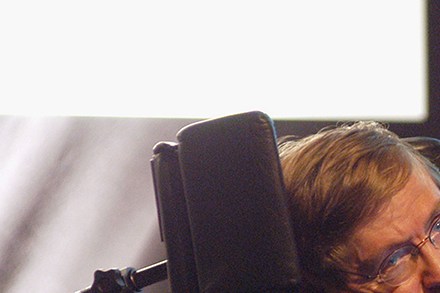
Was Stephen Hawking a world-historical scientific genius? No. Was he nonetheless a scrupulous and collegiate collaborator with others? Also no. But was he basically a nice guy? Well that, as so often, depends on who you ask. His sister Mary is quoted here calling him ‘one of the most self-centred people I’ve ever met’. Yet his friend Kip Thorne, a Nobel-winning physicist, remembered him very fondly. Hawking had a complicated love life, to be sure, but then he had a complicated life in all sorts of ways. This superb biography, authorised by the family, will be the definitive account of it. Graham Farmelo is himself a Cambridge physicist, and his explanations of the scientific issues with which Hawking and his contemporaries grappled are beautifully clear.
Why most scientists don’t want us to believe in life on Mars

From our UK edition

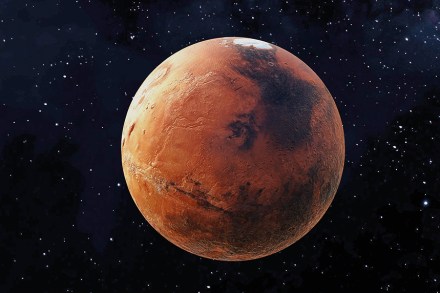
‘Is there life on Mars?,’ asked David Bowie, and would not stay for an answer. The astrobiologist Steven Benner has an answer – which is that Mars not only has had life but still does. The first part of that answer is broadly accepted; the second remains highly contentious. His book is a scattershot plea for increased attention to be paid to searching for evidence – or, as he sees it, more evidence. The stakes are high. As he says in his introduction, if life exists only on Earth, that’s a coincidence; if it exists on Earth and a close neighbour, that’s the start of a pattern. Mars has always excited the imagination. No one has ever speculated hubristically about the chances of anything coming from Mercury. C.S.

Will the universe end with a bang or a bounce?

From our UK edition

The cosiest way to read The End of Everything, Katie Mack’s fast-paced book about universal death, is as a murder mystery. Everything in spacetime, including the reader’s understanding of much of the story, is in the shadows. Black holes, quarks and gluons, Cepheid variables, the Concordance Model? Mere words, strewn across the floor. Believability, restraint and common sense? Left at the door. In the middle of the carpet is our butchered universe. How did it die? Squashed (‘The Big Crunch’)? Boiled (‘Heat Death’)? Eviscerated (‘The Big Rip’)? Burst apart from every pore (‘Vacuum Decay’)? To one side, almost dancing with excitement, is Inspector Mack, a theoretical astro-physicist at Carolina State University.