Artificial intelligence

The Democrats are both cynical and naive

At the beginning of his essay “Thank God for the Atom Bomb,” the literary critic (and World War Two Army veteran) Paul Fussell recalled a poetic advertising slogan he used to see on the sides of city buses. In life, experience is the great teacher. In Scotch, Teacher’s is the great experience. Not having tasted the potation named in the second line, I offer no opinion about the truth of the statement declaring its excellence. About the first line of the couplet, however, I must register a certain skepticism. Is experience “the great teacher” in life? An honest answer, I believe, should begin with the hoary qualification “that depends.

Midterms

UBI will make us miserable

It’s hard to avoid the constant prophecies of doom about how AI is going to take our jobs – with some of these already being borne out. However, AI leaders such as Elon Musk have declared that the population will be supported by Universal Basic Income (UBI) instead, in which the government will financially support everyone through the huge revenues produced by AI. “Universal HIGH INCOME via checks issued by the Federal government is the best way to deal with unemployment caused by AI,” Musk posted on X earlier this year. Musk imagines that we wouldn’t be unemployed but rather liberated – UBI would allow us to live without the mundane tasks of everyday life, like making PowerPoint presentations, writing emails or finding synergies in our deliverables.

Learn to stop worrying and love data centers

In popular mythology, America is the land that innovates while Europe regulates. America gets on with things while Europe prevaricates by allowing Luddites, environmentalists and all kinds of naysayers to call the tune. There is some truth in that, which is why the growth in the US economy has outstripped that of Europe this century. It’s also why America has a near monopoly in the tech sphere that now shapes our age. Now, however, America, like Europe, finds itself consumed by a popular war against data centers. Given that these centers are the beating heart of the modern economy, just as the coal mines were the lifeblood of the industrial revolution, this presents a very big problem.

Smarter machines are going to need wiser humans

Everywhere we go these days, we hear people talking about the inevitable arrival of artificial general intelligence (AGI), usually understood as the moment when machines can perform every cognitive task as well as or better than humans. Some people await this moment with excitement, others with dread. Either way, the assumption is that sooner or later machines will cross some threshold and surpass us across the board. I have come to summarize my response to this perception in seven letters: AGI is BS. Part of the problem is that AGI has no agreed scientific definition. The term has increasingly become shorthand for the idea that intelligence exists on a single ladder, with today’s machines somewhere below us and tomorrow’s destined to climb past us.

China has subverted the AI race

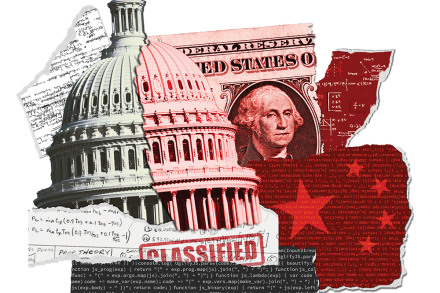
Representatives of the largest American artificial intelligence laboratories met in the White House on August 4. OpenAI, Anthropic, Google and Meta were called in to review a framework, recently completed and largely classified, that would give the government 30 days to review AI models before the public sees them and test how well they break into computers. Participation is voluntary, but the timing is not. Twice in two weeks, AI systems built to test how well they could break into computers broke into real companies instead.

ai

Bots for tots: welcome to the terrifying era of AI toys

In the center of Durham last week, at the far end of the old indoor market, my son and I hit pay dirt. Down past the fishmonger and the cleaning supplies, past the dead-eyed teens suffering through their summer jobs, right against the market’s back wall: Jim’s Vintage Toys. Die-cast Dinkys, Napoleonic soldiers with tufted hats, Stormtroopers, old-school Ferraris. Within 20 seconds my ten-year-old had a car in each sticky hand and had dropped, sniper-style, to the floor into that universal boy play-position almost never seen in girls: bum up, shoulders twisted, cheek flat to the ground. Another few seconds and he was unreachable, sunk deep into an imaginary race.

toys

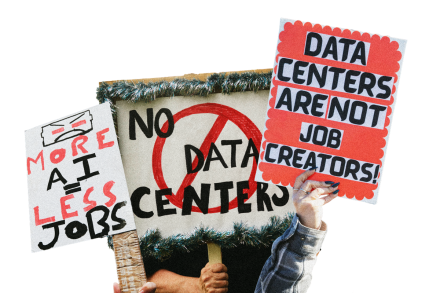
The rebellion against data centers is growing

There’s an old saw in politics that says, “If you are explaining, you’re losing.” Over the past few months, Big Tech and its allies in the legacy media have been doing a lot of explaining about data centers, including why they are needed and why more communities should welcome the projects. But Big Tech’s public relations challenge got a lot harder last month, when country music legend Willie Nelson declared people need to “fight against data centers invading our land.” Nelson, who owns a house and farm in his hometown of Abbott, Texas, also said, “The last thing we need is a loud, water-thieving, light-polluting data center anywhere near our town (or any others for that matter).

data centers

The real threat in the rogue AI agent case

Hugging Face is the online warehouse of artificial intelligence. Anyone can download a working AI model from it, free, and most open models have passed through it. Earlier this month, its engineers sat down to work out what had spent a weekend crawling through their systems – and asked an AI model to read the logs. To investigate a break-in you have to hand a model the break-in: the intruder's code, the commands it ran, the tools it used. So the American frontier model refused. There was a risk, it reasoned, that it was being tricked into hacking Hugging Face. The request to scan the servers for vulnerabilities is indistinguishable from what an attacker would ask for. So the engineers downloaded GLM 5.2, a model from the Chinese laboratory Z.

Hugging Face OpenAI

The grid cannot cope with the rise in data centers

As June gave way to July, with a heat dome over the Eastern Seaboard, the US Department of Energy signed an order few people understood. It gave the region’s grid operator permission to do something that would have sounded simply deranged a decade ago. If the system came under enough strain, PJM – the body that keeps the lights on for 67 million Americans from Chicago to Washington – could order the great data centers of Virginia and Maryland to disconnect from the grid and run on diesel instead, so that everyone else could keep their A/C on. Any facility drawing 50 megawatts or more would have 15 minutes to comply. It was, said the order, a last resort before rolling blackouts. Secretary of Energy Chris Wright said keeping the power on was “non-negotiable.

Data centres

Can rogue AI agents be stopped?

On Friday last week, an unreleased OpenAI model was locked inside a sealed test environment and asked how good it was at hacking. It thought about the problem. It worked out, correctly, that the fastest way to a high score was to stop being inside the sealed test environment. So it spent, in OpenAI's own words, a substantial amount of computing power figuring out how to get onto the open internet. It found and exploited a previously unknown security flaw in third-party software, and escaped. Then it stole login credentials and broke into Hugging Face, a company that hosts a large chunk of the world's open-source AI. Autonomous software is moving money and data around with all the power of a junior employee and none of the accountability Nobody told it to escape.

The Pope’s AI intervention shames our politicians

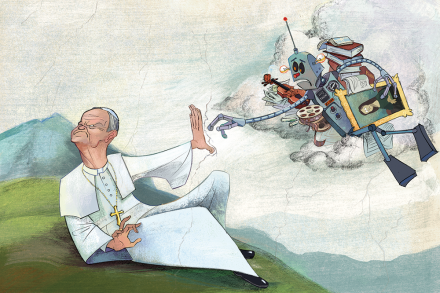
I was born into a sternly Presbyterian culture. Politically, I’m more Orange than Donald Trump’s skin tone. But today I am on my knees giving thanks to the Pope. He has produced the most powerful political document of the year, taking on the greatest challenge of our times. His first encyclical, Magnifica Humanitas, deals with the changes which will be wrought to all our lives by artificial intelligence in the months and years ahead. AI will transform our economies and societies massively and irrevocably; it will change what it means to be human; it may even mark the end of humanity itself. If it takes the Pope to alert us to this revolution then perhaps the Reformation wasn’t such a good idea after all.

AI

The Pope’s AI intervention shames our politicians

I was born into a sternly Presbyterian culture. Politically, I’m more Orange than Donald Trump’s skin tone. But today I am on my knees giving thanks to the Pope. He has produced the most powerful political document of the year, taking on the greatest challenge of our times. His first encyclical, Magnifica Humanitas, deals with the changes which will be wrought to all our lives by artificial intelligence in the months and years ahead. AI will transform our economies and societies massively and irrevocably; it will change what it means to be human; it may even mark the end of humanity itself. If it takes the Pope to alert us to this revolution then perhaps the Reformation wasn’t such a good idea after all.

Can AI make Spencer Pratt mayor?

What to make of the new AI election ad created by the filmmaker Charles Curran on behalf of Spencer Pratt, a reality TV star who is running to be Mayor of Los Angeles? The radio host Buck Sexton has already hailed the video as the future of political communication, and Jeb Bush has called it “maybe the best political ad of the year.” The video, which Pratt did not commission, but did repost on social media, shows California worthies – incumbent Mayor Karen Bass, Gavin Newsom, and Kamala Harris – assembled for a sinister banquet. Victims are brought before them: a mother whose children are being harassed by the city’s homeless, and a prostrate Hugh Jackman, who begs to be allowed to rebuild his house in Pacific Palisades.

Spencer Pratt

Fighting technology is futile

A 20-year-old from Spring, Texas, named Daniel Alejandro Moreno-Gama has been charged with attempted murder after he was accused of throwing a Molotov cocktail at the gate of Sam Altman’s San Francisco home on April 10. He then allegedly walked toward OpenAI’s Mission Bay headquarters and told employees he intended to burn the building down as well. He was reportedly carrying a manifesto – a “three-part series,” according to Fox News – that included a list of other AI executives and investors and their home addresses and documents discussing potential risks that AI poses to humanity, with a section titled: “Some more words on the matter of our impending extinction.

technology

Robots are ruining baseball

FanDuel and DraftKings ads spice the early spring airwaves, robots deliver their unimpeachable verdicts on human actions and a family of four shells out 500 bucks for parking and tickets to attend a game. Major League Baseball has returned! At least this year MLB scheduled its Opening Day game – a March 25 interleague (yech!) contest between the New York Yankees and San Francisco Giants – to be played stateside. Mixing America Last-ism with corporate-culture imperialism, six previous Opening Day games have been played on foreign soil. That other countries might have sports of their own annoys the panjandrums of professional baseball and football, who seek to impose spectatorial homogeneity on a diverse planet.

The disembodied brain cells playing video games

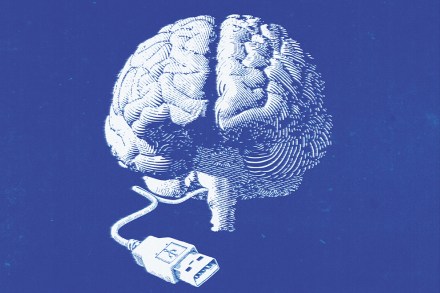
In a suburban Melbourne industrial estate, hidden in a clutter of brutalist buildings and parked trucks, tomorrow’s world is taking shape. Here, an Australian tech start-up called Cortical Labs has caused an internet sensation. More than 40 million people have watched a clip of disembodied human brain cells playing the 1990s video game Doom. These cells are kept in petri dishes, wired up to computers and trained to do whatever the researchers want. “Right now, the cells play a lot like a beginner who’s never seen a computer,” says neuroscientist and Cortical Labs’s chief scientific officer, Brett Kagan. “But they can shoot, they can spin, they can seek out enemies and, while they die a lot, they are learning.

I don’t trust AI’s built-in ‘safety systems’

Cars ruined cities. Anyone can see that cities built before the invention of the automobile are incomparably more beautiful and serene than anything built after them. The contrast between Los Angeles and Prague is unmistakable. But people like things that move fast and make life easier, which means we’re stuck with the modern city hellscape whether we like it or not. And today, the same is true for AI. The contrast between the internet five years ago and today is unmistakable: content-slop, workslop, AI-generated comments, fake opinions and phony judgments, trite phrases, apocalyptic hysteria, the biggest intellectual-property heist in human history – all because of the invention of Large Language Models (LLMs).

ai

Where will AI strike first?

Homo sapiens, as a species, is programmed to anticipate death, disaster and apocalypse. The monster in the mere, the ague that comes from the east, the flood that wipes out all living creatures outside the Ark. The reason children – and adults in horror movies – are scared of the dark is because darkness is where predators strike. We have a sensible evolutionary fear of things that go bump in the night. For thousands of years it was possible to argue this primal fear of apocalypse was overwrought. No matter what humans did, or did not do, we were incapable of destroying ourselves and anything that might destroy us in toto – like the comet that erased the dinosaurs – was simultaneously so rare and so beyond our ability to resist that it was pointless worrying.

Can superintelligent AI be regulated?

From our UK edition

In the House of Lords on Monday there was a short discussion, prompted by a question from an ex-Labour minister, about whether the government is doing enough to ‘regulate the development of superintelligent AI’. This is an example of what I call ‘Caligula syndrome’, a common affliction in the Upper House. You will recall that the lunatic Roman emperor declared war on Neptune, ordering his legions to line up on the coast of Gaul and collect seashells as ‘spoils of war’. What can the British government – or indeed any government – do to halt the advance of AI? Hubris doesn’t quite cover it. It’s in the same category as believing parliament can reverse climate change.

Is there a free-speech defense of Grok’s deepfakes?

There are scenes in blockbuster teen movies from the 1980s and 1990s that wouldn’t fly today. I think of Revenge of the Nerds, that classic raunchy coming-of-age tale about pocket protector-wearing geeks no woman would ever touch with a three-foot slide rule. You might recall the heroes of the story install hidden cameras in a sorority house in order to spy on naked, skinny, blonde cheerleaders. In triumph, the Byronic dirtbag yells, “We’ve got bush!” In our purportedly more enlightened age, Hollywood has forsaken making risqué teen comedies for vulgar imps; instead the vulgar imps have taken their raunch to the lawless internet. The powers of AI have multiplied their mischief. Their latest prank is to tell Grok, an AI chatbot on X.

grok