Artificial intellgience

Has AI finally developed consciousness?

Depending on where you stand on AI, January 30, 2026 will go down in history for one of two things. Either it is the day when the AI singularity really began and the robots became conscious – or the day when it was revealed that far too many people are credulous about AI and were fooled by a bunch of cosplaying crypto-bores.  To recap: this story begins with several confusing names you may have glimpsed on the internet in recent days – Clawdbot, Moltbot, Openclaw, Moltbook. They represent different pieces of the same extraordinary puzzle. Built by London-based software developer Peter Steinberger, OpenClaw (the current name for what started as Clawdbot) is an AI "agent" that runs locally on a user's own hardware and connects to everyday apps such as WhatsApp, Telegram and iMessage.

What happens when AI surpasses humans?

I recently sat down to dinner with some very smart economists. I am the chief executive of an artificial intelligence company and so the conversation swiftly turned to the value of AI for the economy. The economists had many interesting things to say, both about the advantages of AI adoption and about the displacement effects on jobs. But about halfway through the dinner, another AI chief executive offered an opinion that struck me. He said: “I can’t quite articulate it, but I have a sense that what you are measuring with your GDP analysis is not what I care about. You treat this like an economic question. But it’s more like a geopolitical question.”  At a gut level, I knew exactly what he meant – but I also couldn’t clearly state the distinction.

AI
AI

Should AI have rights?

Mary Shelley was challenged by Lord Byron to write a ghost story during a summer of “incessant rainfall” on Lake Geneva in 1816. She came up with something far more interesting than a mere ghost story: the tale of Dr. Frankenstein, a scientist who creates life by reanimating a corpse. Shelley, who was just 18 at the time, was horrified by her “waking dream.” The thought that man could “mock” God’s creation of life was “supremely frightful.” Some of the scientists building artificial intelligence today believe they, too, might be creating life. The implications are frightening – and not just because an AI might decide to kill us all. What if we could hurt the AI?

AI

How should AI be regulated?

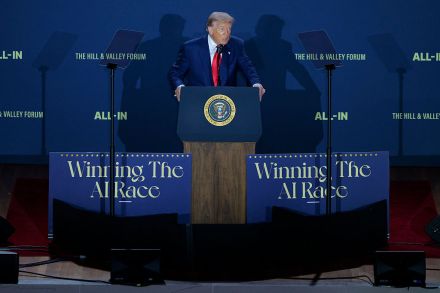
As artificial intelligence becomes increasingly sophisticated, the time has come for humanity to choose. Should the nations of the world shut down or tightly regulate AI until it is clear a godlike artificial superintelligence will not gain consciousness and exterminate the human race? Or should governments not regulate AI at all, in the hope that it will cause an acceleration of technological progress that results in our colonization of the universe, our uploading as bodiless computer programs into the galaxy-wide web – or both? Or how about a third option: AI regulation by AI-enabled industry? AI may turn out to be the latest in a series of “general purpose technologies” (GPTs) that transform the economy, politics and society.

Musk’s chatbot stumbles again

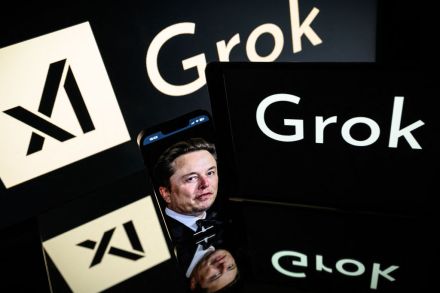
No living human has had a week as tumultuous as Grok, the Elon Musk-sponsored AI that lives inside X for our, and its, amusement. If people were still making the Downfall Hitler meme videos, Grok’s progress would be an apt topic. Last week, Grok started spewing out anti-Semitic posts after a flurry of troll prompts. Soon after, X shut down its newly-created “MechaHitler,” saying "We are aware of recent posts made by Grok and are actively working to remove the inappropriate posts. Since being made aware of the content, xAI has taken action to ban hate speech before Grok posts on X. xAI is training only truth-seeking and thanks to the millions of users on X, we are able to quickly identify and update the model where training could be improved.

Grok