Art

The Heckler: Tate Britain is a mess. Its director Penelope Curtis must go

From our UK edition

Things have not been happy at Tate Britain for some time. Last year Waldemar Januszczak wrote an article culminating with this cri de coeur: ‘Curtis has to go. She really does.’ The meat of the argument against Tate Britain’s director was that she had presided over a run of misconceived exhibitions disliked as much by critics and scholars as by the public. In her defence, these were not the blockbuster shows but the low-cost fillers that UK museums must put on when the coffers are low. As such they tend to be long on ideas and short on jaw-dropping loans. It is not much of a defence. The massive unseen collections of the Tate present plenty of opportunity to mount extraordinary exhibitions. Now, however, she has presided over a stinker of a blockbuster.

Why we should say farewell to the ENO

From our UK edition

It’s easy to forget what a mess of an art form opera once was. For its first 100 years it had no name, it had no fixed address, it didn’t really know who it was or what it was doing. You’d find it at schools, at weddings, at political functions. It was an artistic whore for hire. Embroiled in an epic tug-of-war as to which of the three art forms — word, music or dance — should be primary, it was also lithe and experimental. In fact, it was more like performance art than anything you’ll witness in a modern opera house. Why this historical detour?

Patrick George: painting some of his best work at 91

From our UK edition

‘If I see something I like I wish to tell someone else; this… is why I paint.’ Patrick George is 91, still painting ‘some of the best work he’s ever done’, in Andrew Lambirth’s view. ‘His principal aim is to point out, to those of us less well-trained to observe, how marvellous the appearance of things is, and he does this through exquisite landscapes, figure and still-life paintings, of unassuming but stringent beauty.’ After four years in the Navy (he commanded a landing craft in the D-Day landings) George went to Camberwell art school where he imbibed the strict measuring technique associated with William Coldstream, which he has continued to use — though not exclusively — throughout his career.

Dallas, city of culture

From our UK edition

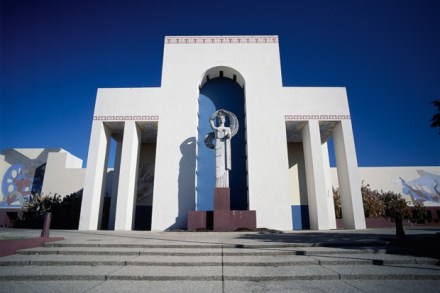
When George W. Bush was outed as an artist, after a computer hacker uncovered his nude self-portraits, jaws dropped around the world. Could Cowboy George, a man whom even Kim Jong-il’s cronies dubbed a philistine, actually be a closet aesthete? This spring, at the first exhibition of his works in Dallas, he confessed: ‘There’s a Rembrandt trapped in this body.’ It shouldn’t come as such a surprise. Bush’s hometown of Dallas may be stereotyped as a cultural wasteland, synonymous with big oil, big hair and Wild West machismo, but it, too, has an artistic side the world is only now discovering. Take the 50th anniversary of the JFK assassination.

How the smile came to Paris (briefly)

From our UK edition

In 1787 critics of the Paris Salon were scandalised by a painting exhibited by Mme Vigée Le Brun. The subject was conventional enough: a self-portrait of the artist cradling her small daughter. The problem was that Vigée Le Brun was depicted smiling. You could even see her teeth. This was, as one critic put it, ‘an affectation which artists, connoisseurs and people of good taste are unanimous in condemning’. These outraged art lovers must have been rather out of touch with current trends. For, as Colin Jones shows in The Smile Revolution — his revealing history of 18th-century French smiling — the full-on, lips-parted sourire had been increasingly visible in Paris since at least the 1740s.

Hiding in Moominland: the conflicted life of Tove Jansson

From our UK edition

Tove Jansson’s father was a sculptor specialising in war memorials to the heroes of the White Guard of the Finnish civil war. He did not like women. They were too noisy, wore large hats at the cinema and would not obey orders in wartime. Tove used to hide to spy on his all-male parties, where everybody got astoundingly drunk and attacked chairs with bayonets. ‘All men are chums who will never leave each other in the lurch,’ she concluded. ‘A chum doesn’t forgive, he just forgets — women forgive everything but never forget. Being forgiven is very unpleasant.’ Father and daughter had such a strained relationship that she sometimes had to run to the loo and vomit.

Apollo Awards 2014: Museum Opening of the Year

From our UK edition

This article first appeared in Apollo magazine Apollo magazine are pleased to announce the Apollo Awards 2014 shortlist for the Museum Opening of the Year, which recognises some of the most important new museum or renovation projects to be completed between October 2013 and September 2014. The winner will be announced in the December issue of Apollo. Find out more about the Apollo Awards. [caption id="attachment_8932852" align="aligncenter" width="520"] © Aga Khan Museum[/caption] Aga Khan Museum, Toronto Highlights from the Aga Khan Museum’s collection have been touring the world for several years.

Which great French novelist was also a crossword-setter?

From our UK edition

One could have endless fun setting quiz questions about Georges Perec. Which French novelist had a scientific paper, ‘Experimental demonstration of the Tomatotropic organisation in the Soprano (Cantatrix sopranico L)’ included in a scientific festschrift at the Centre National de la Recherche Scientifique? (The article charted the ‘yelling reaction’ — YR —of singers pelted with ‘Tomato rungisia vulgaris’.) And which French novelist wrote the world’s longest palindrome (5,566 letters)? Perec would have enjoyed being the subject of a quiz, though, to do him full justice, the questions ought to have been cryptic: he was a crossword-setter as well as a novelist.

To call this offering a book is an abuse of language

From our UK edition

I picked up this book with real enthusiasm. Who cannot be entranced by those 20 years after the second world war when New York supplanted Paris as the cultural capital of the world? One thinks of the Beats, of Dylan and Greenwich Village, of Sontag and Trilling. Well think again, for none of the above feature in this book at all. Indeed the first thing to be said is that to call this offering from Thames & Hudson a book is a real abuse of language. It has covers and inside those covers one finds text and image but the three essays that cover visual art, architecture and design and the performing arts appear to have simply been placed together without either editorial brief or plan. Worse, the book lacks not only a credited editor but also a credited designer.

The pop artist whose transgressions went too far – for the PC art world

From our UK edition

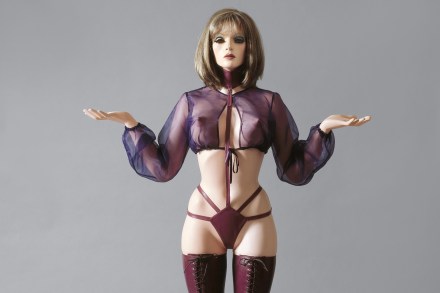
Allen Jones (born 1937) has been demonised. In 1969 he made a group of three sculptures of scantily-clad female figures. They were slightly larger than life and arranged in positions that enabled them (with the addition of a glass top or padded seat) to be turned into a table, a chair and a hat stand. These super-mannequins were highly modelled, wigged and leather-booted, and unavoidably realistic. When first exhibited in 1970 they provoked outrage among the feminist community. Jones’s 1978 retrospective of graphic art at the ICA caused a near riot even though the sculptures weren’t shown. In 1986, when the chair went on display, it had acid thrown over it by an incensed extremist.

Frieze Art Fair: where great refinement meets harrowing vulgarity

From our UK edition

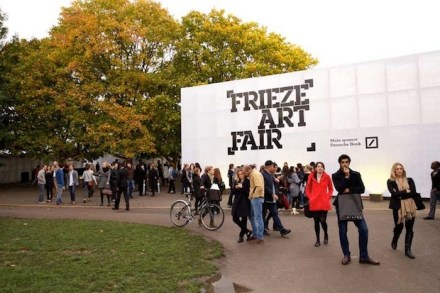
If you wanted to find a middle-aged man in a bright orange suit, matching tie and sneakers, Frieze is a good place to start looking. I found one. Or maybe he was a limited edition existing in several reproductions. Certainly, he was frequently spotted: conspiratorial of aspect, he was stooped and crouched over a mobile with body language saying ‘serious business’. I overheard: ‘Ah, Corinna. Va bene? How are prices in Zurigo?’ Long before you reach Frieze’s vast tented sites in Regent’s Park there are signs of danger. Extraordinary shoes and statement hair and rucked-up skinny trousers start appearing in a fall-out zone about half a mile away from the BMW VIP drop-off area and the Mercedes-Benz shuttle buses.

Frieze Week Diary: Will my marbles be the first to go, or my liver?

From our UK edition

This diary first appeared on Apollo Magazine's website. Monday, 13 October There was something weird in the London air, and it wasn't the rain. E-mails from PRs were hitting my inbox like the salvo from a battery of Gatling guns, and I'd already bumped into one art critic on the point of nervous collapse. ‘Just. Don’t,’ she shot at me when I asked her about all the launch parties I wasn’t invited to. So here we were: on the verge of Frieze, waiting for the ice to break. By the end of tomorrow, art dealers, PRs and journalists would be running screaming through the streets of central London, from Regent’s Park to the river. Gossip would become stronger currency than the Swiss franc.

The best of Frieze Art Fair was free

From our UK edition

Frieze and its ever-multiplying layers - some fantastically rich, others disappointingly dry - has expanded into a millefeuille so dense that you wonder whether organisers Matthew Slotover and Amanda Sharp have ever heard of museum fatigue. Today, 30 to 45 minutes is apparently the concentration cap – the point at which you can no longer bring yourself to give a shit yet keep walking past the frames. Knowing this, the majority of London’s public might feel they had been spared the ordeal of entering the tents in Regent’s Park, where half an hour will get you through almost nothing of the fair. By some freak of programming the best of the works curated to accompany this giant selling spree could be seen for free by anyone outside the fair this year.

Postcard from Ukraine – meet the artists in exile from the People’s Republic of Donetsk

From our UK edition

It was Orthodox Trinity Sunday when Luba Michailova received word that separatists would soon occupy the premises of the Donetsk art centre she founded. She was in Kiev at the time, and recalls now that her first response was religious: 'Any difficulties in life you get, it's for your good, and for testing you.' The following morning, at 8 o'clock, several staff were at work cleaning when 15 men in balaclavas appeared, firing Kalashnikovs into the air. Michailova tells me, 'So when it happened, I knew it would happen, but I never thought it would be so painful.' Donetsk now is in the hands of the masked separatists who brought down MH17. But before May, Donetsk boasted TEDxDonetsk talks, literary festivals, residencies, and exhibitions by artists from abroad.

Tate Modern’s latest show feels like it’s from another planet

From our UK edition

‘Some day we shall no longer need pictures: we shall just be happy.’ — Sigmar Polke and Gerhard Richter, 1966 Who says Germans have no sense of humour? OK, so their writers tend to be a pretty gloomy bunch — but like loads of other German artists, from Otto Dix to Georg Baselitz, Sigmar Polke’s paintings are illuminated by a dry, mordant wit. It’s encapsulated in an early doodle called ‘Mona Lisa’ (1963), which hangs near the entrance to this hugely enjoyable retrospective — the first comprehensive survey of his eclectic, eccentric work. ‘Original value $1,000,000,’ reads the handwritten caption. ‘Now only 99c, including frame.’ That Polke’s pictures now sell for many millions (with or without frames) adds another layer of meaning to this student jape.

Bored bores boring – critics love the Dull Men’s calendar

From our UK edition

The Telegraph has a nice photo gallery featuring the specimens of the 2015 Dull Men of Great Britain calendar, which our own Dot Wordsworth plans to give her husband for Christmas: 'I had thought that dull, in reference to people, was a metaphor from dull in the sense of ‘unshiny’. ‘Dieu de batailles!’ as the Constable of France in Henry V exclaims of the English, ‘where have they this mettle?/ Is not their climate foggy, raw and dull?’ But I was quite wrong, as so often. It started off (in the form dol) meaning ‘foolish’. In English almost as old as you could care to have it, the author of The Seafarer declares: Dol bith se the him his dryhten ne ondrædeth; cymeth him se death unthinged.

Have scientists really found proof of life after death?

From our UK edition

When I finally reached the hospital, my grandma had already lost consciousness. As soon as I saw her, I could tell she wouldn’t wake up again. We all stood around and waited, and hoped it wouldn’t take too long. I sat on the bed and held her hand. Thankfully, it only took an hour or so. Eventually, the nurse came in and checked her pulse and told us she was dead. Except she wasn’t. Not exactly. The nurse was right – her heart had stopped – but from the way she held my hand, I could tell she was still there. I didn’t say anything. I knew she’d be gone soon enough. For a few more minutes I kept her company, stroking her hand while everyone else fussed around us. It was an extraordinary sensation, one of the oddest moments of my life.

Effie Gray can effie off

From our UK edition

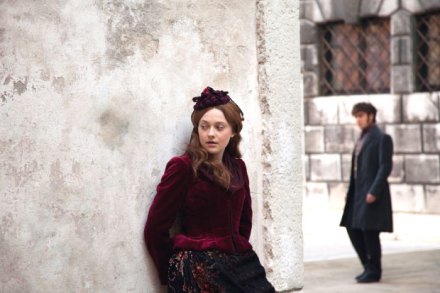
Effie Gray, which has been written by Emma Thompson and recounts the doomed marriage of Victorian art critic John Ruskin to his teenage bride (he refused to consummate it), has a blissful cast. It stars Dakota Fanning, Ms Thompson herself, plus Julie Walters, David Suchet, Greg Wise, James Fox, Derek Jacobi and Robbie Coltrane. So it is period drama heaven, in this respect. It’s a cast you could watch all day, whatever, which is handy, as this is probably quite dull otherwise. It is adequate. It does the job. It gets us from A to B. But it feels as if it is missing something crucial, and I don’t just mean a stiffie. It also doesn’t deliver emotionally.

Liechtenstein is utterly ridiculous – but that’s a big part of its appeal

From our UK edition

It’s official: Europe’s least visited country is unloved little Liechtenstein. Last year, a mere 60,000 tourists travelled to this absurd Alpine principality. For discerning Spectator readers, this is great news. Liechtenstein is charming, its absurdities are enchanting, and it boasts one of the most stylish (and least crowded) modern art museums in Europe. Nothing spoils a sightseeing trip so much as lots of other sightseers. Spend a weekend in Liechtenstein - only two hours by train from Zurich - and you and your significant other should have the entire country (virtually) to yourselves. Liechtenstein is utterly ridiculous, but that’s a big part of its appeal. One of the smallest countries in Europe, it’s only 24km from end to end and barely 12km across.

Picasso’s dealer

From our UK edition

When she was four, Anne Sinclair had her portrait painted by Marie Laurencin. It is a charming picture, a little dark-brown-haired girl with a white bow, very blue eyes and a white and pink striped blouse, and it was commissioned by Sinclair’s grandfather, Paul Rosenberg, one of the handful of most influential Parisian art dealers of the 1920s and 1930s. More interested in politics than family history, Sinclair — for 13 years the host of the prestigious French weekly television news show 7 sur 7 — waited until she turned 60 to explore the trunks of papers in her mother’s attic.