Art deco

Who needs an Italian beach when we have our own lidos?

From our UK edition

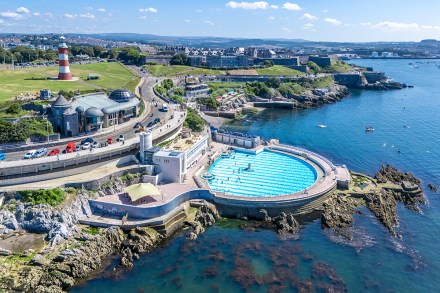
With his 2012 book, The A303: Highway to the Sun, the author and psychogeographer Tom Fort pulled on his driving gloves, got behind the wheel and took us on a journey down the royal road to the West Country and to la Grande Bretagne profonde. Now, in this highly entertaining, informative new study – observant and lightly nostalgic in a similar way – he guides us round our lidos, the outdoor swimming pools which sprang up all over Britain in the 1920s and 1930s, designed and bankrolled by confident, imaginative local councils in the hardy fresh-air-and-fun enthusiasm of the time.
The art of the transatlantic liner

From our UK edition

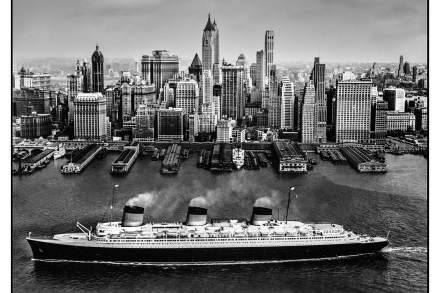
Some time in the next few weeks, a great ocean liner will be lost at sea. One of the greatest, in fact. When the SS United States made its maiden voyage in July 1952, it was the last word in transatlantic liner design. In an age of ocean-going elegance, the ‘Big U’ was the newest, the sleekest and the swiftest. To this day, it holds the Blue Riband – the all-time record for the fastest transatlantic crossing by a passenger ship. Now, after five decades rusting in dock, and a series of unsuccessful preservation attempts, the United States is about to make its final voyage. Stripped of masts, fittings and its massive red, white and blue funnels, it will be towed out and sunk as a diving reef off the Florida coast. It’s heartbreaking to admit that this might be for the best.

Art deco gave veneer and frivolity a bad name

From our UK edition

The jazz style was the blowsy filling between the noxious crusts of two world wars. More than 30 years passed between its flourishing and its remonikered second coming as art deco, no longer gaudy ephemera, now a legitimate addition to the inventory of fashions. The coinage was initially ascribed to the antique dealer John Jesse. It is, more probably, Bevis Hillier’s. He was a scholar of the style, then organiser of its first retrospective, far ahead of the game, in Minneapolis-St Paul in 1971.

The glamour and romance of London’s vanished department stores

From our UK edition

There are two journeys I’ll need to make after reading Tessa Boase’s heartbreakingly poignant book about London’s lost department stores. First, to Mile End, to see the tiny Georgian building bang in the middle of the pillared façade of what used to be Wickhams and is now Tesco and Sports Direct. During Wickhams’s 1920s expansion, one neighbour, a German clockmaker called Otto Spiegelhalter, simply refused to budge, whatever the financial offer. He eventually agreed to sell his garden so that the store could expand round the back of him. But there, dwarfed by the clock tower, his two-storey house still stands, a monument to stubbornness.

Exploring walkable Los Angeles

From our UK edition

‘You’re going where? Why? No. No you’re not! On your own?’ This was not the response I’d hoped for when I mentioned to my friend and colleague Mary Wakefield where I planned to go on holiday. ‘What’s wrong with downtown LA?’ I asked. She said: ‘Last time I was there I saw a man stabbed in the public loo.’ I’m no snowflake, but as I touched down in LAX I had visions of corpses piled up on the sidewalk. I needn’t have worried. Mary was last here more than a decade ago and, as I discovered from the moment I left the airport, modern technology has transformed the tourist experience of LA. Before I left, everyone told me I’d be crazy not to hire a car to navigate the sprawling city.