Armenian genocide

Armenian genocide and the theater of US politics

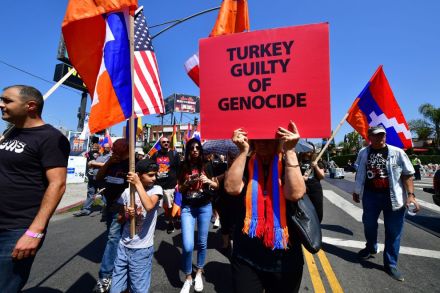
The House of Representatives passed two important bills this week amid deteriorating US-Turkey relations, one imposing sanctions on Turkish military and government officials over Ankara’s incursions against the Kurds in northeast Syria, the other officially recognizing the Armenian genocide. The latter is largely symbolic, finally acknowledging what scholars have long reached an overwhelming consensus on: that during World War One, amid the fading embers of the Ottoman Empire, 1.5 million Armenians were systematically exterminated. Turkey’s longstanding denial of this atrocity stands in stark contrast with how Germany has handled the moral stain of the Holocaust and continues to rob the Armenian people of dignity and closure.
Armenian genocide

Who remembers the Armenians?

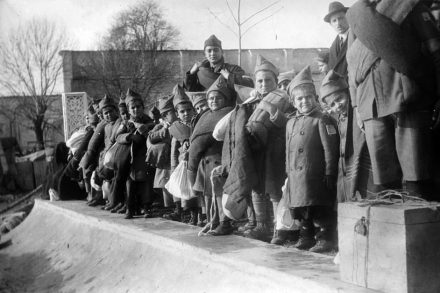
‘Who remembers the annihilation of the Armenians?’ Hitler asked in August 1939. Raphael Lemkin did. In 1944, Lemkin, a Polish-born Jew, published the theory of ‘genocide’. Lemkin’s models were the ongoing genocide of Europe’s Jews, and the Meds Yeghern, the ‘Great Calamity’ of 1915-16: the systematic murder of Armenian Christians by the Ottoman Turkish state and its local helpers. Today, on the 104th anniversary of the beginning of the genocide, we should remember the Armenians — and not forget the disgraceful denial of the genocide by the modern Turkish state. In 1915, some two million Armenians lived in Ottoman Turkey, three-quarters of them in six provinces of eastern Anatolia, on the borders of Russia and Persia. By 1918, 90 percent were gone.

armenians