Architecture

In and out of favour in Iraq

From our UK edition

Nowadays the TV cameras make Baghdad look like a suburban car park, and for Tamara Chalabi, raised in England and Beirut on memories of pre-Saddam Iraq, the first encounter in 2003 was dismal. Her family kissed the very ground as they returned from exile, but initially she felt, and recognised, nothing. She has worked hard to connect with the city where she now lives, and in this absorbing book she has wrapped up much that is important in Iraq’s history in the story of her own family’s development through the 20th century. Of course the reader may want to ask what role Chalabi’s father played in landing Iraq in the mess it is in today.

Oh Brother, where art thou?

From our UK edition

Benjamin Franklin had this ambition for his body: that after his death it should be reissued ‘in a new and more beautiful edition, corrected and amended by the author’. Benjamin Franklin had this ambition for his body: that after his death it should be reissued ‘in a new and more beautiful edition, corrected and amended by the author’. That is roughly what has happened with The Buildings of England guide to Hampshire. The guides used to fit into an overcoat pocket; now you’d need the glove compartment of a car. High praise is due to the authors of this volume for careful scholarship, an outstanding array of colour illustrations, and a literary style which is not drily academic, but relaxed and colloquial.

Built for eternity

From our UK edition

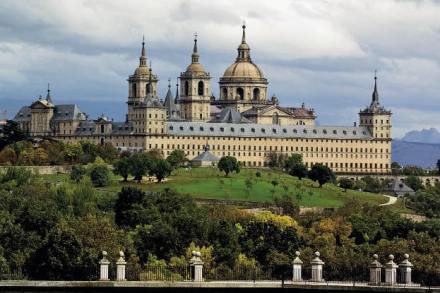
The Escorial, as a monastery and a royal palace, was the brain child of Philip II of Spain. Built in the latter half of the 16th century, about 30 miles north-west of Madrid, the huge granite complex with 4,000 rooms, 16 courtyards, a basilica, a library and picture gallery as well as the king’s private apartments, came to be regarded as the creation of a cold-hearted despot cut off from the outside world. For Richard Ford, whose 1850 Handbook for Travellers in Spain is the most learned guidebook ever written, the Escorial ‘was as cold as the grey eye and granite heart of its founder’.

Secrets and silences

From our UK edition

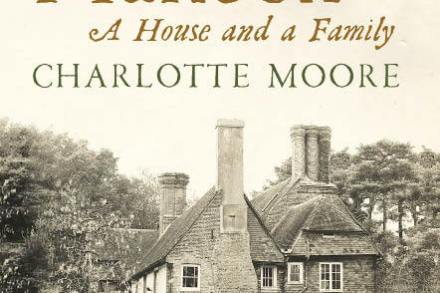
Charlotte Moore’s family have lived at Hancox on the Sussex Weald for well over a century. Charlotte Moore’s family have lived at Hancox on the Sussex Weald for well over a century. Hancox is a large, rambling house, and the Moores are a family who throw nothing away. Charlotte Moore still cooks on a 1934 Aga. Every drawer and every cupboard bulges with letters, diaries, receipts, even cheque book stubs. Moore has pieced together this chaotic archive to construct the history of her family. It is a complex but riveting story. Hancox was bought in the 1891 by a 23-year old spinster named Milicent Ludlow. Both her parents had died, leaving her with independent means.

The pride of the Sackvilles

From our UK edition

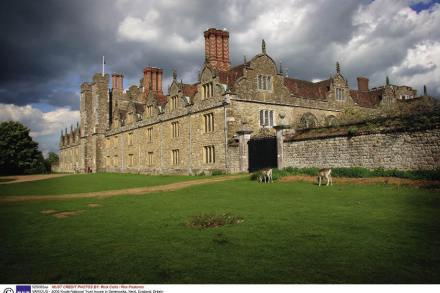
Knole is a country house the size of a small village in the Kent countryside. For the past 400 years it has been inhabited by 13 generations of a single family, the Sackvilles. The present Lord Sackville, Robert Sackville-West who lives with his family there, has written a scholarly book on Knole’s effect on the family and vice versa. It was Thomas Sackville who in the 1590s transformed a late medieval manor house into the Renaissance mansion that has become today’s tourist attraction. Like the Cecils, who were his colleagues in government, he made little distinction between enriching the crown and his own family, just as today’s MPs fiddled expenses to feather their own nests.

Flights of futuristic fantasy

From our UK edition

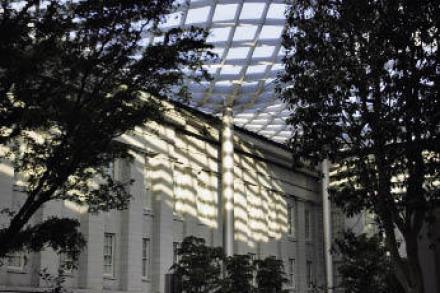
The Great Court of the British Museum is a good place to start. Norman Foster brought light into the wonderfully elegant and inspiring glazed space at the heart of the museum where there had been nothing but greyness around the domed Reading Room. It also put Lord Foster of Thames Bank OM at the heart of the British cultural establishment. Why don’t we know more about him? His creative achievement is enormous. He is 75 this year and his firm grows, employing over 1,000 people in 25 offices around the world. His clients include rulers of Middle Eastern oil rich states; the President of Kazakhstan; Commander Chen, responsible for all the new airports in China; Swiss banks and Russian oligarchs.

Array of luminaries

From our UK edition

In November 1660, on a damp night at Gresham College in London, a young shaver named Christopher Wren gave a lecture on astronomy. In the clearly appreciative audience were 12 ‘prominent gentlemen’, who in discussions afterwards, possibly over a drink or two, decided they would meet every week to talk about science and perform experiments. In a flash, this informal gathering coalesced into a society, which they called ‘a Colledge for the Promoting of Physico-Mathematicall Experimentall Learning’. As Bill Bryson writes in his introduction, ‘nobody had ever done anything quite like this before, or would ever do it half as well again.’ In 1662 Charles II granted them a charter, and the society became the Royal Society.

A dream made concrete

From our UK edition

You are celebrated as the architect of one of the most famous buildings in the world, now in your late eighties and living quietly in your home outside Copenhagen. One day a beautiful blonde German girl knocks on your door. She is clutching a folder of her photographs of the extraordinary structure on the other side of the world which, following a dispute in 1965 with a new Australian Government, you have never seen completed. For her, that architectural work was love at first sight. For you, her images are a love letter that confirms the enduring greatness of your conception. It is happiness on both sides, and its fruit the publication of this hauntingly beautiful book. Few modern buildings can have been more photographed than the Opera House on Geelong Point in Sydney Harbour.

Repeat that, repeat

From our UK edition

When the Louvre invited me to organise for the whole of November 2009 a series of conferences, exhibitions, public readings, concerts, film projections and the like on the subject of my choice, I did not hesitate for a second and proposed the list. Thus Umberto Eco on the genesis of this book, published simultaneously in Italian, French and English. Considering those parallel manifestations of the project, it was perhaps to be expected that this, its sole printed version, would be situated at the more ingratiatingly ludic end of the Eco spectrum. The Infinity of Lists is a work less of theory than of taxonomy.

Not so serene

From our UK edition

Is there anything original left to say about Venice? Probably not, but that doesn’t stop the books from coming, tied in, as they mostly now are, with a television series. Is there anything original left to say about Venice? Probably not, but that doesn’t stop the books from coming, tied in, as they mostly now are, with a television series. In this context I dream of programme-makers courageous enough to eschew tacky carnival masks or mood-shots of gondola beaks reflected in muddy ripples, with Vivaldi mandolins wittering cosily over the soundtrack, but it aint gonna happen, alas. How about the areas of La Bella Dominante most visitors are too rushed or incurious to explore?

Shrine of a connoisseur

From our UK edition

Sir John Soane’s Museum, London, by Tim Knox, photographs by Derry Moore Sir John Soane’s Museum is very nearly a folly — a mad grotto in the midst of Georgian London. It is clearly the monument of someone both eccentric and egocentric. What saves it from being Hearst Castle, Liberace’s palace or Michael Jackson’s Neverland, is that its creator was a great architect — the Bank of England was his masterpiece. In the early 1790s Soane and his rich wife bought No. 12 Lincoln’s Inn Fields. The house was rebuilt to Soane’s designs, and they moved there in 1794.

Architect of his own misfortune

From our UK edition

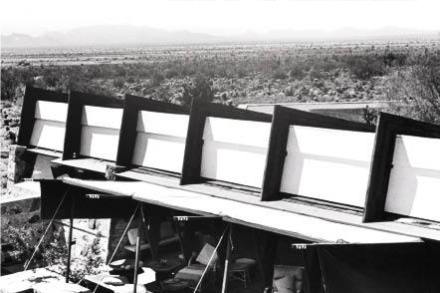
Tom Coraghessan Boyle, in some 20 books, has energetically demon- strated his enthusiasm for turning the bio- graphies of figures from early 20th-century American life into quasi-historical fiction. After writing the story of the sex-obsessed researcher Dr Alfred Kinsey and the rare tale of the inventor of the cornflake, Will Keith Kellogg and his health farm, perhaps it was inevitable that the roaring private life of the architect Frank Lloyd Wright would be a natural sequel. The Women is certainly not a novel about architecture, although the narrator of the story, Tadashi Sato, is a young Japanese architectural student who is drawn to the studio/commune run by Wright at Taliesin in Wisconsin.

Boldly for restoration

From our UK edition

Wales, by Simon Jenkins Last year, having been to Scotland, I called on the mother of an old friend. Mrs Molly Jones of Carmarthen, I found to my great surprise, was very enthusiastic about Scotland. It was so unlike Wales, she said. All those castles . . . ‘But Mrs Jones, there are castles at six-mile intervals from where you’re sitting.’ ‘Yes, but they’re so . . . well . . . dilapidated.’ The first delightful thing about this gazeteer to what his publishers describe as ‘the best Welsh buildings’ is that Simon Jenkins is quietly, and sometimes not quietly at all, of her persuasion. This is Jenkins on Caernarfon, the best preserved (having had a 19th-century makeover) of all Welsh castles.

At Home in Turkey

From our UK edition

If you can’t afford the airfare you might take this delicious guided tour instead. Exploring some of the best contemporary Turkish houses (or caves), the photographer, Solvi dos Santos, divides her subjects by season, as if to emphasise the perpetual variety of Turkey’s terrain — and the successive civilisations that have held sway there. Berrin Torolsan’s informative text explores the inspiration behind such gems as a classical wooden yali on the Bosphorus; a rustic chalet in the mountains; a tea-planters mansion on the Black Sea; a Cappadocian cave-dwelling, with beautifully hewn piers and arches.

Differences and similarities

From our UK edition

West Workroom towards a new sobriety in architecture theory + practice, by Paolo Conrad-Bercah+w office (including contributions from Daniel Sherer, Pierluigi Panza and George Baird) ‘This is not a book….’ These are the opening words of this initially unfathomable paperback volume of architectural ramblings. It has been assembled as an account of the work of a Milan-based architecture practice, West Workroom. The firm designs commercial, residential and institutional buildings, with a special emphasis on functional offices and other workplaces.