Aphrodite

An ancients’ guide to sexual incontinence 

From our UK edition

King’s College Cambridge has lost (according to the papers) a ‘famous’ classicist, who resigned because he slobbered wet kisses all over an unimpressed woman. But everyone knows there is only one famous classicist, and she is not at King’s. The classicist at issue surely cannot have been paying too much attention to the literature which one assumes he has studied, because Eros was seen as a sickness, a madness, a god who robs us of our wits, creating a strong and obsessive desire (‘desire doubled’ as an ancient puts it). Plato saw sexual incontinence as a ‘disease of the soul’. Sophocles thought of sex as a ‘mad and savage master’.

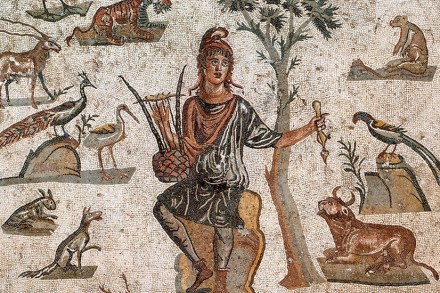
Singing to the gods: a millennium’s span of ancient Greek hymns, gloriously portrayed

From our UK edition

We are experiencing a boom of popular books on Greek mythology: Stephen Fry’s Mythos; Natalie Haynes’s Pandora’s Jar; Liv Albert’s Greek Mythology: The Gods, Goddesses, and Heroes Handbook, to name a few. Admittedly, Greek mythology has it all: love, sex, murder, incest, cannibalism, magical transformations, pirates, monsters, miracles. Surely some readers, though, will want to go even deeper, to tap into the ancient sources, incorrigibly plural and various. These sources include Homer’s Iliad and Odyssey and Hesiod’s genesis and who-begat-whom of the gods, the Theogony. (Plus a chunk of ‘Greek’ mythology which we actually get via the Roman poet Ovid.