Angela merkel

Europe’s great game

From our UK edition

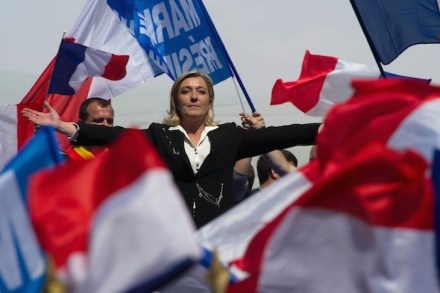
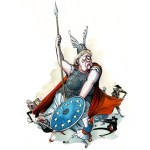
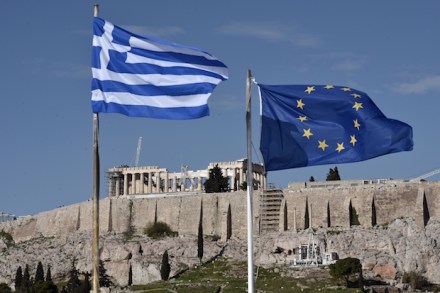
[audioplayer src="http://rss.acast.com/viewfrom22/angelamerkel-sburden/media.mp3" title="Fredrik Erixon and James Forsyth discuss the challenges facing Angela Merkel" startat=36] Listen [/audioplayer]For generations, ambitious politicians have dreamed about having the power to run Europe — but as Angela Merkel can attest, it’s a horrible job. She didn’t want to end up with the continent’s problems on her shoulders, but things have ended up that way. The Greek economic implosion, the seemingly unstoppable wave of immigrants from north Africa, the menace of Russian aggression, the euro crisis — all the multiple, interconnected, crises battering Europe have ended up as Merkel’s problem.

The one thing that might ensure a Greek deal: fear

From our UK edition

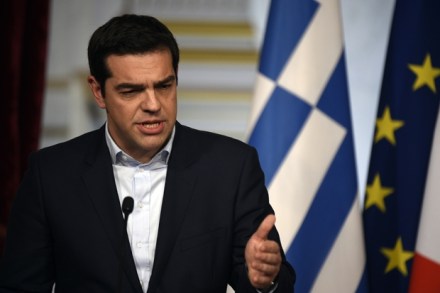
On a narrow, sloping street in downtown Athens sits a graffiti-strewn wall that has captured the spirit of a nation. Amidst the spray-painted slogans and flaking posters, a black-and-white stencilled image of Greek Prime Minister Alexis Tsipras looks down benignly (beneath a perfectly-observed monobrow) at passers-by. His arms outstretched, dressed in flowing robes and with a halo circling his head, he is Christ come to redeem Greece. Such is the bitter humour that now pervades the country’s capital city as the prospect of financial implosion nears. Tsipras came to power promising to get rid of austerity and take the fight to Greece’s European partners. Reality, alas, proved less accommodating. The partners didn’t budge. Syriza, the party Tsipras leads, has had to.

If Grexit happens, parliamentary egotisms may well be to blame

From our UK edition

In 1987, the American historian Richard R. Johnson wrote a quite brilliant essay explaining how a clash of legislatures had contributed to the American declaration of independence. In short, his argument was that a deal was eminently achievable, but ‘parliamentary egotisms’ made it impossible to achieve. Westminster wouldn’t give way to the Massachusetts Assembly and vice-versa, for they feared that any concessions would strengthen the power of the crown against them. I wonder, increasingly, if history won’t end up saying something similar about the Greek crisis. The gap between the various sides is actually relatively small. But neither side wants to be seen to back down and both want the other to have to publicly retreat.

How far will Merkel go on Greece?

From our UK edition

The Greek crisis has been going on for so long now, it is hard to imagine it actually coming to a conclusion. But next week’s meeting of European Finance Ministers is one of the last chances for a deal to be struck. However, there is no sign of an agreement yet. The Financial Times today picks up on German press reports about the German government preparing for Greece leaving the Euro. The Germans have long been convinced that any contagion from Greece leaving the single currency could be contained privately many in Whitehall think that Berlin is far too complacent about this. Now, it appears that Merkel is turning her attention to how Greece could be kept inside the EU if it was, effectively, kicked out of the single currency.

High life | 11 June 2015

From our UK edition

There’s nothing to add to Martin Vander Weyer’s item about Hellas of two weeks ago in these here pages except a Yogi Berra pearl, ‘It ain’t over till it’s over.’ The Greek drama will go on and on until the brinkmanship is exhausted. The EU has blinked, as I thought it would. Although Greek accounting arabesques have been known to shame the Bolshoi — Goldman Sachs taught the modern Hellenes how to legally cook the books and screw Brussels, something we are now paying the price for — we Greeks have contributed a few things apart from cheating and not paying our taxes. As Michael Daley wrote in a letter to the Telegraph, Greeks ‘divined architecture in the human body and the proportions of humanity in their architecture’.

Coffee Shots: Merkel and Obama have it out

From our UK edition

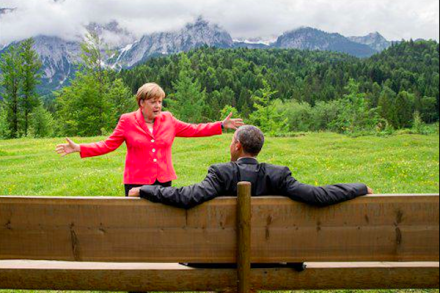
Mr S isn't sure who would win in a fight between Angela Merkel and Barack Obama. However, judging by this photo of the duo together at the G7 summit we may soon get to find out. A lively game of charades? A reenactment of the Sound of Music? Or, have relations between America and Germany become even more strained? Caption suggestions welcome.

The two tightropes that Cameron must walk on Europe

From our UK edition

David Cameron has to walk two tightropes on Europe, and at the same time too. The first is to negotiate a deal with other European leaders that satisfies the bulk of his Euro-sceptic party. If this was not difficult enough, simultaneously Cameron has to show voters that the European question isn’t consuming all of his government’s energies. For despite its importance, it still rankles relatively low on the public’s list of priorities. To address the latter point, I’m told that Cameron will make a major domestic policy announcement in the week of every EU summit in an effort to show that he is not taking his eyes off the home front.

Portrait of the week | 28 May 2015

From our UK edition

Home A Bill to enable a referendum on whether voters wanted Britain to ‘remain’ in the European Union figured in the Queen’s Speech. Another Bill prohibited any rise in income tax rates, VAT or national insurance before 2020. Tenants of housing associations would be given the right to buy their homes. Provision for Scottish devolution was promised in fulfilment of the recommendations of the cross-party Smith Commission. A ‘powerhouse’ in the north was to come into being through cities being given powers over housing, transport, planning and policing. Laws on strikes would be tightened. Red tape for business would be reduced, and a new quango set up to invigilate late payment to small businesses. Apprenticeships would be encouraged and childcare expanded.

Cameron’s friend in Brussels

From our UK edition

The Spanish, in their local elections, just elected a bunch of radicals who oppose the austerity needed to keep Spain in the euro. Poland on Monday elected a Eurosceptic challenger from the conservative Law and Justice party. And leaks from the Euro-summit suggested that David Cameron will respond to this rare combination of crisis and opportunity by demanding… well, not much in the way of reforms and concessions. Admittedly these leaks may be feints to mislead all sides about London’s negotiating strategy. It’s early days. Nor is Poland yet a reliable ally for Britain in such negotiations: its government will be divided between a Eurosceptic president and a pro-Brussels administration until at least October.

Thankfully for Cameron, EU treaty change isn’t a black and white issue

From our UK edition

It seems every week now there is a story about France and/or Germany ruling out EU treaty change and thereby putting pay to David Cameron’s EU reform push before it has even really begun. While this makes for good headlines, the reality is much more nuanced. Take today’s example: A leaked preliminary draft of a Franco-German paper on Eurozone reform reported by Le Monde and picked up by the Guardian, stated that in the short term (the next few years) the countries will focus on working within the EU treaties, which has been seen as a blow to Cameron’s reform push. There are some important points to keep in mind though. Firstly, this is not actually a shift in the Franco-German position.

The Eurozone crisis is as much a political problem as it is an economic one

From our UK edition

Veterans of Eurozone crisis summits, hoping for another nail-biting drama, had queued to get ringside seats. But yesterday’s meeting over Greece with Eurozone Finance Ministers ended without result. And you shouldn’t be surprised. We’ve been here many times before – Eurozone committees keep minutes but lose hours – and this was not a meeting during which decisions were to be taken. While some Eurozone watchers have convinced themselves that there is now a new script for Greece’s relation with its Eurozone creditors, no Eurozone government but the Greek share that view. It’s not just that other capitals are hostile to Greece’s own game plan of forcing other governments to make a new decision about its debt terms.

Taki’s recipe for the survival of the Greek nation

From our UK edition

The good news is that a Greek suppository is about to relieve the EU’s economic constipation. The bad is that there’s a Castro in our midst posing — just as Fidel did 56 years ago — as a democratically elected populist. Back then it was Uncle Sam who was the bogyman. Now it’s the EU. Back then the Soviet Bear came to Fidel’s rescue. Now it’s Putin. Personally, I’d take Vlad over the faceless unelected Brussels gang anytime. The problem is Tsipras, a vulgar-sounding name if ever there was one. Add to it the fact that he has two sons, one named after Che Guevara, the other after Carlos, the murdering Venezuelan terrorist at present languishing in a French jail.

Why France so worries European policy makers

From our UK edition

Today’s huge Podemos rally in Madrid is a reminder that Syriza’s victory in Greece has emboldened the anti-austerity left across the Eurozone. What worries Angela Merkel and other northern European leaders is, as I say in the magazine this week, that any concessions to the new government in Athens, will lead to Podemos—a party which was founded less than 12 months ago—wining the Spanish elections later this year. But the country that most worries European policymakers isn’t Greece or Spain but France. Its economy is showing no signs of recovering and its politics are threatening to become very ugly indeed. A new poll published this week shows the Front National’s Marine Le Pen topping the first round of the French presidential election.

Merkel’s difficulty is Cameron’s opportunity

From our UK edition

In the run-up to the Greek election, European figures were adamant that there wasn’t as much to worry about as people thought. They argued that Syriza wouldn’t come close to winning a majority and that it would have to do a coalition deal with Potami who would end up moderating its demands. This complacency was misplaced. Syriza came within a whisker of a majority and then formed a coalition with right wing nationalists, the Greek Independents, who agree with Syriza on very little other than the need to end EU-imposed austerity. Politically, it is very hard to see how the Greek situation can be resolved. Syriza’s entire rationale as a political movement is to renegotiate the terms of the Greek bailout.

Europe’s crisis is Cameron’s opportunity

From our UK edition

Napoleon notoriously preferred his generals to be lucky — and on that score at least, he would have approved of David Cameron. The triumph of the Syriza party in Greece presents him with a glorious opportunity to solve the European question that has bedevilled the Tories for so long. Europe’s difficulty is Cameron’s opportunity. The European elite has been shaken by the scale of Syriza’s victory. Just a few weeks ago, Cameron was arguing in private that Greek voters, who remain overwhelmingly pro-EU, would ultimately not back a party that was intent on a confrontation with the eurozone authorities.

Confusion, snobbery and Pegida – a letter from Dresden

From our UK edition

Sachsenschweine — Saxon pigs — said the graffiti as my train moved out of Berlin on its way to Dresden. Germany is not as monolithic as it can seem: not only do some of its ancient kingdoms continue a ghostly existence as states of the Federal Republic, but also their populations nurture historic rivalries, at least on the football pitches. But the new popular movement in Dresden — Pegida, or ‘Patriotic Europeans against the Islamisation of the West’, no less — has thrown into relief keener intra-German divisions: not only those between immigrants and ethnic Germans but also those between many German voters and the country’s mortally politically correct establishment.

A Syriza majority will put Athens and Berlin on a collision course

From our UK edition

The next set of exit polls are now out from Greece and they, again, show Syriza pulling off a spectacular victory. Their lead might even be just enough to see them win an overall majority; the poll estimates that they will win between 148 and 154 seats in the 300 seat parliament. If Syriza do win outright, they will have no justification to voters for watering down their demands to the rest of the Eurozone. They will have a clear mandate to push for the debt restructuring that they want. But Berlin is not going to be in any mood to grant concessions. Angela Merkel is already deeply unhappy about the European Central Bank’s programme of quantitative easing and the Germans will not agree to any backsliding on structural reforms in Greece or easing of austerity.

Greece votes, Europe waits

From our UK edition

Greek voters are currently going to the polls in an election that will have profound consequences for the Eurozone. If the anti-austerity Syriza party wins, as the polls suggest it will—and its lead has actually been increasing in the past few days, the Eurozone crisis will enter a new and more acute phase. Syriza will demand a softening of the terms of the Greek bailout. But the Merkel government, the European Central Bank and the European Commission are adamant that they’ll be no leeway given. With Merkel already deeply unhappy about the ECB’s quantitative easing programme, she isn’t going to sign off on any concessions to Athens.

How the Greek election will affect our election

From our UK edition

In ten days time, Greece goes to the polls in what is, arguably, the most important election that will take place this year. For if — as looks likely — Syriza wins, then the Eurozone crisis will move into an acute and particularly dangerous phase. Syriza are committed to a loosening of the terms of the Greek bailout deal. But, as I write in the magazine this week, Berlin, Frankfurt and Brussels are all adamant that there will be no easing of the fiscal straitjacket. Indeed, Berlin is making it clear that it would rather Greece leave the Euro than allow it to restructure its debts. As always with Greece and the Euro, this isn’t really about this small economy on the EU’s south eastern edge.

It’s rich of Cameron to joke about press conferences

From our UK edition

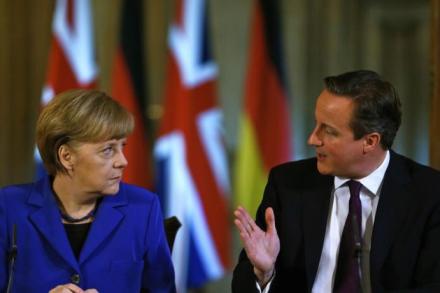
There were very few smiles at Downing Street this afternoon as a mustard clad Angela Merkel spoke of a 'moving moment'. Yet that steely resolve had to crack eventually and with the final question at her joint press conference with David Cameron, the German Chancellor's perma-frown turned into an impish grin for just a split second. Scolding ITV's Tom Bradby, Mrs Merkel announced that she 'never answered speculative questions' and she certainly would not be starting today, danke very much. 'I think the policy of not answering speculative questions will make all press conferences much shorter in the future', piped up David Cameron, seeing a chance to wrap things up. 'Another excellent German invention'.